Kamigare Tea plantation s2.jpg
Article

21401 / いびがわちょう

Gifu Prefecture 揖斐郡

Ibigawa Town

Mulberry fields became tea, about 300 m.

Kamigare tea fields

Photo by Alpsdake (CC BY-SA 4.0)

01 / Nijo Kampaku Sosei no Izumi

Fleeing the capital, a kampaku is saidto have quenched his thirst at this spring.
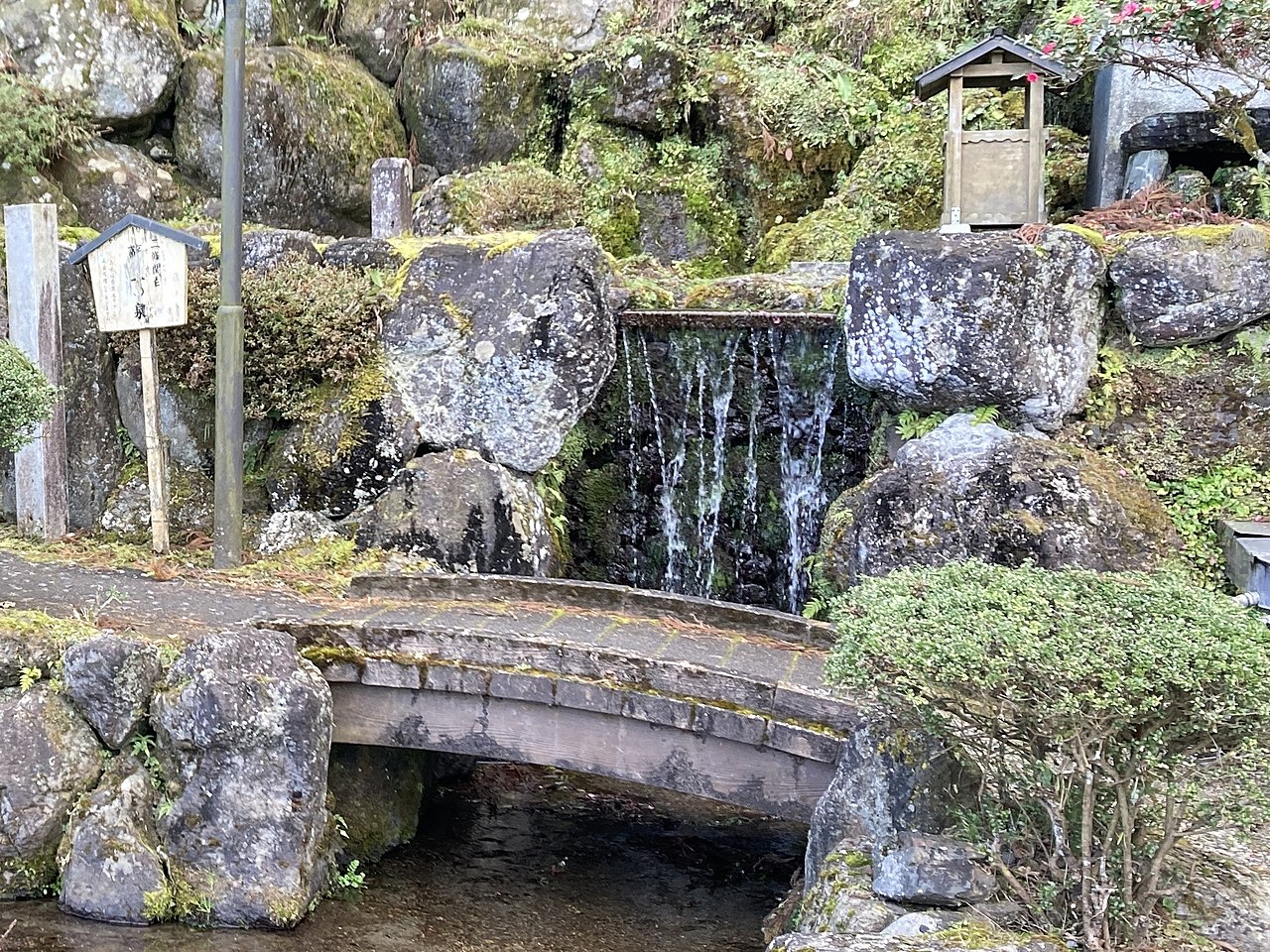
蘇生の泉.jpg
Photo by Kent lee (CC BY-SA 4.0)

In 1353, a publication of the Ministry of Land, Infrastructure, Transport and Tourism records, the party escorting Gokogon-in set up a temporary palace below Toki Yoriyasu's Ojima Castle. Nijo Yoshimoto, who followed, is said to have quenched his thirst at a spring near Zuiganji Temple; it is a town-designated historic site. Yoshimoto wrote of the journey in his diary Ojima no Susami.

  • 1353 (Bunwa 2)
  • Town-designated historic site
  • Diary Ojima no Susami

02 / Ibigawa yana fishing technique

Giant bamboo-and-log baskets line the riverbed,packed with stones to dam the water.

In 2016 the national government selected it as an intangible folk cultural property requiring record-making measures. Baskets called inoko form three weirs, tate, sode and mizutataki, and fish washed up onto a bamboo screen are caught. Descending ayu are the main target; the weir runs from August to mid-October and is dismantled entirely when the season ends.

  • National selection, March 2, 2016
  • Three weirs
  • Runs August to mid-October

03 / Yokokuraji three-storied pagoda

The upper stories shrink little,so the pagoda looks stable from below.

Three-storied Pagoda, Yokokuraji (Ibigawa) 2016-11-22.jpg
Photo by Alpsdake (CC BY-SA 4.0)

The three-storied pagoda of Yokokura-ji Temple, a Prefectural Important Cultural Property since 1989, is a cypress-bark-roofed three-bay pagoda. Its wayo-style tri-bracket system has a touch of karayo on the rear cusped window. The prefecture explains that it appears to date from Kanbun 3 (1663), judging from ink inscriptions and other evidence.

  • Prefectural Important Cultural Property, 1989
  • Cypress-bark roof
  • Appears to date from Kanbun 3 (1663)

Living here

Over nine-tenths of the town is forest.

  • about 20,000 people
  • Rural district town

The town formed on January 31, 2005 from the merger of one town and five villages, and lies at the far west of Gifu Prefecture. Its total area is 803.44 km², 7.6% of the prefecture, and the Ibi River flows from northwest to southeast. The gateway is Ibi Station on the Yoro Railway Yoro Line.

People living here
19,529people
20052020

−9.2% since 2015

26,192 → 19,529

Area
803.44km²

72.85km² of it habitable

2024

Households
7,067households

2.8 people per household

2020

Rent (average for rentals)
34,526yen

National average 60,630 yen

2023

Healthcare
0 hospitals / 22 clinics

11.3 per 10,000 people

2023

Area803.44km²Habitable land72.85km² / 9%
Area and habitable land at the same scalee-Stat B1101 / B1103

Population from 2005 onward (municipal boundary changed).2005-01-31 に合併。2005年調査から市域が変わっている。

Children waiting for childcare
—8 nurseries and similar
Home purchase subsidy
—
Average annual temperature
—

These 3 items are waiting on a nationwide data source. We do not fill them with estimates.

Shape

Borders 10 municipalities across 2 prefectures.

Ibigawa Town in Japan35.487°N 136.569°E
TokyoIbigawa Town
Territory of Ibigawa Town
Boundaries: National Land Numerical Information (N03)

North to south

45.1km

Gifu Prefecture
本巣市, 大野町, 池田町, 垂井町, 関ケ原町
Shiga Prefecture
米原市, 長浜市
Fukui Prefecture
南越前町, 大野市, 池田町

Travel times per leg are not published by the municipality, so they are not shown.

Ibigawa Town isthis kind of town.

  1. 01The Kamigare tea fields lie at an elevation of about 300 m in Kasuga Mutsuai; the town explains that silkworm raising flourished until 1960 and the mulberry fields later became tea fields because tea sold at a high price. Yabukita has also been grown since 1980 and makes up 60% of current production
  2. 02The Nijo Kampaku Sosei no Izumi spring is a town-designated historic site in Ojima, and a manuscript of Yoshimoto's travel diary Ojima no Susami is a Prefectural Important Cultural Property. The graves of Toki Yorikiyo and Yoriyasu are a prefectural historic site, and the Ibigawa yana technique is nationally selected as an intangible folk cultural property
  3. 03The main hall, pagoda and Nio gate of Yokokura-ji Temple are Prefectural Important Cultural Properties. The Ibi Festival floats are a prefectural Important Tangible Folk Cultural Property and the Tanigumi dance an Important Intangible Folk Cultural Property; the town introduces Tanigumisan Kegon-ji Temple as the 33rd temple of the Saigoku Thirty-three Kannon Pilgrimage

If something caught your eye, ask the town itself.