Renkei-ji Agui 2025-12 ac (2).jpg
Article

23441 / あぐいちょう

Aichi Prefecture 知多郡

Agui Town

A Yokomatsu carpenter rebuilt the gate.

Renkei-ji gate, Yokomatsu

Photo by Asturio Cantabrio (CC BY-SA 4.0)

01 / Hisamatsu-Matsudaira graves

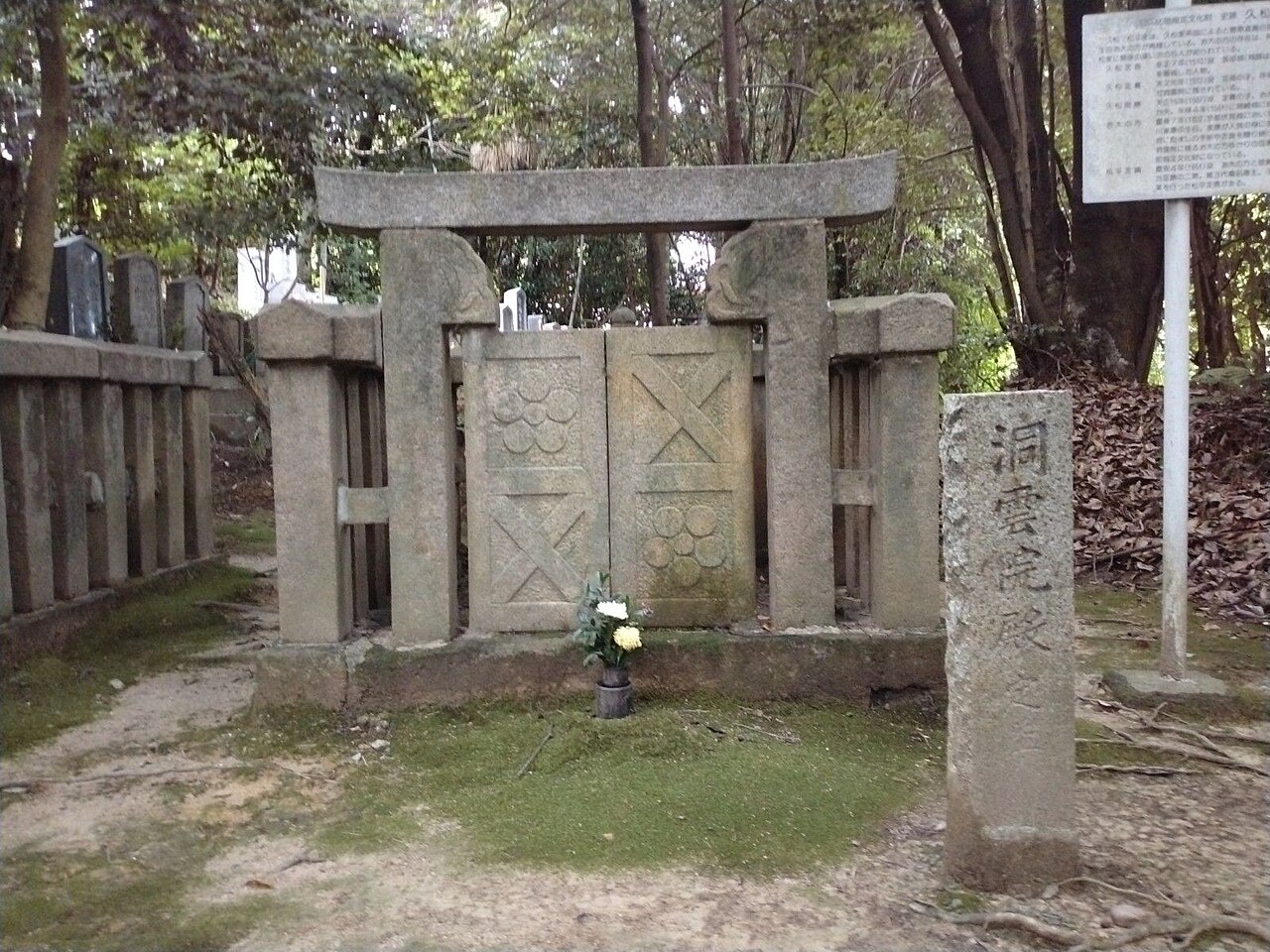
Behind Toun-in, five graves of theHisamatsu and Matsudaira families, Odai included.
久松定益の墓.jpg
Photo by IshizakiA (CC BY-SA 4.0)

The Hisamatsu-Matsudaira family graveyard behind Toun-in was designated a town historic site in 1982. It holds five graves, including that of Odai no Kata. She was the mother of Tokugawa Ieyasu; the town records that she spent about 15 years at Sakabe Castle and that some of her hair was interred in the Toun-in graveyard.

  • Town historic site, 1982
  • Five graves
  • About 15 years at Sakabe Castle

02 / Agui-dani Mushikuyo

The Agui-dani Mushikuyo rite ishosted in turn by 12 districts.

One of the Chita Mushikuyo rites, a prefectural intangible folk cultural property, it is recorded by the town as held in Agui since the late Heian period. The host district prepares for a year, with tasks such as doyo-boshi airing and erecting a great sotoba, and in fiscal 2024 fifteen hanging scrolls were displayed, twelve of them designated by the town.

  • Prefectural folk property, 1983
  • 12 districts in rotation
  • 15 scrolls (fiscal 2024)

03 / Itayama Nagane kiln site

At the Itayama Nagane kiln, bowlsremain packed inside the kiln.

The Itayama Nagane kiln site, a prefectural historic site, consists of three tunnel kilns that fired yamachawan bowls and plates and were excavated in 1978. The town describes it as having a flame-dividing pillar and as probably dating from the late 12th century. The ash dump is lost, but the pillar's ceiling survives and the kiln is preserved with bowls still packed inside.

  • Three tunnel kilns
  • Prefectural historic site, 1984
  • Probably late 12th century

Living here

28 minutes from Meitetsu-Nagoya by limited express.

  • about 30,000 people
  • 30 min to a city centre
  • Rural district town

Agui Station on the Meitetsu Kowa Line is as little as 28 minutes from Meitetsu-Nagoya by limited express, with no change of trains (27 minutes on Saturdays and holidays). Renkei-ji stands on the west side of Uedai Station, on the same Kowa Line.

People living here
28,383people
19952020

+2.3% since 2015

23,890 → 28,383

Area
23.8km²

22.32km² of it habitable

2024

Households
10,134households

2.8 people per household

2020

Rent (average for rentals)
52,478yen

National average 60,630 yen

2023

Healthcare
0 hospitals / 21 clinics

7.4 per 10,000 people

2023

Area23.8km²Habitable land22.32km² / 94%
Area and habitable land at the same scalee-Stat B1101 / B1103
Children waiting for childcare
—8 nurseries and similar
Home purchase subsidy
—
Average annual temperature
—

These 3 items are waiting on a nationwide data source. We do not fill them with estimates.

ACCESS

Where you can go from here.

Agui Town in Japan34.933°N 136.915°E
TokyoAgui Town
Agui Station
阿久比駅2020
  • to NagoyaMeitetsu limited express28min

Travel times follow 名古屋鉄道『乗換案内・時刻表検索』(trainbus.meitetsu.co.jp)の阿久比(KC08)の路線時刻表〔河和線〕。ページに『2026年10月19日現在』。平日は 2026-10-19(月)、土・休日は 2026-10-24(土)の各列車の停車時刻表を読んだ。町公式『阿久比町までの交通アクセス』に名鉄名古屋駅から河和線特急で27分 (checked 2026-10-20). They vary by time of day.

Shape

Borders 4 municipalities.

Territory of Agui Town
Boundaries: National Land Numerical Information (N03)

North to south

5.8km

知多市, 東浦町, 常滑市, 半田市

Agui Town isthis kind of town.

  1. 01Renkei-ji's main hall and main gate became nationally registered tangible cultural properties in 2013. Ridge tablets show that rebuilding of the hall was resolved in the second year of Bunka and completed in the eighth, and that the gate was rebuilt in Meiji 29; the gate's master carpenter was Ehara Shinsuke of Yokomatsu, and the prefecture records that Yokomatsu was recognised in the late early modern period as a village of carpenters
  2. 02The Hisamatsu-Matsudaira family graveyard at Toun-in is a town historic site and the Itayama Nagane kiln site a prefectural one. Agui-dani Mushikuyo is one of the Chita Mushikuyo rites, a prefectural intangible folk cultural property
  3. 03The origin of the name Agui is unknown; a wooden tablet unearthed at the Fujiwara capital site with a date in 694 and the characters for Agui is said to be the oldest known source. Three villages merged into Agui Village in 1906, and it became a town in 1953

See the town as it is now.

Source: Wikidata (P2002, P2003, P2013, P2397)

If something caught your eye, ask the town itself.