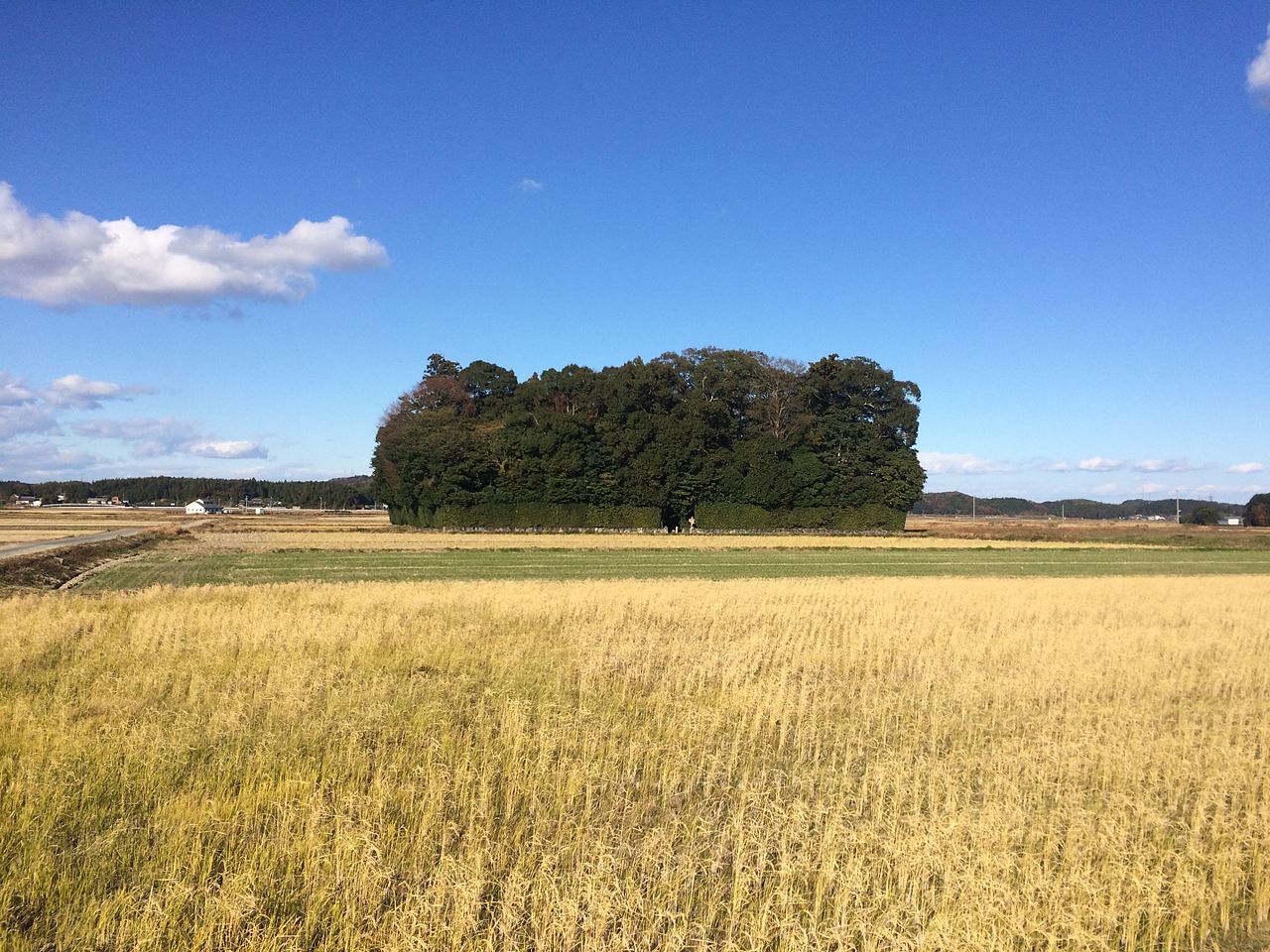
円通寺石仏庵(石仏観音堂) 02.jpg
Article

24461 / たまきちょう

Mie Prefecture 度会郡

Tamaki Town

Thirty-three stone Kannon line a hall.

Ishibutsu-an, Kumano Iseji Route

Photo by Asset utilitist (CC0)

01 / Castle site

Murayama Ryohei took over the castle sitefrom the state and donated it to the town.

田丸城天守跡.jpg
Photo by HikaruKinkakuji (CC BY-SA 4.0)

In 1928 (Showa 3), Ryohei Murayama, who was born in Tamaru, received nine cho and nine tan of state-owned land from the Imperial Forestry Bureau and donated it to Tamaru Town as Shiroyama Park. In 1871 (Meiji 4) the castle's buildings were dismantled and disposed of; stone walls, moats and some buildings remain today (the town).

  • Donated 1928
  • Nine cho and nine tan of state land
  • Prefectural Historic Site

02 / Stone bathhouse

A steam bath of heated stones,to purify those who take part in the ritual.

A tile-roofed hut beside Kajiwara-dera Temple has a stoking room and a bathing room. Water is poured on the red-hot stones of the bathing room, and people enter the rising steam. At the ritual held around the 10th day of the first lunar month, two negi priests and six people on duty enter first. The only stone bath in the prefecture still in use is at Miyako (the prefecture).

  • Around the 10th of the first lunar month
  • 2 priests and 6 people on duty
  • Prefectural folk cultural property

03 / Sessha and massha

Thirteen sessha and massha of Ise Jingu's Naikustand within the town.

Kuchira-jinja.jpg
Photo by Nakagita Yoshiaki (CC BY-SA 4.0)

Ten sessha and three massha (subsidiary shrines) of the Naiku are enshrined in the town (the town). At Kuchira Shrine, it is said that when drought dragged on, people sang rain-calling songs to bring the rain. Near Sakatekunari Shrine lay the Tanoue paddy, which sent 13 bales of sacred rice to Jingu until the Meiji Restoration.

  • 10 sessha of the Naiku
  • 3 massha
  • 13 bales of sacred rice

Living here

87 minutes from Nagoya by Rapid Mie.

  • about 20,000 people
  • 90 min to a city centre
  • Rural district town

Tamaru Station on the JR Sangu Line is the only station in the town, and stands in its center (the town). The Rapid Mie from Nagoya takes 87 minutes at the fastest, without a transfer (timetable). Only 4 Rapid Mie trains a day from Nagoya stop at Tamaru.

People living here
15,041people
19952020

−2.5% since 2015

13,313 → 15,041

Area
40.91km²

28.32km² of it habitable

2024

Households
5,404households

2.8 people per household

2020

Rent (average for rentals)
46,546yen

National average 60,630 yen

2023

Healthcare
1 hospital / 10 clinics

7.3 per 10,000 people

2023

Area40.91km²Habitable land28.32km² / 69%
Area and habitable land at the same scalee-Stat B1101 / B1103
Children waiting for childcare
—4 nurseries and similar
Home purchase subsidy
—
Average annual temperature
—

These 3 items are waiting on a nationwide data source. We do not fill them with estimates.

ACCESS

Where you can go from here.

Tamaki Town in Japan34.490°N 136.631°E
TokyoTamaki Town
Tamaru Station
田丸駅2024
  • to NagoyaJR Rapid87min

Travel times follow JR西日本『JRおでかけネット』区間時刻表(データは交通新聞社『JR時刻表』2026年10月号に基づく)。下り=紀勢本線・参宮線(亀山〜多気〜鳥羽)https://timetable.jr-odekake.net/line-timetable/2321、上り=参宮線・紀勢本線(鳥羽〜多気〜亀山)https://timetable.jr-odekake.net/line-timetable/2322。ページの日付 2026年10月13日(火)・17日(土)・18日(日)の3日で見た。JR東海公式の時刻表(railway.jr-central.co.jp)は検索が動的で本文を読めなかった (checked 2026-10-13). They vary by time of day.

Shape

Borders 4 municipalities.

Territory of Tamaki Town
Boundaries: National Land Numerical Information (N03)

North to south

8.5km

伊勢市, 度会町, 多気町, 明和町

Tamaki Town isthis kind of town.

  1. 01Ishibutsu-an is a Kannon hall in the Tamaki section of the Iseji of the Kumano Pilgrimage Routes. It houses 33 stone Kannon statues modeled on the principal images of the Saigoku Thirty-three Pilgrimage temples. On February 17, 2026 (Reiwa 8) it was added to the nationally designated Historic Site
  2. 02Tamaru Castle Site, a Prefectural Historic Site said to have been built by Kitabatake Chikafusa in the Nanbokucho period, was donated to the town as Shiroyama Park by Murayama Ryohei in 1928. The Miyako stone bath is a prefectural folk cultural property, and the prefecture describes it as the only stone bath in the prefecture still in use
  3. 03Thirteen sessha and massha of Ise Jingu stand in the town. Genkosha, a tea house and secondary residence built in 1847 (Koka 4) by the senior retainer Kanamori Tokusui, is town-designated, and the Yamagami lion dance is a prefecturally designated intangible folk cultural property. The town's chronology lists the invention of the obulato wafer under 1902

If something caught your eye, ask the town itself.