Kamochi Jinja.jpg
Article

31402 / ひのちょう

Tottori Prefecture 日野郡

Hino Town

Lucky name, said to stem from iron mines

Kamochi Shrine

Photo by Flow in edgewise (CC BY 3.0)

01 / The Kondo Family and the Tsugoyama Tatara Site

The head of the Kondo family, ironmasters,gave Neu a public hall.
Houbutsu5.jpg
Photo by Mass Ave 975 at en.wikipedia (CC BY-SA 3.0)

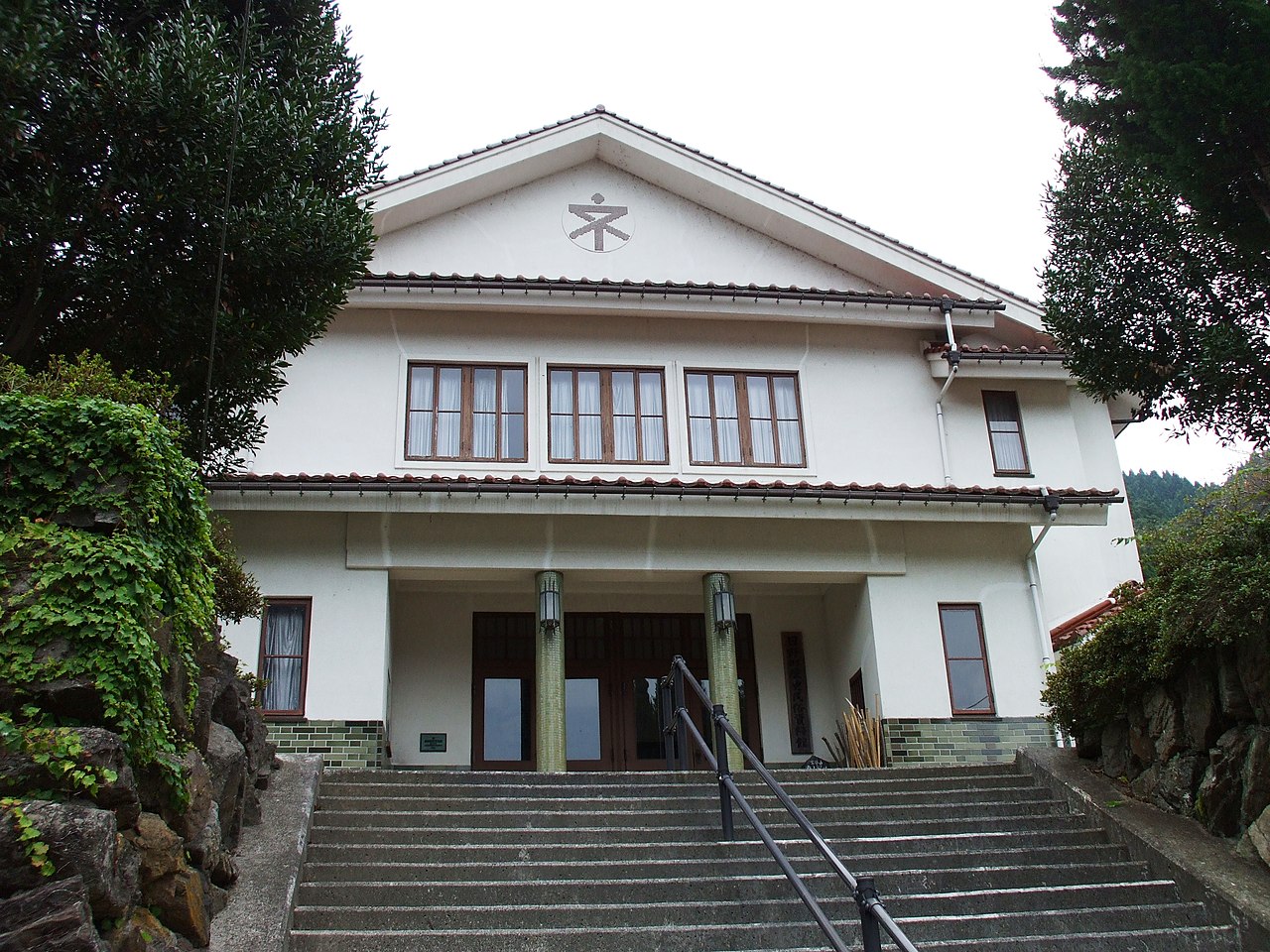
In the middle of Neu-juku, the old post town, stands the Kondo family house, home of ironmasters. Its main house dates from 1864 and is a prefectural Cultural Property. From 1889 to 1899 the family also ran a tatara ironworks at Tsugoyama, now a prefectural Historic Site. The seventh head donated the former Neu Public Hall in 1940.

  • Kondo family house: prefectural Cultural Property (2018)
  • Tsugoyama tatara site: prefectural Historic Site (2019)
  • Former Neu Public Hall: donated 1940; nationally registered Tangible Cultural Property

02 / Oshidori Observation Hut

On the rocks of the Hino River,the town and prefectural bird winters.

The mandarin duck (oshidori) is Hino's town bird and is also designated the prefectural bird of Tottori. It arrives at the Hino River around October and leaves north around March. The Oshidori Observation Hut in Neu is open from November 1 to March 31, with a close view of the flock. Sightings are not guaranteed.

  • Town bird (designated November 2009)
  • Arrives around October, leaves around March
  • Hut open November 1 to March 31

03 / Senryuji Temple and the Inpan Nijushi

In the late Edo period, twenty loyalist samuraiof Tottori Domain were confined in a Kurosaka temple.

Senryuji was built by Seki Kazumasa, who built Kurosaka Kagamiyama Castle. In the late Edo period, twenty pro-imperial samurai of the Tottori Domain (Inpan Nijushi) were moved from Kyoto and confined here; they left Kurosaka eight months later. Their calligraphy, poems and other belongings are town-designated Cultural Properties; viewing requires advance contact.

  • Left Kurosaka eight months after confinement
  • Belongings: town-designated Tangible Cultural Property
  • Advance contact needed to view

Living here

Along the Hino River: Neu, the post town, and Kurosaka, the former castle town.

  • about 3,000 people
  • Rural district town

Hino is a mountain town in southwestern Tottori, bordering Okayama Prefecture. The Hino River runs through its center; Neu was a post town on the Izumo Kaido road, and Kurosaka had a castle town built by Seki Kazumasa in the early Edo period. The town was formed in 1959 when the towns of Neu and Kurosaka merged.

People living here
2,907people
19952020

−11.3% since 2015

4,921 → 2,907

Area
133.98km²

13.87km² of it habitable

2024

Households
1,210households

2.4 people per household

2020

Rent (average for rentals)
—
Healthcare
1 hospital / 2 clinics

10.3 per 10,000 people

2023

Area133.98km²Habitable land13.87km² / 10%
Area and habitable land at the same scalee-Stat B1101 / B1103
Children waiting for childcare
—1 nurseries and similar
Home purchase subsidy
—
Average annual temperature
—

These 3 items are waiting on a nationwide data source. We do not fill them with estimates.

Shape

Borders 6 municipalities across 1 prefectures.

Hino Town in Japan35.241°N 133.443°E
TokyoOsakaHino Town
Territory of Hino Town
Boundaries: National Land Numerical Information (N03)

North to south

12.5km

Tottori Prefecture
日南町, 伯耆町, 江府町, 南部町
Okayama Prefecture
新見市, 新庄村

Travel times per leg are not published by the municipality, so they are not shown.

Hino Town isthis kind of town.

  1. 01Kamochi Shrine stands in Kamochi, Hino, in a place whose name, Kamochi, is considered lucky. According to the shrine, the area had three iron mines, and the name is said to mean a village that owns them: "Kanamochi" was shortened to "Kamochi."
  2. 02Neu was a post town on the Izumo Kaido road, and the Kondo family house, home of ironmasters, is a prefectural Cultural Property. The family ran the Tsugoyama tatara ironworks in the hills from 1889 to 1899; its site is a prefectural Historic Site. Mandarin ducks visit the Hino River from autumn to early spring.
  3. 03Senryuji in Kurosaka is the temple where twenty pro-imperial samurai of the Tottori Domain were confined in the late Edo period; their belongings are town-designated Cultural Properties. Seki Kazumasa built a castle town at Kurosaka in the early Edo period, and stone walls and a well remain at the Kagamiyama castle site.

If something caught your eye, ask the town itself.