Municipal Museum, main building, Abashiri City
Article

01211 / あばしりし

Hokkaido

Abashiri City

Wooden museum, wire-mesh concrete walls.

Municipal Museum, main building

Photo by 663highland (CC BY 2.5)

01 / Moyoro Shell Mound

A survey at the Abashiri River mouthrevealed the Okhotsk culture.

Moyoro Shell Mound in Abashiri City
Photo by Ozizo (Public domain)

A National Historic Site designated on December 16, 1936, on a sand-dune terrace 5 m above sea level on the left bank of the Abashiri River mouth. The city says surveys of dwelling sites, graves and shell middens revealed the Okhotsk culture. The Moyoro Shell Mound Museum calls it a village of about 1,300 years ago.

  • National Historic Site, designated Dec. 16, 1936
  • Sand-dune terrace 5 m above sea level
  • Village of about 1,300 years ago (museum)
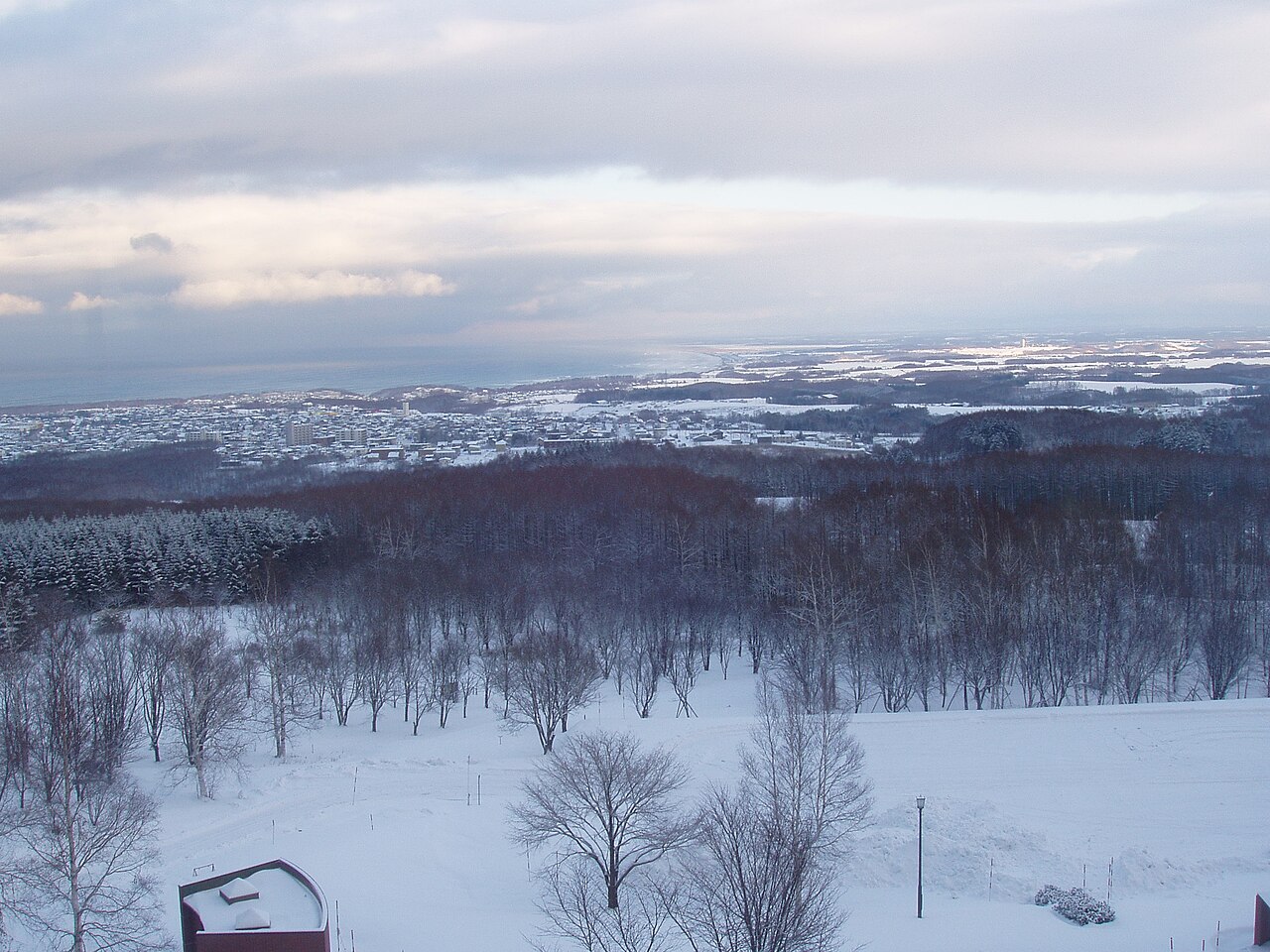
02 / Mount Tento

From a 207 m Place of Scenic Beauty,see the Okhotsk Sea and Shiretoko's peaks.

Mount Tento in Abashiri City
Photo by 江戸村のとくぞう (CC BY-SA 4.0)

A 207 m mountain southwest of the city center, designated a national Place of Scenic Beauty on December 14, 1938. The city's heritage page says it lies almost at the center of Abashiri Quasi-National Park, with a grand view from the Okhotsk Sea to the World Heritage Shiretoko and the Akan mountains of the national park.

  • National Place of Scenic Beauty, designated Dec. 14, 1938
  • 207 m above sea level
  • Almost at the center of Abashiri Quasi-National Park

03 / Ponmoi Columnar Joints

On a seaside cliff near the city,polygonal cross-sections show.

Ponmoi Columnar Joints in Abashiri City
Photo by 221.20 (Public domain)

Andesite columnar joints on the coast at Daimachi 3-chome, Abashiri, designated a city Natural Monument on March 5, 1983. The city says the polygonal sections exposed on the cliff come in many shapes and types, and are of high geological value for studying the complex action of magma.

  • City Natural Monument, designated Mar. 5, 1983
  • Andesite columnar joints
  • Coast at Daimachi 3-chome

Abashiri City from the sky

Now and 1974–78. Tap a photo to zoom in.

Wide (about 6 km across)

Close (about 1.5 km across)

Now (shot July–August 2024)Shot 1974–78

Source: Geospatial Information Authority of Japan (GSI) GSI Tiles(全国最新写真(シームレス)/国土画像情報(第一期:1974〜1978年撮影))

Open in GSI Maps (now)Open in GSI Maps (1974–78)

Living here

Six active JR stations in the city, including Abashiri.

  • about 40,000 people

Six stations in the city are listed in the JR Hokkaido timetable (October 2026 issue). Abashiri Station is the terminus of the Sekihoku Main Line and the starting point of the Senmo Main Line. The gateway is Abashiri Station.

People living here
35,759people
19952020

−8.5% since 2015

44,176 → 35,759

Area
470.84km²

229.83km² of it habitable

2024

Households
17,253households

2.1 people per household

2020

Rent (average for rentals)
36,844yen

National average 60,630 yen

2023

Healthcare
4 hospitals / 18 clinics

6.2 per 10,000 people

2023

Area470.84km²Habitable land229.83km² / 49%
Area and habitable land at the same scalee-Stat B1101 / B1103
Children waiting for childcare
—5 nurseries and similar
Home purchase subsidy
—
Average annual temperature
—

These 3 items are waiting on a nationwide data source. We do not fill them with estimates.

Shape

Borders 3 municipalities.

Abashiri City in Japan44.021°N 144.274°E
TokyoOsakaAbashiri City
Territory of Abashiri City
Boundaries: National Land Numerical Information (Administrative Area Data), MLIT. Processed by Machigatari.Lakes: National Land Numerical Information (Lake Data), MLIT. Processed by Machigatari. Prepared with the approval of the Director-General of the Geospatial Information Authority of Japan, using its Digital Map 25000 (Spatial Data Framework) and Digital Map 25000 (Place Names and Public Facilities). (承認番号 平27情使、第585号)

North to south

37.7km

Travel times per leg are not published by the municipality, so they are not shown.

Abashiri City isthis kind of town.

  1. 01The Abashiri City Folk Museum main building opened in 1936 as a folk museum. Online Cultural Heritage describes it as among the earliest folk museums in Hokkaido, and it was registered as a Registered Tangible Cultural Property in 2019
  2. 02The Moyoro Shell Mound is a National Historic Site at the Abashiri River mouth, Mount Tento is a 207 m national Place of Scenic Beauty, and the Ponmoi columnar joints on a seaside cliff are a city Natural Monument
  3. 03Six active JR stations in the city; the gateway is Abashiri Station on the Sekihoku and Senmo Main Lines (JR Hokkaido timetable)

See the town as it is now.

Source: Wikidata (P2002, P2003, P2013, P2397)

If something caught your eye, ask the town itself.