Krauss No. 15, built 1889, Numata Town
Article

01438 / ぬまたちょう

Hokkaido 雨竜郡

Numata Town

A German-made engine hauled coal here.

Krauss No. 15, built 1889

Photo by ブルーノ・プラス (CC BY-SA 4.0)

01 / Hongan-ji Ekitei

Built in 1894 to rest travelers and horsesand handle mail, now a prefectural asset.

Hongan-ji Ekitei in Numata Town
Photo by 禁樹なずな (CC BY-SA 4.0)

The Hongan-ji Ekitei was built in 1894 and officially approved as a post station in 1900. It gave travelers and horses a rest on the way from the Sapporo and Asahikawa side toward Rumoi, collected and delivered letters for settlers in the interior, and was designated a Hokkaido cultural property in 1971.

  • Built in 1894
  • Approved as a post station in 1900
  • Hokkaido-designated in 1971

02 / Numata porpoise fossil

Thirty years after the first specimen,a second ear bone turned up in storage.

Numata porpoise fossil in Numata Town
Photo by 沼田町化石体験館 (CC0)

Numataphocoena yamashitai, the Numata porpoise, was described in 2000 as a new genus and species, and was designated a Hokkaido natural monument in 2018. In 2015 an ear bone excavated in 1986 was found in storage and identified as a second specimen. A reconstructed skeleton is at the Fossil Experience Museum.

  • Hokkaido natural monument, 2018
  • Second specimen found in 2015
  • Reconstructed skeleton on display

03 / Yotaka Andon Festival

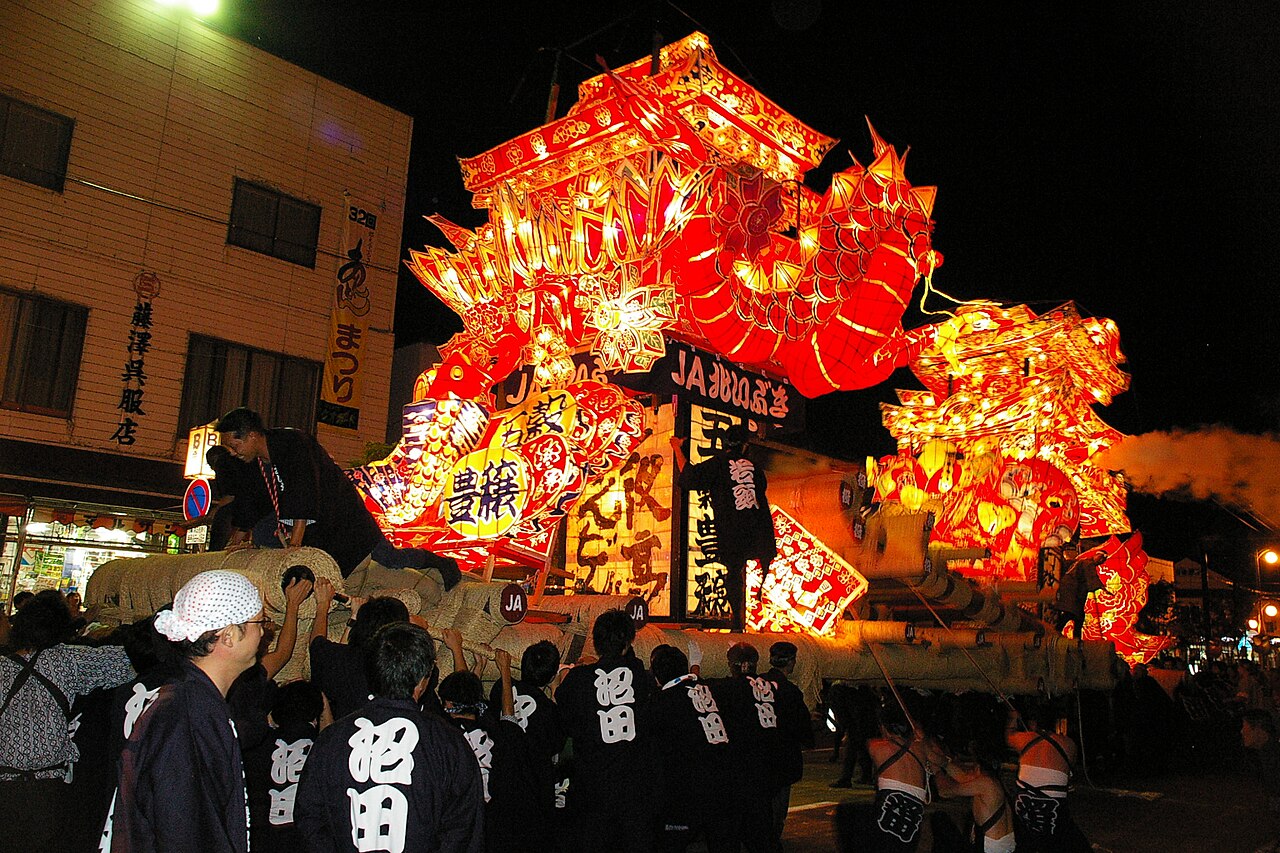
Brought from Oyabe in 1977, a festivalwhere 7 m lanterns crash together.

Yotaka Andon Festival in Numata Town
Photo by 100yen (CC BY-SA 3.0)

According to the organizing committee, the Yotaka Andon Festival came in 1977 from Oyabe, Toyama, the home of the town's pioneer founder, and is the only fighting andon festival in Hokkaido. It says the highlight is the clash of huge lanterns, 7 m high, 12 m long and 5 t.

  • Brought from Oyabe in 1977
  • 7 m high, 12 m long, 5 t
  • Hokkaido's only fighting andon (committee)

Numata Town from the sky

Now and 1974–78. Tap a photo to zoom in.

Wide (about 6 km across)

Close (about 1.5 km across)

Now (shot July–September 2025)Shot 1974–78

Source: Geospatial Information Authority of Japan (GSI) GSI Tiles(全国最新写真(シームレス)/国土画像情報(第一期:1974〜1978年撮影))

Open in GSI Maps (now)Open in GSI Maps (1974–78)

Living here

From Fukagawa Station, 25 min by bus at best.

  • about 3,000 people
  • Rural district town

There is no railway station in the town. From the bus stop in front of JR Fukagawa Station, the Kitaso Liner takes as little as 25 minutes to Numata Tourist Information Plaza (timetable checked October 2026). The town gives about 30 minutes from Fukagawa.

People living here
2,909people
19952020

−8.6% since 2015

4,745 → 2,909

Area
283.35km²

83.65km² of it habitable

2024

Households
1,244households

2.3 people per household

2020

Rent (average for rentals)
—
Healthcare
0 hospitals / 3 clinics

10.3 per 10,000 people

2023

Area283.35km²Habitable land83.65km² / 30%
Area and habitable land at the same scalee-Stat B1101 / B1103
Children waiting for childcare
—1 nurseries and similar
Home purchase subsidy
—
Average annual temperature
—

These 3 items are waiting on a nationwide data source. We do not fill them with estimates.

ACCESS

Where you can go from here.

Numata Town in Japan43.807°N 141.933°E
TokyoOsakaNumata Town
Numata Town Office
沼田町役場2014
  • to FukagawaLocal bus25min

Travel times follow 町公式「沼田町への交通ガイド」(2026-09-09 更新)と、きたそライナー号の時刻表(平日・休日。令和8年4月1日運行開始分・発行 令和8年3月19日 沼田町役場産業創出課。PDF)。町公式「沼田町の交通アクセスについてご案内します」(産業創出課 次世代交通推進室・2026-04-09 更新)の札幌方面・旭川方面・留萌方面の経路PDF (checked 2026-10-29). They vary by time of day.

Shape

Borders 5 municipalities.

Territory of Numata Town
Boundaries: National Land Numerical Information (Administrative Area Data), MLIT. Processed by Machigatari.Lakes: National Land Numerical Information (Lake Data), MLIT. Processed by Machigatari. Prepared with the approval of the Director-General of the Geospatial Information Authority of Japan, using its Digital Map 25000 (Spatial Data Framework) and Digital Map 25000 (Place Names and Public Facilities). (承認番号 平27情使、第585号)

Numata Town isthis kind of town.

  1. 01Krauss No. 15 was built in 1889 at the Krauss locomotive works in Germany and hauled coal on the Rumoi Railway and a coal mine's freight line until December 1967; the town says it is the oldest small steam locomotive surviving in Japan
  2. 02The Hongan-ji Ekitei, built in 1894, is a Hokkaido-designated cultural property that gave travelers and horses a rest and handled letters; the Numata porpoise fossil became a Hokkaido natural monument in 2018
  3. 03The Yotaka Andon Festival came from Oyabe, Toyama, in 1977; the town has no railway station, and the bus from Fukagawa Station takes as little as 25 minutes

If something caught your eye, ask the town itself.