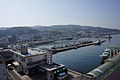
Akashi Kaikyō Bridge - 明石海峡大橋 - panoramio (4).jpg
Article

28226 / あわじし

Hyogo Prefecture

Awaji City

They cross the bridge to work in Kobe.

Akashi Kaikyo Bridge

Photo by z tanuki (CC BY 3.0)

01 / Akashi Kaikyo Bridge

A centre span of 1,991 metres.One of the world's largest.

Akashi Kaikyō Bridge - 明石海峡大橋 - panoramio (6).jpg
Photo by z tanuki (CC BY 3.0)

The Akashi Kaikyo Bridge is 3,911 metres long with a centre span of 1,991 metres, one of the largest suspension bridges in the world. Built as part of the Honshu-Shikoku link, work began on site in May 1988 and it was finished in April 1998. The city writes that many residents cross the bridge to work and to school.

  • 3,911 metres long
  • A centre span of 1,991 metres
  • Finished in April 1998

02 / Incense

A hundred and seventy years of incense.The largest output in Japan.

Incense has been made in Awaji for about 170 years, and the city has the largest output in the country. The makers are concentrated in the Ei and Gunge districts on the west coast. The same city also makes about 80 per cent of the fukimodoshi (吹き戻し), the paper party blowers, produced in Japan.

  • About 170 years of incense making
  • The largest output in Japan
  • Centred on the Ei and Gunge districts

03 / Gossakaito site

An ironworks of the Yayoistood on the hill.

五斗長垣内遺跡.jpg
Photo by Wikiwiki82~jawiki (CC BY-SA 4.0)

The Gossakaito site (五斗長垣内遺跡) is an ironworking settlement of the late Yayoi period. It shows that iron culture, which mattered greatly to the forming of the early state, was taken up here before the Kinai region, and the city calls it the core site of Awaji Island's Japan Heritage. The Funaki site nearby shows the same.

  • An ironworking site of the late Yayoi period
  • Iron culture taken up before the Kinai region
  • The core site of Awaji Island's Japan Heritage

Living here

Akashi to Iwaya in 13 minutes.

  • about 40,000 people

Awaji Island has no railway, and the gateway of the city is the port of Iwaya, about 13 minutes from Akashi on the Awaji Jenova Line. Highway buses from Sannomiya and Kosoku-Maiko stop at Tsuna-ko, about ten minutes' walk from city hall. The city was formed in 2005 by the merger of five towns: Tsuna, Awaji, Hokudan, Ichinomiya and Higashiura.

People living here
41,967people
20052020

−4.6% since 2015

49,078 → 41,967

Area
184.24km²

111.8km² of it habitable

2024

Households
17,494households

2.4 people per household

2020

Rent (average for rentals)
44,135yen

National average 60,630 yen

2023

Healthcare
3 hospitals / 41 clinics

10.5 per 10,000 people

2023

Area184.24km²Habitable land111.8km² / 61%
Area and habitable land at the same scalee-Stat B1101 / B1103
Children waiting for childcare
—15 nurseries and similar
Home purchase subsidy
—
Average annual temperature
—

These 3 items are waiting on a nationwide data source. We do not fill them with estimates.

ACCESS

Where you can go from here.

Awaji City in Japan34.440°N 134.915°E
TokyoAwaji City
Port of Iwaya
岩屋港2013
  • to AkashiAwaji Jenova Line13min

Travel times follow 市公式「市勢要覧テキストバージョン(淡路市市勢要覧2021)」のACCESSに載る値 (checked 2026-09-23). They vary by time of day.

Shape

Borders 1 municipalities.

Territory of Awaji City
Boundaries: National Land Numerical Information (N03)

North to south

23.9km

洲本市

Awaji City isthis kind of town.

  1. 01The Akashi Kaikyo Bridge ties the city to Kobe, and many people commute across it
  2. 02Incense has been made here for about 170 years, the largest output in the country
  3. 03The Gossakaito site is a late Yayoi ironworks, taken up before the Kinai region

See the town as it is now.

Source: Wikidata (P2002, P2003, P2013, P2397)

If something caught your eye, ask the town itself.