IseOkitsuStn01 199101.jpg
Article

24201 / つし

Mie Prefecture

Tsu City

Steam-engine tank sits on four columns.

Ise-Okitsu Station water tower

Photo by Olegushka (CC BY-SA 4.0)

01 / Tanigawa Kotosuga

The scholar who compiled a dictionary in kana orderis said to have buried his unneeded drafts.
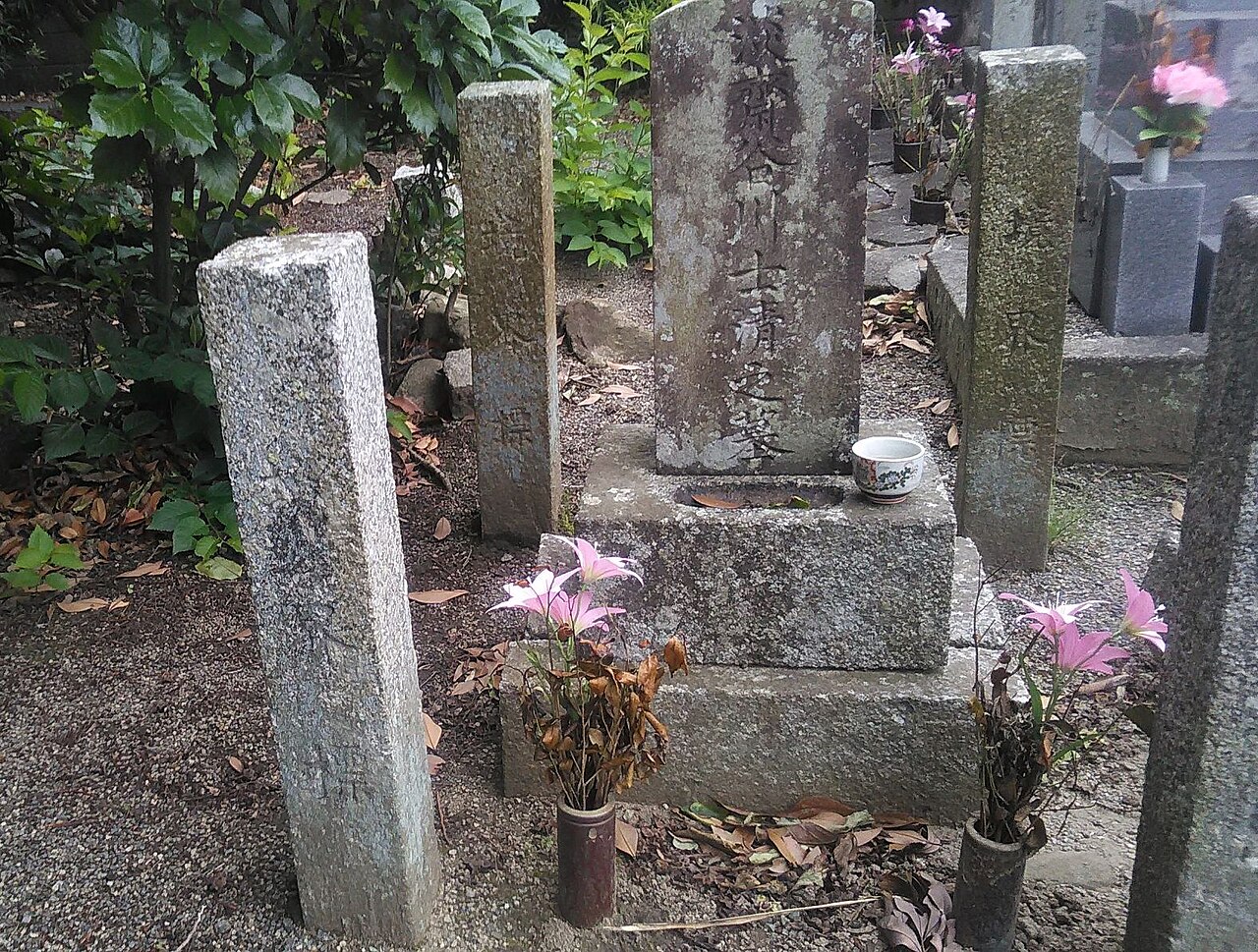
谷川士清の墓.jpg
Photo by IshizakiA (CC BY-SA 4.0)

Tanigawa Kotosuga practiced medicine in Hacho, Tsu, while compiling Wakun no Shiori, a Japanese dictionary of about 21,000 entries arranged in kana order, in 93 volumes. In 1775 he built the Hogozuka mound, said to hold unneeded drafts he buried there. His descendants carried on the publication, which was completed in 1887. His former residence and grave are national historic sites.

  • About 21,000 entries
  • 93 volumes
  • Residence and grave: national historic sites

02 / Great Muku of Mukumoto

A muku tree said to be over 1,500 years oldhas supports taking its east and west branches.

Mukumoto no Omuku Aphananthe aspera tree. D.jpg
Photo by さかおり (CC BY-SA 4.0)

A giant muku tree in Mukumoto, in the former town of Geino, designated a national natural monument in 1934. It stands about 18 m tall and about 8 m around, and is said to be more than 1,500 years old. To ease the spread of a crack in the main trunk and the load on its branches, it was decided to set up supports under the east and west branches.

  • National natural monument, 1934
  • About 18 m tall, about 8 m around
  • Said to be over 1,500 years old

03 / Minamiieki Kawaguchi Yusui

Two irrigation channels were united in 1729,and villagers now manage the system together.

南家城川口井水1.jpg
Photo by Indiana jo (CC BY-SA 4.0)

A weir is thought to have been built on the Kumozu River as early as the Heian period. In 1729 the Minamiieki and Kawaguchi irrigation channels were united. Besides supplying 360 ha of paddy fields, the channels serve as water for daily life and for fire prevention in the villages, and the villagers maintain them together.

  • 360 ha of paddy fields
  • United in 1729
  • MAFF 100-canal selection, 2006

Living here

From Kintetsu Nagoya to Tsu Station in 43 minutes by limited express.

  • about 270,000 people

By Kintetsu limited express it takes as little as 43 minutes from Kintetsu Nagoya Station to Tsu Station, and as little as 81 minutes from Osaka Namba Station (Kintetsu timetable search, October 2026). Both Kintetsu and JR trains serve Tsu Station. The city, formed by the January 2006 merger of 2 cities, 6 towns and 2 villages, covers 711.18 km2, which the city describes as about the size of Lake Biwa.

People living here
274,537people
2010

−1.9% since 2015

285,746 → 274,537

Area
711.18km²

295.84km² of it habitable

2024

Households
117,663households

2.3 people per household

2020

Rent (average for rentals)
44,219yen

National average 60,630 yen

2023

Healthcare
22 hospitals / 270 clinics

10.6 per 10,000 people

2023

Area711.18km²Habitable land295.84km² / 42%
Area and habitable land at the same scalee-Stat B1101 / B1103

Population from 2010 onward (municipal boundary changed).2006-01-01 に新設合併(久居市・河芸町・芸濃町・美里村・安濃町・香良洲町・一志町・白山町・美杉村)。2010年調査から市域が変わっている。

Children waiting for childcare
—55 nurseries and similar
Home purchase subsidy
—
Average annual temperature
—

These 3 items are waiting on a nationwide data source. We do not fill them with estimates.

ACCESS

Where you can go from here.

Tsu City in Japan34.718°N 136.506°E
TokyoTsu City
Tsu Station
津駅2022
  • to NagoyaKintetsu limited express43min
  • to OsakaKintetsu limited express81min

Travel times follow 近畿日本鉄道『ダイヤ案内』(eki.kintetsu.co.jp/norikae。経路検索の結果)。2026-10-14(水)・2026-10-17(土)・2026-10-18(日)の3日(名古屋→津は3日とも、大阪難波→津は3日とも、ほかの向きは水曜のみ)、各駅を5:00〜23:30の30分おきに発車で検索して全便を集めた(乗り換え0回のものだけ数えた)。近鉄名古屋→津・大阪難波→津・大阪上本町→津・津→近鉄名古屋・津→大阪難波を数えた (checked 2026-10-13). They vary by time of day.

Shape

Borders 7 municipalities across 1 prefectures.

Territory of Tsu City
Boundaries: National Land Numerical Information (N03)

North to south

44.1km

Mie Prefecture
松阪市, 伊賀市, 亀山市, 鈴鹿市, 名張市
Nara Prefecture
御杖村, 曽爾村

Tsu City isthis kind of town.

  1. 01The water tower at Ise-Okitsu Station is a reinforced-concrete structure built to supply water to steam locomotives when the Meisho Line opened along its full length in 1935; it became a nationally registered tangible cultural property in 2024
  2. 02Tanigawa Kotosuga's former residence and grave are national historic sites, the Great Muku of Mukumoto is a national natural monument, and the Minamiieki Kawaguchi Yusui was selected for MAFF's 100-canal list in 2006
  3. 03Also in the city are the Akogizuka mound, tied to the Akogi shore legend that dictionaries give as the origin of the word "akogi"; the old swimming style Kankai-ryu; the Gonbo festival; the Kaiseki-zan fossil cliff in Sakakibara; and the Tago Kitabatake clan castle sites, all designated cultural properties

See the town as it is now.

Source: Wikidata (P2002, P2003, P2013, P2397)

If something caught your eye, ask the town itself.