前鬼のトチノキ巨樹群.jpg
Article

29450 / しもきたやまむら

Nara Prefecture 吉野郡

Shimokitayama Village

Nuts from giant trees also became food.

Zenki giant horse chestnuts

Photo by Pochi6 (CC BY-SA 4.0)

01 / Toya

Each district picks one representativeto visit the shrine on the 1st and 15th.

Shimokitayama ikejinja.jpg
Photo by Opqr (CC BY-SA 4.0)

Ike Shrine in Ikemine is the village's tutelary shrine. The village's cultural-property booklet (2022) describes the "toya" system that supports it. Each district chooses one representative, who visits on the 1st and 15th of every month; at festivals they clean, and offer rice cakes and sake. The rice offered is sweetened with sugar and is called "ichiya-zukuri".

  • Visits on the 1st and 15th each month
  • One representative per district
  • Offered rice: "ichiya-zukuri"

02 / Bridge

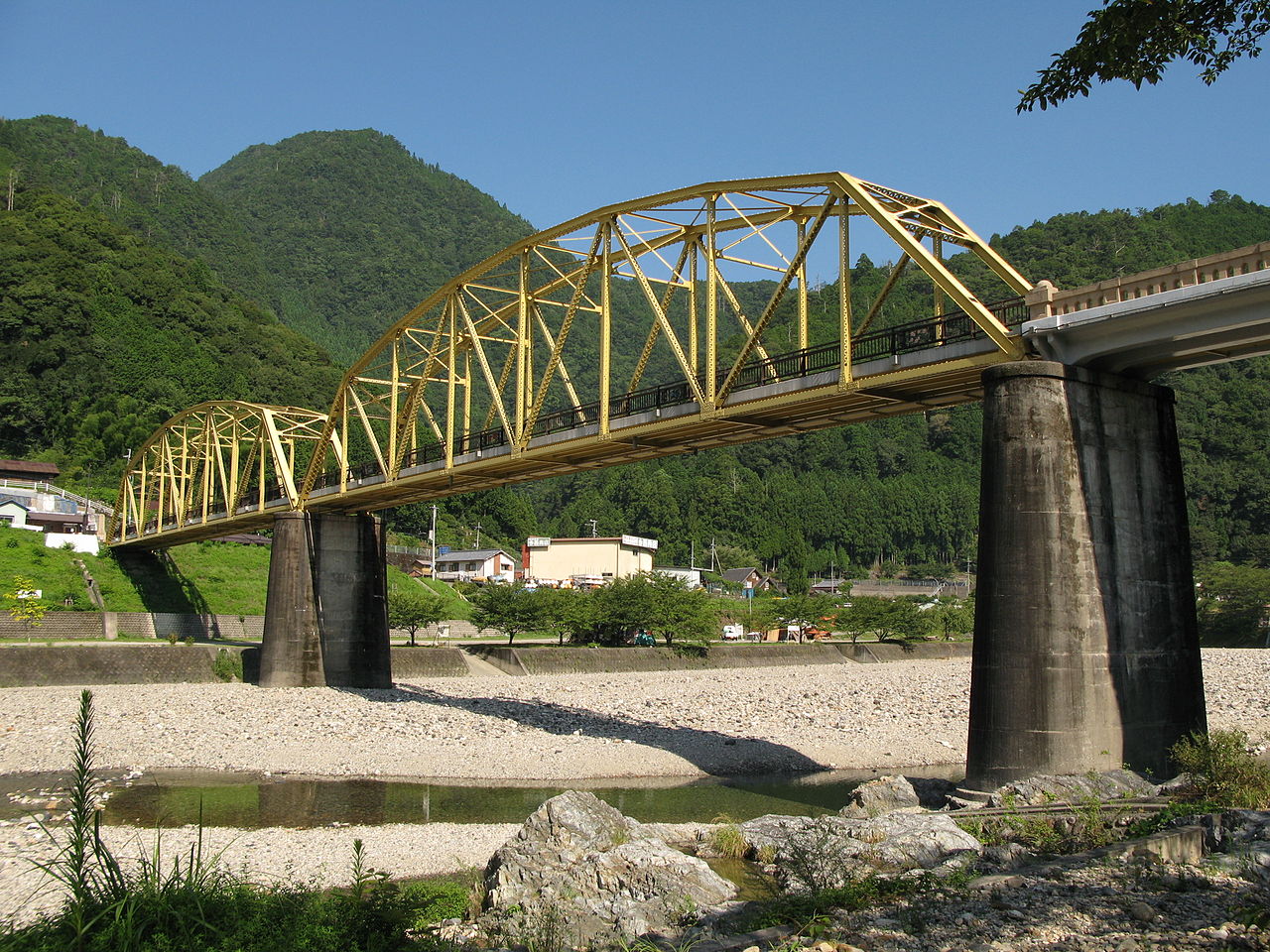
A bridge was built in 1929where the Funado ferry once ran.

Ikehara bridge, Shimokitayama01.JPG
Photo by Kansai explorer (CC BY 2.5)

Ikehara Ohashi Bridge was built on 30 June 1929 (Showa 4) at the spot where the ferry called "Funado no Watashi" once ran. The village booklet says it was built along with road widening for a power-generation facility, so that people could cross between Ikehara and the Ikemine side whatever the river level or weather. It was extensively renovated in 2003, but the truss girders and other main parts are as they were.

  • Built 30 June 1929 (Showa 4)
  • Extensively renovated in 2003
  • Truss girders left as they were

03 / Village site

Zenki, outside any administrative district,was joined to Yoshino District in 1872.

Zenki is the 29th nabiki, a practice site, on the Omine Okugake-michi route (World Heritage). The prefecture's database says five lodges, said to have been run by descendants of a disciple of En no Gyoja, stood until the mid-Meiji period. The village booklet says Zenki joined Yoshino District in 1872 and Shimokitayama Village in 1889, and that in 2022 no one lived there year-round.

  • Joined Yoshino District in 1872
  • Joined Shimokitayama Village in 1889
  • Five lodges until the mid-Meiji period

Living here

From Yamato-Kamiichi, 2 hours 28 minutes by bus.

  • about 1,000 people
  • Rural district town

There is no railway station in the village. From Yamato-Kamiichi Station (Yoshino Town) on the Kintetsu line, take the R169 Yuyu Bus bound for Shimokuwabara. The village says the stop nearest the village office is Terigaito, about two and a half hours by bus. In the timetable revised in October 2021 (Reiwa 3), the bus leaving Kamiichi Station at 16:00 (8:30 on weekends and holidays) reaches Terigaito in 2 hours 28 minutes, with one round trip a day.

People living here
753people
19952020

−15.9% since 2015

1,370 → 753

Area
133.39km²

9.72km² of it habitable

2024

Households
447households

1.7 people per household

2020

Rent (average for rentals)
—
Healthcare
0 hospitals / 1 clinic

13.3 per 10,000 people

2023

Area133.39km²Habitable land9.72km² / 7%
Area and habitable land at the same scalee-Stat B1101 / B1103
Children waiting for childcare
—0 nurseries and similar
Home purchase subsidy
—
Average annual temperature
—

These 3 items are waiting on a nationwide data source. We do not fill them with estimates.

ACCESS

Where you can go from here.

Shimokitayama Village in Japan34.005°N 135.954°E
TokyoShimokitayama Village
  • to Yamato-KamiichiLocal bus148min

Travel times follow R169ゆうゆうバス(南部地域連携コミュニティバス。奈良交通に運行委託)の時刻表。村公式『アクセス』(https://www.vill.shimokitayama.nara.jp/about/access.html)がリンクする『R169ゆうゆうバス時刻表』PDF(令和3年10月1日改正・PDF作成 2021-08-30・保存 $SP/shimokitayama/yuyu.pdf)と、上北山村公式の時刻表PDF(『2022年4月1日時点』・PDF作成 2022-04-11・保存 $SP/shimokitayama/kami_bus.pdf)。**2つのダイヤは大和上市発・下桑原発とも時刻が同じ** (checked 2026-10-14). They vary by time of day.

Shape

Borders 4 municipalities across 2 prefectures.

Territory of Shimokitayama Village
Boundaries: National Land Numerical Information (N03)

North to south

17.2km

Nara Prefecture
上北山村, 十津川村
Wakayama Prefecture
北山村
Mie Prefecture
熊野市

Shimokitayama Village isthis kind of town.

  1. 01The giant Japanese horse chestnuts of Zenki stand up the path from Zenki hamlet toward Taiko-no-Tsuji. The prefecture's list records them as a Natural Monument (plants) designated on 30 March 2001, and the village booklet says some have trunks over 10 m around and that, in Zenki, where flat land is scarce and farming difficult, the nuts the giant trees drop were also a valuable food
  2. 02Ike Shrine in Ikemine is the village's tutelary shrine, and the village booklet describes its "toya" system and the "ichiya-zukuri" rice offered. Ikehara Ohashi Bridge was built in 1929 where a ferry once ran. Sugioka Kason, a kana calligrapher born in Shimoikehara, received the Order of Culture in 2000
  3. 03The Zenki village site is the remains of a hamlet with lodges run by descendants of a disciple of En no Gyoja. The Nara Prefecture database says its landscape, with flat ground made by stone walls and the like, conveys the look of a settlement in the Yoshino mountains

See the town as it is now.

Source: Wikidata (P2002, P2003, P2013, P2397)

If something caught your eye, ask the town itself.