Tsurumisaki 04.JPG
Article

44205 / さいきし

Oita Prefecture

Saiki City

This cape is Kyushu's easternmost point.

Tsurumisaki

Photo by ReoRockville (CC0)

01 / Fukashima Island

A protected pigeon nests here,and a snail found nowhere else but here and Miyazaki.

Fukashima (深島), Oita's southernmost island, is home to the Japanese wood pigeon (karasubato), a nationally protected species. The purple land hermit crab (murasaki okayadokari) lives only here in the prefecture. A snail subspecies, the Fukashima kobesomaimai (フカシマコベソマイマイ), is found only on this island and on islands off northern Miyazaki -- nowhere on the mainland.

  • 1971/5: wood pigeon named a national natural monument
  • Purple land hermit crab: the prefecture's only habitat
  • Fukashima kobesomaimai: only here and off Miyazaki
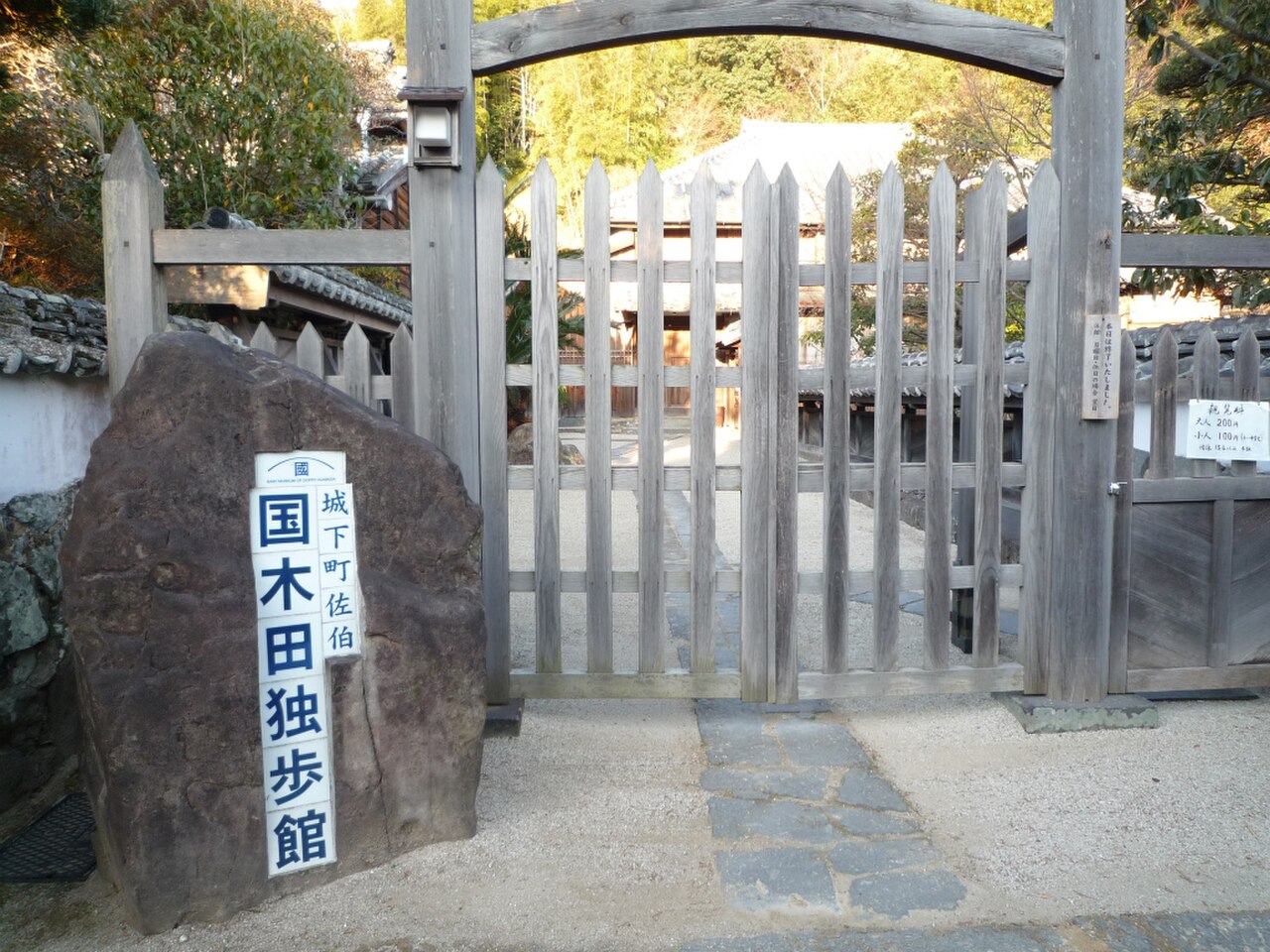
02 / Kunikida Doppo and Shiroyama

A 22-year-old teacher stayed for nine months.He often walked up the old castle hill, it's said.

Kunikida-Doppo House.jpg
Photo by Heartoftheworld (CC BY-SA 3.0)

At 22, the novelist Kunikida Doppo (国木田独歩) lived in Saiki from October 1893 to the end of June 1894, teaching English and math at the private Tsurutani Academy (鶴谷学館). He boarded on the upper floor of the Sakamoto Einen (坂本永年) house, a family of former domain elders, and often walked up Shiroyama, the hill behind it, it's said. At its foot, the ruins of Saiki Castle (佐伯城跡) became a National Historic Site in 2023.

  • 1893/10 - 1894/6: stayed in Saiki
  • Taught English and math at Tsurutani Academy
  • Boarded at the Sakamoto Einen house

03 / Gomadashi

A leftover fish, grilled and ground with sesame.Named among Japan's 100 local dishes.

Gomadashi udon01.jpg
Photo by Gomadashi (CC BY-SA 3.0)

Gomadashi is a preserved seasoning made in Saiki by grilling and shredding lizardfish (eso), then grinding it with sesame and soy sauce -- said to have begun as a way to use fish too plentiful to sell. Beyond udon, it also flavors ochazuke and somen. In 2007, it was named one of Japan's 100 local dishes by the agriculture ministry.

  • Grilled, shredded eso ground with sesame and soy sauce
  • 2007: named one of Japan's 100 local dishes
  • Nov. 10: Saiki Gomadashi Day (registered 2021)

Living here

Forest covers nearly nine-tenths of its land.

  • about 70,000 people

In 2005, Saiki merged with five towns and three villages. It covers 903.14 square kilometers, nearly nine-tenths of it forest. A roughly 270-kilometer ria coastline runs along its shore, and the gateway is JR Saiki Station.

People living here
66,851people
20052020

−7.4% since 2015

80,297 → 66,851

Area
903.14km²

120.54km² of it habitable

2024

Households
28,716households

2.3 people per household

2020

Rent (average for rentals)
37,953yen

National average 60,630 yen

2023

Healthcare
8 hospitals / 55 clinics

9.4 per 10,000 people

2023

Area903.14km²Habitable land120.54km² / 13%
Area and habitable land at the same scalee-Stat B1101 / B1103

Population from 2005 onward (municipal boundary changed).2005-03-03 に合併。2005年調査から市域が変わっている。

Children waiting for childcare
—18 nurseries and similar
Home purchase subsidy
—
Average annual temperature
—

These 3 items are waiting on a nationwide data source. We do not fill them with estimates.

Shape

Borders 5 municipalities across 1 prefectures.

Saiki City in Japan32.960°N 131.900°E
TokyoOsakaSaiki City
Territory of Saiki City
Boundaries: National Land Numerical Information (N03)

North to south

39.4km

Oita Prefecture
豊後大野市, 津久見市, 臼杵市
Miyazaki Prefecture
延岡市, 日之影町

Travel times per leg are not published by the municipality, so they are not shown.

Saiki City isthis kind of town.

  1. 01Cape Tsurumisaki (鶴御崎) is the easternmost point of Kyushu's mainland. On its 200-meter cliff, gun-battery ruins from wartime still remain.
  2. 02Fukashima, Oita's southernmost island, is home to the nationally protected Japanese wood pigeon. The Fukashima kobesomaimai snail lives only here and on islands off northern Miyazaki.
  3. 03At 22, Kunikida Doppo taught for nine months at a school in Saiki and, it's said, loved its castle hill. Gomadashi, a preserved dish born in this fishing town, was named one of Japan's 100 local dishes in 2007.

See the town as it is now.

Source: Wikidata (P2002, P2003, P2013, P2397)

If something caught your eye, ask the town itself.