Shozuijo06.jpg
Article

36403 / あいずみちょう

Tokushima Prefecture 板野郡

Aizumi Town

A sotoba surfaced from the moat floor.

Sotoba, Shōzui-yakata site

Photo by ブレイズマン (CC BY 3.0)

01 / Okumura Residence (奥村家住宅)

Salvaged from the dismantled Tokushima Castle,its timber built the Okumura indigo merchants' gate.

The Okumura Residence's main gate dates from 1875 (Meiji 8). The town board of education's guide records that when the state dismantled Tokushima Castle, the Okumuras bought the old timber of a salt storehouse, its gate and plank fence in one lot for 115 yen, and built the gate from what was left after building their new house next door.

  • Built in 1875 (Meiji 8) (town board of education)
  • Timber bought for 115 yen (town board of education; Shintaku Fushin Kaimonochō account book)
  • Roof-tile ends of the storehouse bear the Hachisuka crest (Agency for Cultural Affairs)

02 / Awa Indigo Cultivation and Processing Tools (阿波藍栽培加工用具)

Gathered in Aizono village, 93 tools covereverything from growing indigo to making indigo balls.

Aizumi Ai no Yakata.jpg
Photo by Tamago915 (CC BY-SA 3.0)

The nationally designated Important Tangible Folk Cultural Property "Awa Indigo Cultivation and Processing Tools" totals 93 items: 39 cultivation tools, 23 leaf-processing tools, 17 sukumo-making tools and 14 indigo-ball tools. They were collected in Aizono village, and the property is managed by Aizumi Town. Ai no Yakata displays farm and folk tools once used to grow indigo and process its leaves.

  • Designated April 22, 1955; one set of 93 items (Agency for Cultural Affairs)
  • 39 cultivation, 23 leaf-processing, 17 sukumo, 14 indigo-ball tools (Agency for Cultural Affairs)
  • Located at Tokumyō, Aizumi (Agency for Cultural Affairs)

03 / Kenshō-ji (見性寺)

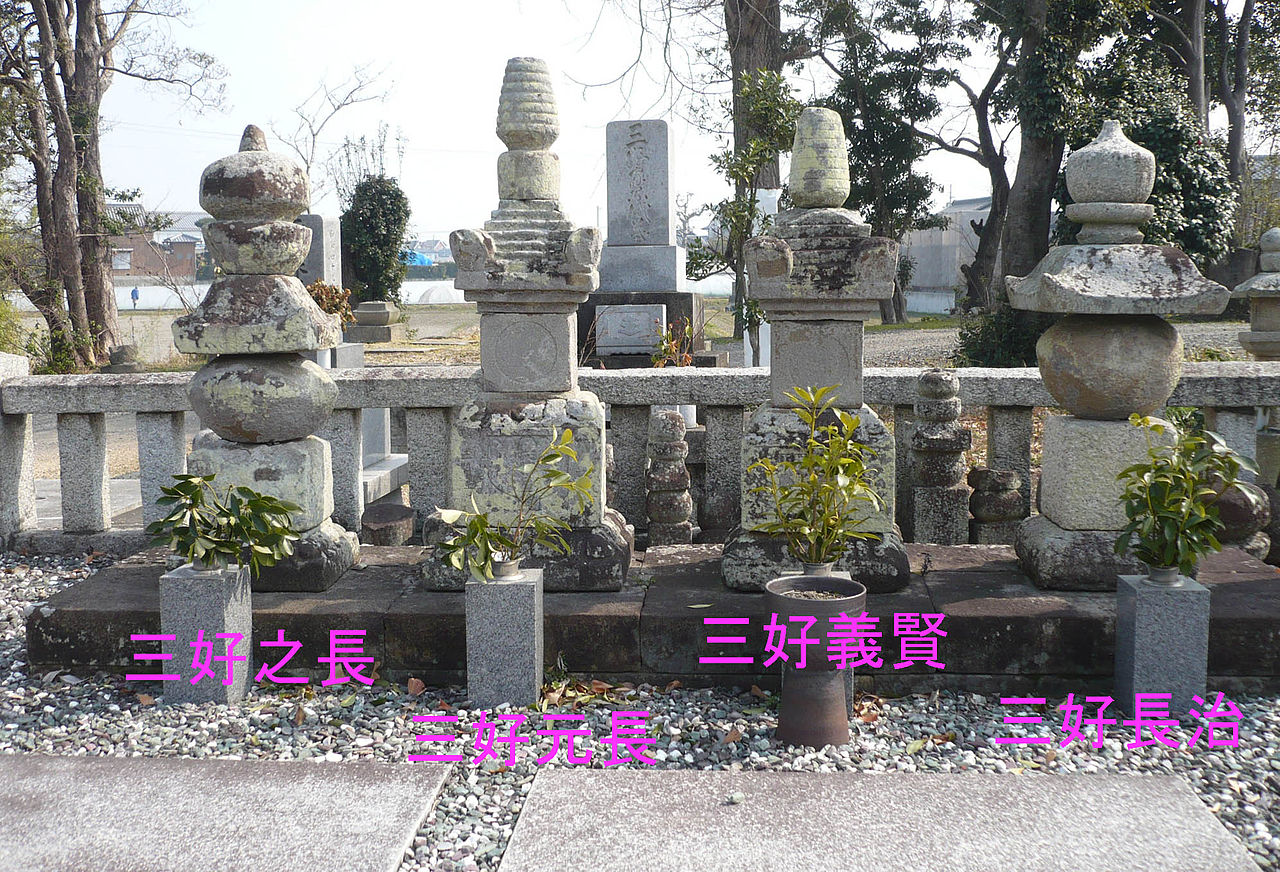
In Kenshō-ji's grounds stand graves said to bethose of Yukinaga, Motonaga, Jikkyū and Nagaharu.

Shozuijo15.jpg
Photo by ブレイズマン (CC BY 3.0)

Kenshō-ji is the Miyoshi clan's family temple, and part of the Shōzui Castle site is now its precinct. The grounds hold graves of successive Miyoshi lords, said to be those of Yukinaga, Motonaga, Jikkyū and Nagaharu. The Shōzui Gichō monument (勝瑞義冢碑), a town-designated cultural property nearby, records the Awa Miyoshi rise and fall in classical Chinese.

  • The Miyoshi clan's family temple (town board of education)
  • Said to be the graves of Yukinaga, Motonaga, Jikkyū and Nagaharu (town board of education)
  • The Shōzui Gichō monument is a town-designated cultural property (town board of education)

Living here

On the Yoshino River delta, 5.17 m above sea level.

  • about 40,000 people
  • Rural district town

The town website says Aizumi lies on a delta enclosed by the Old Yoshino and Yoshino rivers, only 5.17 m above sea level, with no mountains at all. The board of education's guide records eight pilgrim's route markers in town. It is a leading producer of spring Western carrots. Shōzui Station is 15 minutes from Tokushima on the Kōtoku Line.

People living here
35,246people
19952020

+1.8% since 2015

28,408 → 35,246

Area
16.27km²

16.27km² of it habitable

2024

Households
13,973households

2.5 people per household

2020

Rent (average for rentals)
49,281yen

National average 60,630 yen

2023

Healthcare
2 hospitals / 28 clinics

8.5 per 10,000 people

2023

Almost entirely flat.Almost all of it is habitable land (100.0%)
Area and habitable land at the same scalee-Stat B1101 / B1103
Children waiting for childcare
—5 nurseries and similar
Home purchase subsidy
—
Average annual temperature
—

These 3 items are waiting on a nationwide data source. We do not fill them with estimates.

Shape

Surrounded by 6 municipalities, and almost entirely flat.

Aizumi Town in Japan34.127°N 134.495°E
TokyoAizumi Town
Territory of Aizumi Town
Boundaries: National Land Numerical Information (N03)

North to south

4.6km

徳島市, 板野町, 鳴門市, 北島町, 上板町, 石井町

Travel times per leg are not published by the municipality, so they are not shown.

Aizumi Town isthis kind of town.

  1. 01The Shōzui-yakata site in Aizumi is a national historic site presumed to be a residence of the Miyoshi clan. From an organic clay layer at the bottom of the moat, which held water, wooden items such as sotoba (卒塔婆, grave tablets), spell tablets, lacquer bowls and spinning tops have been excavated.
  2. 02The board of education's guide records that the Okumura Residence's main gate was built from the timber of the dismantled Tokushima Castle. Ai no Yakata opened in 1989 after the Okumura family donated its 13-building former estate, and the town manages the nationally designated Awa indigo tools.
  3. 03A flat town on the north bank of the lower Yoshino River, with graves said to be the Miyoshi lords' lining Kenshō-ji. It grows Western carrots, and Shōzui Station is 15 minutes from Tokushima on the Kōtoku Line.

If something caught your eye, ask the town itself.