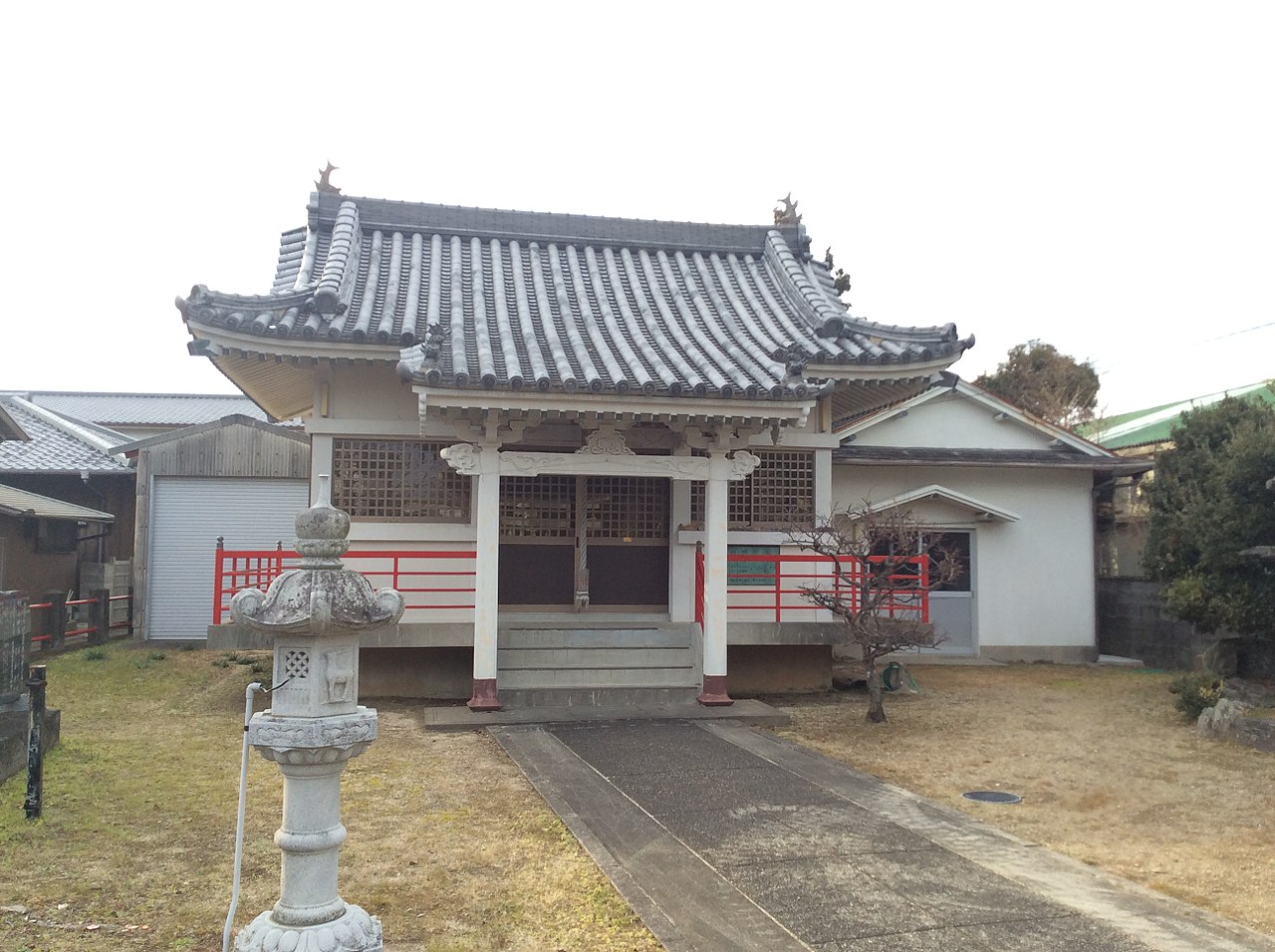
Kincho Jinja 02.JPG
Article

36203 / こまつしまし

Tokushima Prefecture

Komatsushima City

They say a grateful tanuki became a god.

Kincho Shrine, Awa Tanuki War

Photo by Reggaeman (CC BY-SA 3.0)

01 / Tatebi Fukitsutsu Fireworks

At Tatsue, bamboo-tube fireworks arewritten "standing fire" (tatebi).

A bamboo tube packed with gunpowder is set on a rack (hotate) about 7 m tall, and sparks fly from its tip. Tatsue Hachiman Shrine is said to be the birthplace of Awa fireworks, and since the Edo period they have been offered as a ritual every September.

  • Hotate rack: about 7 m
  • Municipal intangible folk cultural property (designated July 2013)
  • Prefectural designation "Awa no Fukitsutsu Enka" (April 2022)
02 / Toyokuni Shrine

Hachisuka Iemasa, in retirement,built a shrine to Hideyoshi nearby.

Toyokuni shrine, Komatsushima, Tokushima.jpg
Photo by 岩佐 栄三 (CC0)

In 1614, Iemasa built Toyokuni Shrine and its attached temple near his villa in Nakata. Its object of worship is a wooden statue of Toyotomi Hideyoshi (not open to view). The shrine hall was torn down in the Joo era and rebuilt at its present site in 1794.

  • Built in Keicho 19 (1614)
  • Wooden Hideyoshi statue: municipal designation (1975)
  • Established at the present site in Kansei 6 (1794)

03 / Statue of Minamoto no Yoshitsune, Hatayama

On Hatayama, said to be where a white bannerflew, a mounted Yoshitsune towers.

Yoshitsune Minamoto Hatayama.jpeg
Photo by Sorrysorry at Japanese Wikipedia (Public domain)

Yoshitsune is said to have crossed in a storm and reached Awa in just six hours, a trip that normally took two days. Seigo, where he mustered his ships, and Hatayama, where a white banner was raised, still survive as place names. The statue is 6.7 m tall and lit up at night.

  • Statue height: 6.7 m
  • Said to have landed in February 1185 (Juei 4)
  • Yoshitsune Dream Road: about 10 km in the city

Living here

A port that lands pike conger and chirimen,and Kushibuchi, where bayberries grow.

  • about 40,000 people

Local specialties include seafood such as pike conger (hamo), chirimen (dried baby sardines) and wakame, and crops such as mushrooms and okra (city introduction). The bayberry, the city tree, is grown mainly by farmers in Kushibuchi and harvested from about June to early July.

People living here
36,149people
19952020

−6.7% since 2015

43,349 → 36,149

Area
45.37km²

38.8km² of it habitable

2024

Households
15,141households

2.4 people per household

2020

Rent (average for rentals)
41,147yen

National average 60,630 yen

2023

Healthcare
7 hospitals / 28 clinics

9.7 per 10,000 people

2023

Area45.37km²Habitable land38.8km² / 86%
Area and habitable land at the same scalee-Stat B1101 / B1103
Children waiting for childcare
—11 nurseries and similar
Home purchase subsidy
—
Average annual temperature
—

These 3 items are waiting on a nationwide data source. We do not fill them with estimates.

Shape

Borders 3 municipalities.

Komatsushima City in Japan34.005°N 134.591°E
TokyoKomatsushima City
Territory of Komatsushima City
Boundaries: National Land Numerical Information (N03)

North to south

10.1km

徳島市, 阿南市, 勝浦町

Travel times per leg are not published by the municipality, so they are not shown.

Komatsushima City isthis kind of town.

  1. 01Kincho Shrine honors Kincho the tanuki, hero of the folktale "Awa Tanuki War." Saved by Moemon, a dyer in Hikaino, Kincho is said to have repaid the debt by becoming the guardian of his shop, then won a battle against Rokuemon but was badly wounded, and was enshrined as "Sho Ichii Kincho Daimyojin."
  2. 02At Tatsue Hachiman Shrine, fukitsutsu fireworks that scatter sparks from bamboo tubes have been offered every September since the Edo period. Toyokuni Shrine in Nakago was originally a shrine to Hideyoshi built by Hachisuka Iemasa, and a mounted statue of Yoshitsune stands on Hatayama in Shibafu.
  3. 03Temples 18 (Onzan-ji) and 19 (Tatsue-ji) of the Shikoku pilgrimage are in the city, and part of the pilgrim paths linking them, the Onzan-ji and Tatsue-ji roads, is a national historic site. It is a port town where pike conger and chirimen are landed, and bayberries grow in Kushibuchi.

See the town as it is now.

Source: Wikidata (P2002, P2003, P2013, P2397)

If something caught your eye, ask the town itself.