Shippo-yaki Place of Origin Stele ac (1).jpg
Article

23237 / あまし

Aichi Prefecture

Ama City

Roman letters line the head of a stele.

Shippoyaki origin stele, Toshima

Photo by Asturio Cantabrio (CC BY-SA 4.0)

01 / Pickle Festival

Vegetables and salt are packed into jars,for offering to Atsuta Shrine.

Kayazu-jinja Pickles Festival ac (1).jpg
Photo by Asturio Cantabrio (CC BY-SA 4.0)

Every 21 August, the Konomono Festival at Kayazu Shrine is a rite of pickling vegetables to be offered to Atsuta Shrine. In the pickling rite at the Konomono-den hall, vegetables and salt are put into jars. The tourist association says that long ago, in this once-coastal land, vegetables and seaweed salt offered before the deity made a good salt-pickle.

  • Every 21 August
  • Ama City Intangible Folk Cultural Property (1985)
  • Pickles are offered to Atsuta Shrine
02 / Renge-ji Temple

A garden without stones has five artificial hills.It is thought to date from the Muromachi period or earlier.

Rengeji2.JPG
Photo by Bariston (CC BY-SA 4.0)

The garden of Renge-ji Temple is a pond garden built without stonework, and a Prefectural Place of Scenic Beauty. Five artificial hills stand to the north, northeast and southwest of the pond, and 24 stones donated from Kiyosu in the Momoyama period were added. Every year on the third Sunday of April, the Procession of the Twenty-five Bodhisattvas re-enacts their appearance.

  • Prefectural Place of Scenic Beauty (1965)
  • Five hills, 24 donated stones
  • Procession: Ama City Intangible Folk Cultural Property (2016)

03 / Jimokuji South Gate

A gate whose upper floor is ringedby a railing with upturned ends.

Jimokuji (Ama, Aichi) VLux5 hdsr ni05.jpg
Photo by Hyppolyte de Saint-Rambert (CC BY 4.0)

The South Gate of Jimokuji Temple stands at the front of the grounds: a two-storey gate with three bays and one entrance, hip-and-gable roofed and shingled. Bracket sets above the lower pillars carry the upper veranda, which is ringed on all four sides by a railing. When it was dismantled and repaired in 1902 (Meiji 35), an ink inscription reading "built in Kenkyu 7" was found. It is an Important Cultural Property.

  • Three bays, one entrance
  • Important Cultural Property (designated 1900)
  • Ink inscription found in the 1902 repair

Living here

Nagoya is 10 minutes away by Meitetsu at the fastest.

  • about 90,000 people
  • 30 min to a city centre

Ama has three Meitetsu Tsushima Line stations: Jimokuji, Shippo and Kida. In Meitetsu's timetable (revised 14 March 2026), the fastest run from Meitetsu Nagoya to Jimokuji is 10 minutes (departing 0:01), and the fastest in the daytime is 11 to 12 minutes. The city's overview says about 15 minutes from Meitetsu Nagoya.

People living here
86,126people
2010

−0.9% since 2015

86,714 → 86,126

Area
27.49km²

27.49km² of it habitable

2024

Households
34,041households

2.5 people per household

2020

Rent (average for rentals)
51,840yen

National average 60,630 yen

2023

Healthcare
3 hospitals / 54 clinics

6.6 per 10,000 people

2023

Almost entirely flat.Almost all of it is habitable land (100.0%)
Area and habitable land at the same scalee-Stat B1101 / B1103
Children waiting for childcare
—12 nurseries and similar
Home purchase subsidy
—
Average annual temperature
—

These 3 items are waiting on a nationwide data source. We do not fill them with estimates.

ACCESS

Where you can go from here.

Ama City in Japan35.200°N 136.783°E
TokyoAma City
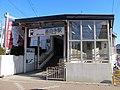
Jimokuji Station
甚目寺駅2022
  • to NagoyaMeitetsu express10min

Travel times follow 名古屋鉄道『路線別時刻表 津島線・尾西線』のPDF(2026年3月14日改正)の平日・土休日の下り・上りの4本。市公式『あま市の概要』(更新 2018-03-27)は『名鉄名古屋から約15分』 (checked 2026-10-20). They vary by time of day.

Shape

Borders 7 municipalities.

Territory of Ama City
Boundaries: National Land Numerical Information (N03)

North to south

7.8km

大治町, 津島市, 稲沢市, 清須市, 名古屋市, 蟹江町, 愛西市

Ama City isthis kind of town.

  1. 01The Shippoyaki origin stele is a stone marker set up in 1895 (Meiji 28) as a sign for entering Toshima from the old Saya Kaido road; it carries the Roman letters "Shippoyaki Toshima" at the top, and was designated a city historic site in 2000
  2. 02The Konomono Festival of Kayazu Shrine, held every 21 August, is a city-designated Intangible Folk Cultural Property in which pickles are made to be offered to Atsuta Shrine. The garden of Renge-ji Temple is a Prefectural Place of Scenic Beauty, and its Procession of the Twenty-five Bodhisattvas, held every third Sunday of April, is a city-designated Intangible Folk Cultural Property
  3. 03The South Gate of Jimokuji Temple is a two-storey gate that is an Important Cultural Property. The town also has three prefecturally designated Natural Monuments (the Shimokayazu wisteria, the Toshima Rakanmaki, and the Renge-ji kaya), and the iron Jizo Bodhisattva standing statue of Hozo-ji Temple, an Important Cultural Property

See the town as it is now.

Source: Wikidata (P2002, P2003, P2013, P2397)

If something caught your eye, ask the town itself.