Gyoda Maruhakayama Tumulus In Spring from afar.jpg
Article

11206 / ぎようだし

Saitama Prefecture

Gyoda City

"Saitama" was born among these mounds.

Sakitama burial mounds

Photo by 京浜にけ (CC BY-SA 3.0)

01 / Burial mounds

On an excavated sword,115 characters in gold.

Inariyama Kofun (Gyoda), zenkei.JPG
Photo by Saigen Jiro (CC0)

Sakitama (埼玉), said to be where Saitama Prefecture takes its name, has nine large burial mounds built from the late 5th century. In 1978 an inscription of 115 characters inlaid in gold was found on an iron sword from Inariyama Kofun (稲荷山古墳), now a National Treasure. Maruhakayama Kofun (丸墓山古墳), 105 m across, is one of Japan's largest round mounds; Ishida Mitsunari made his camp on it while flooding Oshi Castle. In 2020 the group became the prefecture's first Special Historic Site.

  • 9 large mounds
  • 115-character inscription
  • Saitama's first Special Historic Site
02 / Tabi

Storehouses for tabi socksstill stand, nearly 80 of them.

Gyoda Konumagura 2020-11 ac (1).jpg
Photo by Asturio Cantabrio (CC BY-SA 4.0)

Gyoda tabi (行田足袋) are said to have begun about 300 years ago as piecework by samurai wives. At their peak, around 1938, the city made about 80% of the country's tabi. Tabigura (足袋蔵), storehouses that held the socks until shipping, were built along the back streets of the Oshi Castle town, in clay, stone, brick and mortar. In 2017 the story became Saitama's first Japan Heritage.

  • c. 1938: about 80% of Japan's tabi
  • Nearly 80 tabigura
  • 2017: Japan Heritage

03 / Ancient lotus

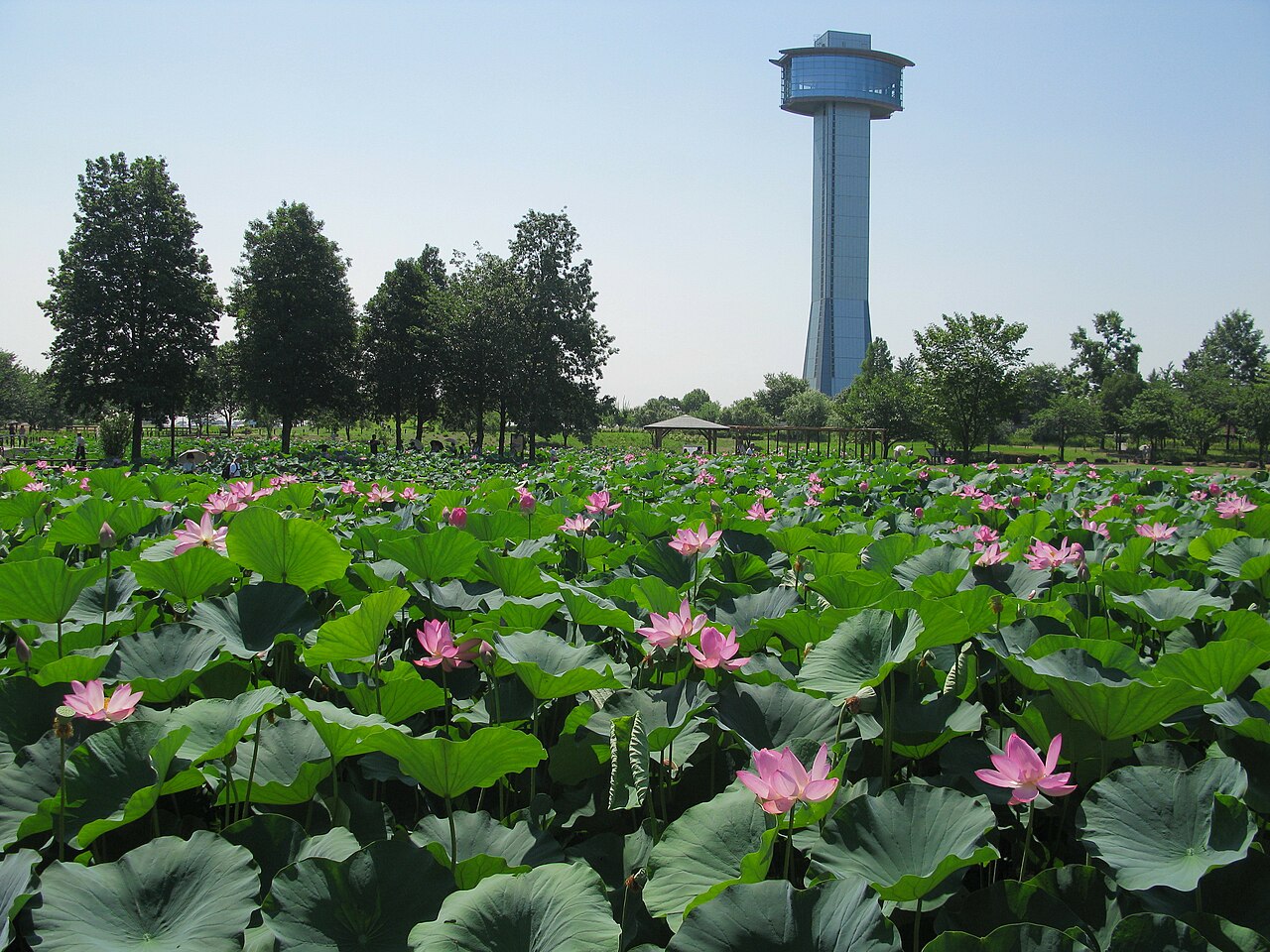
In a pond left by construction,an ancient lotus bloomed.

Gyoda Kodaihasu-no-sato Ancient Lotus Pond 1.jpg
Photo by 京浜にけ (CC BY-SA 3.0)

In 1971 the city began preparing land for an incinerator, and water filled the excavated ground to form a pond. In July 1973, lotus seeds that had lain in the earth sprouted and flowered. Known as Gyoda lotus (行田蓮), it is thought to be 1,400 to 3,000 years old and is a city natural monument. At Kodaihasu no Sato (古代蓮の里) it blooms from mid-June to early August.

  • July 1973: first bloom
  • 1,400 to 3,000 years old
  • City natural monument

Living here

68 minutes to Tokyo Station, no changes.

  • about 80,000 people
  • 90 min to a city centre

From Gyōda Station on the JR Takasaki Line, trains run through on the Ueno-Tokyo Line to Tokyo Station in about 1 hour 8 minutes. The station is in the southwest of the city; city loop buses reach the centre, with Oshi Castle and City Hall, in about 15 to 30 minutes. Gyōdashi Station on the Chichibu Railway, in the centre, is about 8 minutes from Kumagaya Station.

People living here
78,617people
2010

−4.3% since 2015

85,786 → 78,617

Area
67.49km²

67.34km² of it habitable

2024

Households
31,876households

2.5 people per household

2020

Rent (average for rentals)
47,913yen

National average 60,630 yen

2023

Healthcare
2 hospitals / 39 clinics

5.2 per 10,000 people

2023

Almost entirely flat.Almost all of it is habitable land (99.8%)
Area and habitable land at the same scalee-Stat B1101 / B1103

Population from 2010 onward (municipal boundary changed).2006-01-01 に編入合併(南河原村)。2010年調査から市域が変わっている。

Children waiting for childcare
—12 nurseries and similar
Home purchase subsidy
—
Average annual temperature
—

These 3 items are waiting on a nationwide data source. We do not fill them with estimates.

ACCESS

Where you can go from here.

Gyoda City in Japan36.139°N 139.456°E
OsakaGyoda City
Gyōda Station
行田駅2012
  • to TokyoJR Ueno-Tokyo Line and Takasaki Line68min

Travel times follow 市公式「交通案内」(2023-08-30 更新・広報広聴課)の「東京駅から JR高崎線直通上野東京ラインの高崎行きで行田駅まで約1時間8分」。JR東日本の行田駅の時刻表(2026年10月版・平日下り)の列車ごとの時刻で、東京13:59発→行田15:07着・東京14:39発→行田15:47着(どちらも68分・乗り換え無し)を確かめた (checked 2026-09-24). They vary by time of day.

Shape

Borders 6 municipalities across 1 prefectures.

Territory of Gyoda City
Boundaries: National Land Numerical Information (N03)

North to south

12.0km

Saitama Prefecture
熊谷市, 鴻巣市, 羽生市, 加須市
Gunma Prefecture
千代田町, 明和町

Gyoda City isthis kind of town.

  1. 01Sakitama, said to be the origin of the prefecture's name, has nine large burial mounds, including Inariyama Kofun, where a National Treasure sword was found
  2. 02Nearly 80 storehouses for tabi socks remain in the back streets of the Oshi Castle town, which at its peak made about 80% of Japan's tabi
  3. 03A lotus 1,400 to 3,000 years old, woken in a pond left by construction work, blooms each summer at Kodaihasu no Sato

See the town as it is now.

Source: Wikidata (P2002, P2003, P2013, P2397)

If something caught your eye, ask the town itself.