Hozoji-numa.JPG
Article

11216 / はにゆうし

Saitama Prefecture

Hanyu City

A lost carnivorous plant returned to its pond.

Mujinamo, Hōzōji Pond

Photo by Abasaa (Public domain)

01 / Mujinamo

A carnivorous plant gone from its pondis back, a million plants strong.

Hozoji-numa Aldrovanda vesiculosa Habitat.JPG
Photo by Abasaa (Public domain)

Hōzōji Pond (宝蔵寺沼), the only place in Japan where the waterwheel plant, mujinamo (ムジナモ), grows wild, was designated a Natural Monument in 1966. By the late 1960s no wild plants could be found, but a local preservation society grew plants at home and released them, and the pond was restored until the count passed one million in 2022. In 2025 the prefecture's Red List moved it out of "extinct in the wild".

  • Natural Monument, 1966
  • Over one million plants, 2022
  • No longer extinct in the wild, 2025

02 / Indigo dyeing

Indigo leaves are fermented,and the yarn is dyed by hand.

Bushu Nakajimakonya 02.JPG
Photo by Abasaa (Public domain)

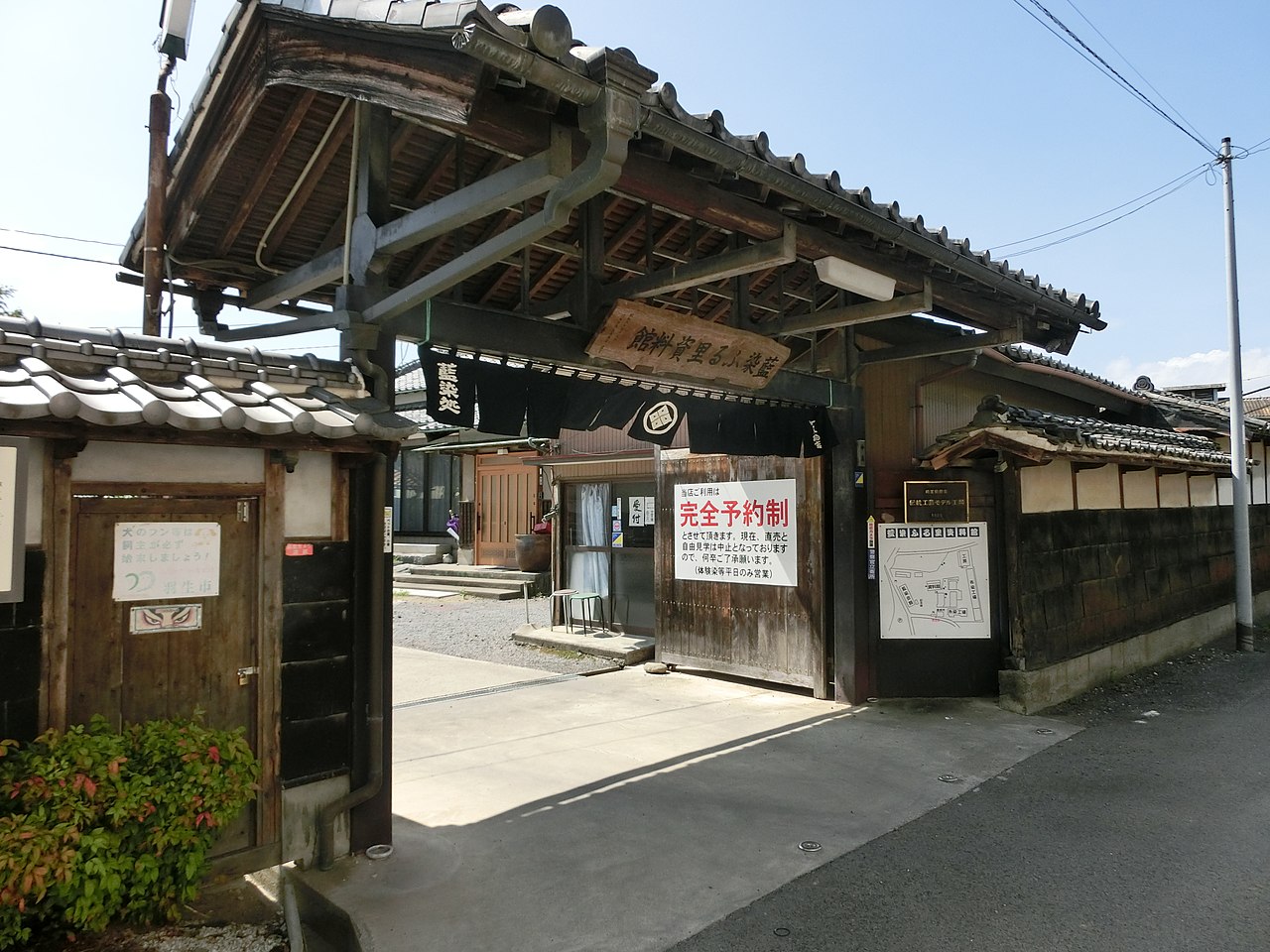
Indigo is said to have been grown in northern Saitama since the Tenmei era of the late Edo period. Bushū Shōaizome (武州正藍染) is hand-dyed with dye from naturally fermented indigo leaves, and 70% of it is dyed as yarn. From aojima (青縞), cotton cloth woven from indigo-dyed yarn, Hanyu grew into a town of clothing makers. "Bushū Shōaizome" was registered as a regional collective trademark in 2008.

  • Since the Tenmei era
  • 70% dyed as yarn
  • Regional collective trademark, 2008

03 / Inaka Kyōshi

A teacher who died at 20 left a diary.Katai made it a novel.

Kempuku-ji (Hanyu).JPG
Photo by Abasaa (Public domain)

In 1901, 17-year-old Kobayashi Shūzō became an assistant teacher at Miroku Higher Elementary School; he died of illness at 20. Tayama Katai, brother-in-law of Ōta Gyokumei, head priest of Kenpuku-ji (建福寺) where Shūzō lodged, drew on his diary for the 1909 novel Inaka Kyōshi (田舎教師, "The Country Teacher"). The temple holds Shūzō's grave and a haiku stone from Kawabata Yasunari's party's 1938 visit.

  • To Miroku Higher Elementary School, 1901
  • Inaka Kyōshi, 1909
  • Shūzō's grave at Kenpuku-ji

Living here

The Chichibu Railway starts at Hanyū Station.

  • about 50,000 people

The city's stations are Hanyū and Minami-Hanyū on the Tobu Isesaki Line, and Hanyū, Nishi-Hanyū and Shingō on the Chichibu Railway. The Chichibu Railway begins at Hanyū Station and runs through Kumagaya, Nagatoro and Chichibu to Mitsumineguchi. The city also has Hanyū Interchange on the Tōhoku Expressway, and lies about 60 km from central Tokyo.

People living here
52,862people
19952020

−3.7% since 2015

56,035 → 52,862

Area
58.64km²

58.51km² of it habitable

2024

Households
21,159households

2.5 people per household

2020

Rent (average for rentals)
46,175yen

National average 60,630 yen

2023

Healthcare
3 hospitals / 34 clinics

7.0 per 10,000 people

2023

Almost entirely flat.Almost all of it is habitable land (99.8%)
Area and habitable land at the same scalee-Stat B1101 / B1103
Children waiting for childcare
—8 nurseries and similar
Home purchase subsidy
—
Average annual temperature
—

These 3 items are waiting on a nationwide data source. We do not fill them with estimates.

Shape

Surrounded by 4 municipalities, and almost entirely flat.

Hanyu City in Japan36.172°N 139.548°E
OsakaHanyu City
Territory of Hanyu City
Boundaries: National Land Numerical Information (N03)

North to south

8.2km

Saitama Prefecture
加須市, 行田市
Gunma Prefecture
明和町, 板倉町

Travel times per leg are not published by the municipality, so they are not shown.

Hanyu City isthis kind of town.

  1. 01At Hōzōji Pond, the only wild habitat of mujinamo in Japan, the vanished plant revived and was recognized as returned to the wild in 2025
  2. 02Indigo has been grown here since the late Edo period, and Bushū Shōaizome still dyes yarn with naturally fermented indigo
  3. 03The setting of Tayama Katai's novel Inaka Kyōshi; Kobayashi Shūzō, the teacher behind it, lies at Kenpuku-ji

If something caught your eye, ask the town itself.