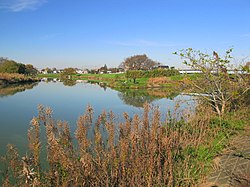
Yoshikawa Noda Edo River 1.JPG
Article

11243 / よしかわし

Saitama Prefecture

Yoshikawa City

Don't leave without eating the catfish.

Photo by 京浜にけ (CC BY-SA 3.0)

01 / Catfish

Come to Yoshikawa,and don't leave without catfish.

Set between the Naka and Edo rivers, Yoshikawa took to river-fish cooking, and in the early Edo period restaurants are said to have lined its river landings. People said "Come to Yoshikawa and don't leave without eating catfish and eel", and namazu no tataki (なまずのたたき), catfish flesh chopped with miso and deep-fried, became a home dish. At the south exit of Yoshikawa Station sits a golden catfish made by Murose Kazumi, a Living National Treasure of maki-e lacquer.

  • River-fish cooking since the early Edo period
  • Local dish: namazu no tataki
  • Golden catfish, 1995

02 / River trade

From landings on the Naka River,rice and rope went to Edo.

Yoshikawa bridge Hiranuma Yoshikawa city Saitama prefecture Japan 20211105 143737.jpg
Photo by LERK (CC BY-SA 4.0)

In the Edo period Yoshikawa was shogunate land, and new-field reclamation made it one of the leading rice-growing areas. Boats on the Naka River carried the rice to Edo, and the Yoshikawa and Hiranuma river landings (吉川河岸・平沼河岸) prospered. Rope and other straw goods were shipped to Edo from the landings too, and until recent years that craft lived on in making the straw bales that ring the sumo ring at the Ryōgoku Kokugikan.

  • Yoshikawa and Hiranuma landings
  • Early-ripening rice
  • Straw bales for the Kokugikan ring

03 / Temple

At a temple founded by Shinran's disciple,a hexagonal stone tower from the Kamakura era.

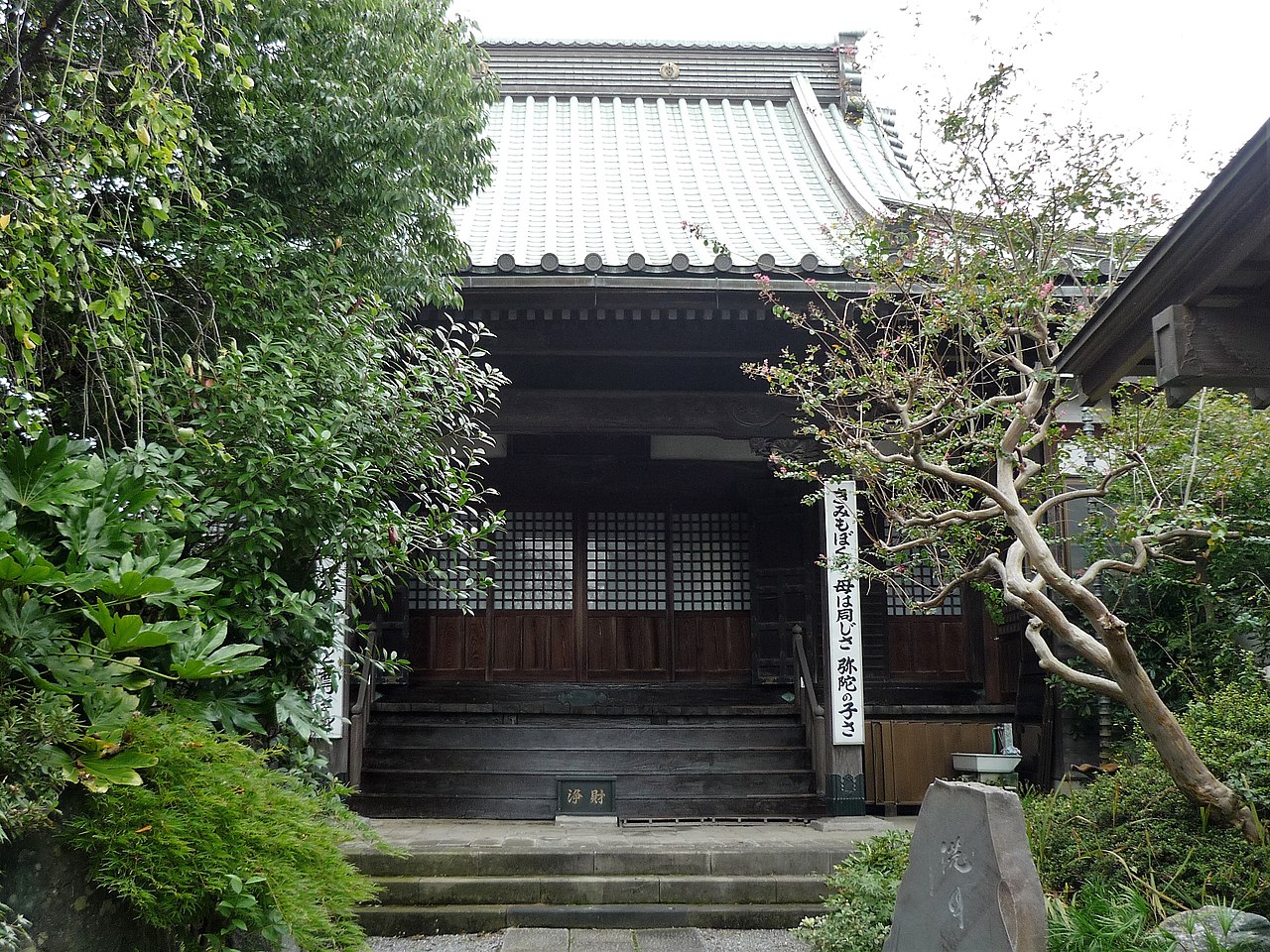
Shojoji (Yoshikawa) 02.jpg
Photo by Suikotei (CC BY-SA 4.0)

According to the temple, Shōjō-ji (清浄寺) was founded in 1261 by Sainen (西念), one of the "Twenty-four Disciples" (二十四輩) of Shinran, on the riverside at Kiuri (木売) where boats came and went. In its grounds, the Sainen Hōshi Tower (西念法師塔), a Kamakura-period stone tower with a hexagonal body under a hexagonal roof, is the only one of its kind in the prefecture. Together with a bluestone slab carved "Namu Butsu" (南無仏), it is a prefectural Historic Site.

  • Founded 1261, by tradition
  • The only Kamakura hexagonal stone tower in the prefecture
  • Two prefectural Historic Sites

Living here

About 50 minutes from Tokyo Station, no change.

  • about 70,000 people
  • 60 min to a city centre

The city has Yoshikawa Station on the JR Musashino Line and Yoshikawa-Minami Station, opened in 2012. It takes about 50 minutes from Tokyo Station to Yoshikawa Station on the Musashino Line, and buses run to City Hall from the station's north exit. The population grew after the Musashino Line and the Yoshikawa housing estate arrived in 1973, and the town became a city in 1996.

People living here
71,979people
20002020

+3.2% since 2015

56,673 → 71,979

Area
31.66km²

31.62km² of it habitable

2024

Households
27,901households

2.6 people per household

2020

Rent (average for rentals)
60,232yen

National average 60,630 yen

2023

Healthcare
2 hospitals / 41 clinics

6.0 per 10,000 people

2023

Almost entirely flat.Almost all of it is habitable land (99.9%)
Area and habitable land at the same scalee-Stat B1101 / B1103
Children waiting for childcare
—12 nurseries and similar
Home purchase subsidy
—
Average annual temperature
—

These 3 items are waiting on a nationwide data source. We do not fill them with estimates.

ACCESS

Where you can go from here.

Yoshikawa City in Japan35.896°N 139.856°E
OsakaYoshikawa City
Yoshikawa Station
吉川駅2021
  • to TokyoJR Musashino Line50min

Travel times follow 市公式「市役所への交通案内」(2026-05-29 更新)の「JR東京駅から、武蔵野線でJR吉川駅まで約50分」。JR東日本の吉川駅の時刻表(2026年10月分・下り)で東京行きの直通があることを確かめた (checked 2026-09-24). They vary by time of day.

Shape

Borders 6 municipalities across 1 prefectures.

Territory of Yoshikawa City
Boundaries: National Land Numerical Information (N03)

North to south

9.0km

Saitama Prefecture
松伏町, 三郷市, 越谷市, 草加市
Chiba Prefecture
流山市, 野田市

Yoshikawa City isthis kind of town.

  1. 01A town of river-fish cooking between the Naka and Edo rivers, where people said not to leave without eating catfish and eel
  2. 02In the Edo period, rice and straw goods went to Edo by boat on the Naka River, and the Yoshikawa and Hiranuma landings prospered
  3. 03Shōjō-ji, said to have been founded by Shinran's disciple Sainen, has a Kamakura-period hexagonal stone tower found nowhere else in the prefecture

If something caught your eye, ask the town itself.