Shorin-ji kikkochiku ac (2).jpg
Article

23234 / きたなごやし

Aichi Prefecture

Kitanagoya City

Lower segments are tortoiseshell-shaped.

Tortoiseshell bamboo, Shorin-ji

Photo by Asturio Cantabrio (CC BY-SA 4.0)

01 / Main hall

A main hall under a hip-and-gable roofof cypress bark.

Kodenji.jpg
Photo by Bariston (CC BY-SA 4.0)

Cultural Heritage Online describes the main hall of Koden-ji Temple as five bays by five bays, single-storied, in the irimoya (hip-and-gable) style, with a cypress-bark roof. The city writes that its date of construction is unknown and is estimated from its style to be between the late Kamakura and early Muromachi periods. Its attached shrine and goma-fuda tablets are also national Important Cultural Properties.

  • National Important Cultural Property, designated 1920
  • Five bays by five bays
  • Attached shrine and goma-fuda tablets also nationally designated

02 / Landowner's residence

On a site of about 370 tsubo, a main housewith a nagaya-mon gate, storehouse and tall wall.

愛知県北名古屋市六ツ師南屋敷 旧加藤家住宅 20240926 1347.jpg
Photo by 円周率3パーセント (CC BY-SA 4.0)

The city writes that the Kato family, known as the "Great Kato" landowners, left a refined residence typical of the Meiji-period landowner class, and that it is well preserved. According to the city, the main house, nagaya-mon gate, storehouse, middle gate and north tall wall date from the early Meiji period, and the annex and tea room from the Taisho to Showa periods. They were registered as national Registered Tangible Cultural Properties in November 1999.

  • Site of about 370 tsubo (city)
  • 6 nationally registered tangible cultural properties
  • Registered November 1999

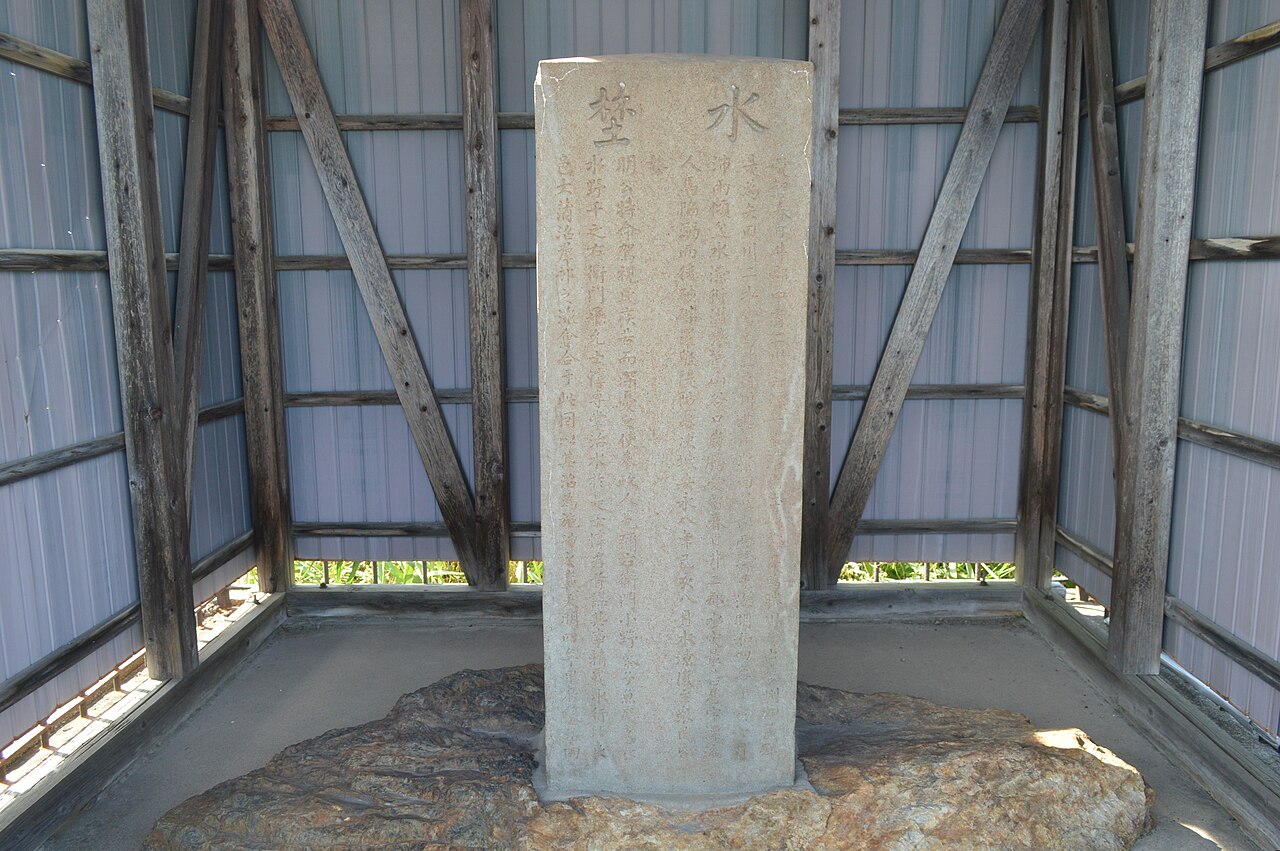
03 / Flood-control monument

A monument honors the magistrate who workedto prevent floods on the Shonai River.

Mizuno Shijun Monument ac (1).jpg
Photo by Asturio Cantabrio (CC BY-SA 4.0)

The city writes that the finance magistrate of Owari Domain, acting as construction magistrate, set about work to prevent floods on the Shonai River, and that the new river was named Shinkawa. The monument was erected to pass his achievement on to later generations. The Shinkawa still flows through the city.

  • City-designated historic site (Kujino)
  • The Shinkawa flows through the city (city)

Living here

10 minutes by express from Meitetsu Nagoya.

  • about 90,000 people
  • 30 min to a city centre

Nishiharu Station on the Meitetsu Inuyama Line is 10 minutes from Meitetsu Nagoya by express (the fastest daily service in the timetable revised on 14 March 2026, on weekdays and on weekends and holidays alike). In the other direction, from Nishiharu Station, it takes 11 minutes on weekdays and 10 minutes on weekends and holidays. The city covers 18.37 km².

People living here
86,385people
2010

+2.7% since 2015

81,571 → 86,385

Area
18.37km²

18.37km² of it habitable

2024

Households
36,117households

2.4 people per household

2020

Rent (average for rentals)
55,904yen

National average 60,630 yen

2023

Healthcare
2 hospitals / 53 clinics

6.4 per 10,000 people

2023

Almost entirely flat.Almost all of it is habitable land (100.0%)
Area and habitable land at the same scalee-Stat B1101 / B1103
Children waiting for childcare
—14 nurseries and similar
Home purchase subsidy
—
Average annual temperature
—

These 3 items are waiting on a nationwide data source. We do not fill them with estimates.

ACCESS

Where you can go from here.

Kitanagoya City in Japan35.246°N 136.866°E
TokyoKitanagoya City
Nishiharu Station
西春駅2018
  • to NagoyaMeitetsu express10min

Travel times follow 名古屋鉄道『路線別時刻表 犬山線・各務原線』のPDF(2026年3月14日改正)。平日・下り(神宮前→岩倉→犬山→名鉄岐阜)20260314_IY_W1.pdf、土・休日・下り 20260314_IY_H1.pdf、平日・上り 20260314_IY_W2.pdf、土・休日・上り 20260314_IY_H2.pdf(https://www.meitetsu.co.jp/train/timetable/__icsFiles/afieldfile/2026/02/25/ の下。一覧は https://www.meitetsu.co.jp/train/timetable/index.html。PDF の見出しは『平日』『休日』と書く) (checked 2026-10-20). They vary by time of day.

Shape

Borders 6 municipalities.

Territory of Kitanagoya City
Boundaries: National Land Numerical Information (N03)

North to south

4.6km

名古屋市, 清須市, 岩倉市, 小牧市, 一宮市, 豊山町

Kitanagoya City isthis kind of town.

  1. 01The tortoiseshell bamboo grove of Shorin-ji Temple is a city-designated natural monument. The city writes that it is a rare bamboo whose lower internodes take a tortoiseshell form, also called butsumen bamboo, long said to be the staff of Kobo Daishi and Kenshin Daishi
  2. 02The main hall of Koden-ji Temple, in the irimoya style with a cypress-bark roof, is a national Important Cultural Property. The former Kato residence has six national Registered Tangible Cultural Properties, including the main house, nagaya-mon gate and storehouse, and the city writes that the site covers about 370 tsubo
  3. 03The monument at Kujino honors the magistrate who worked to prevent floods on the Shonai River, and is a city-designated historic site. The city also has the city-designated Kumanosho yabusame rite and Noda Tokuwaka manzai, the Takatsuka burial mound, a round mound from the first half of the 5th century, and the Showa Daily Life Museum, which conveys life in the Showa era

See the town as it is now.

Source: Wikidata (P2002, P2003, P2013, P2397)

If something caught your eye, ask the town itself.