Okyaku-ya-mon (Ōzu, Kumamoto) VLux5 hdsr 02.jpg
Article

43403 / おおづまち

Kumamoto Prefecture 菊池郡

Ozu Town

A temple gate was donated to the town.

Okyaku-ya-mon, Ozu Tenaga Kaisho

Photo by Hyppolyte de Saint-Rambert (CC BY 4.0)

01 / Notice on Horikawa Canal Shipping

A town history said tribute rice went by boat;the town admits an error, citing old documents.

Nigatake Toshine jinja (Ōzu, Kumamoto) VLux5 hdsr 07.jpg
Photo by Hyppolyte de Saint-Rambert (CC BY 4.0)

The tradition, based on the Ozu Town History (1988), held that tribute rice was carried by boat along the Uwaide (上井手) and Horikawa (堀川) canals. Later, the Saito family papers (斎藤家文書) yielded a report, the 'Oboe' (覚) of 1865, in which the Ozu tenaga (手永, a Hosokawa domain district) told the domain: 'We tried once but could not, and have not since.' In March 2020 the town announced that no such shipping took place.

  • Ozu Town History, 1988
  • Saito papers 'Oboe', 1865
  • Town notice, March 2020

02 / Aso Kitamukidani Primeval Forest

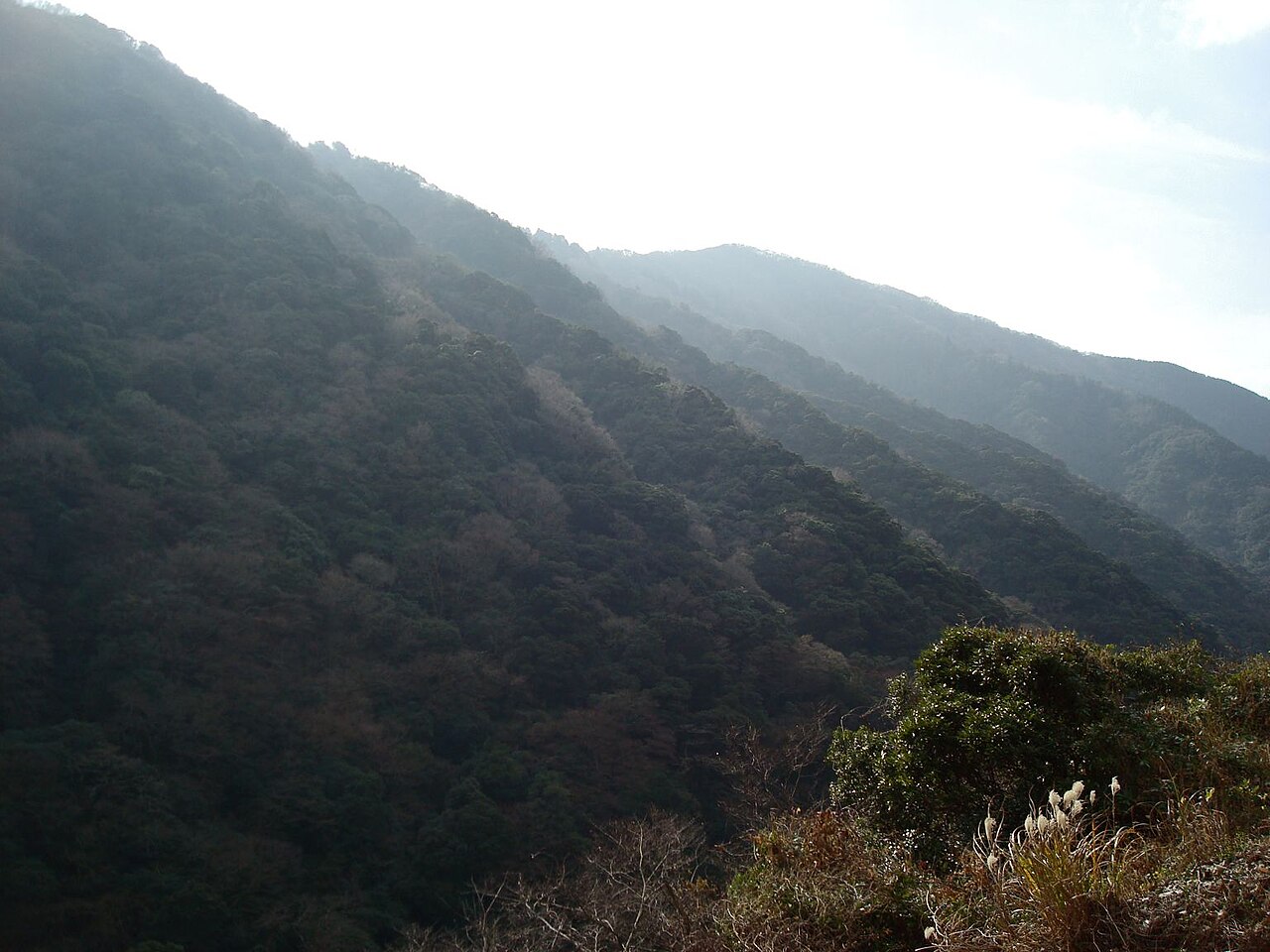
On a north-facing slope cut by the Shirakawa,a forest of shii, kashi and tabu trees spreads.

Aso kitamukidani forest2.jpg
Photo by K.F (CC BY-SA 3.0)

Kitamuki Mountain (790m) is a steep north-facing slope of the outer rim, carved by the Shirakawa River, and covered mainly in evergreen broadleaf trees such as shii, kashi, tabu and mokkoku. The town writes that such nature surviving on low ground, close to everyday life, is 'rare even nationwide.' It became a National Natural Monument in 1969.

  • National Natural Monument, 1969-08-22
  • Kitamuki Mountain, 790m
  • Evergreen broadleaf laurel forest

03 / Toshine Shrine's Stone Catfish Ema

To the shrine moved to the canal's north bank,a stone ema carved with a pair of catfish was offered.

When the Uwaide canal was dug in the early Edo period and the villagers of Nigatake were moved, Toshine Shrine was relocated to the canal's north bank in 1631. In 1705 residents of Nigatake-machi offered a square andesite ema carved in relief with a pair of catfish. The town calls it rare even nationwide, and wonders if it depicts the god of Aso, praying for the canal's safety.

  • Offered 1705
  • Andesite, pair of catfish in relief
  • Town-designated cultural property

Living here

Between Kumamoto and Mt. Aso, the first night's stop for sankin travel.

  • about 40,000 people
  • Rural district town

The town describes itself as lying midway between Kumamoto City and Mt. Aso. In the Edo period, Ozu was developed as the first overnight stop for daimyo traveling from Kumamoto to Edo along the Bungo Kaido road. Local cultural properties include the Eto family house (a national Important Cultural Property), the Kubota Aso Shrine Goshinko festival held once a decade, and the Obayashi cow dance, which uses a whole cow's hide.

People living here
35,187people
19952020

+5.2% since 2015

26,376 → 35,187

Area
99.1km²

50.18km² of it habitable

2024

Households
14,165households

2.5 people per household

2020

Rent (average for rentals)
44,315yen

National average 60,630 yen

2023

Healthcare
1 hospital / 23 clinics

6.8 per 10,000 people

2023

Area99.1km²Habitable land50.18km² / 51%
Area and habitable land at the same scalee-Stat B1101 / B1103
Children waiting for childcare
—9 nurseries and similar
Home purchase subsidy
—
Average annual temperature
—

These 3 items are waiting on a nationwide data source. We do not fill them with estimates.

Shape

Borders 7 municipalities.

Ozu Town in Japan32.879°N 130.868°E
TokyoOsakaOzu Town
Territory of Ozu Town
Boundaries: National Land Numerical Information (N03)

North to south

13.0km

菊池市, 西原村, 南阿蘇村, 菊陽町, 阿蘇市, 合志市, 益城町

Travel times per leg are not published by the municipality, so they are not shown.

Ozu Town isthis kind of town.

  1. 01The Okyaku-ya-mon (御客屋門) is a yakui-mon style gate of the okyakuya (guest lodge, 御客屋), built beside the Ozu tenaga office. Its roof tiles bear rows of the Kuyo crest. It stood on its original site until about 1961, then became a temple gate, and the town moved it here after receiving it as a donation.
  2. 02In 2020 the town announced, from old documents, that tribute rice was never shipped by boat along the Uwaide and Horikawa canals. The sign at the Uwaide Park waterwheel (completed December 2017) says about 70 waterwheels were said to have stood in town in the late Taisho era.
  3. 03The Aso Kitamukidani Primeval Forest, a National Natural Monument, is a laurel forest of shii, kashi and tabu trees. A stone catfish ema offered in 1705 to Toshine Shrine, the guardian shrine of Nigatake, is a town-designated property held at the History and Culture Hall.

If something caught your eye, ask the town itself.