Ningyo-toge Uranium Mine Entrance.jpg
Article

33606 / かがみのちょう

Okayama Prefecture 苫田郡

Kagamino Town

Tour a tunnel dug to find uranium.

Visitor Tunnel, Yotsugi-minami 2

Photo by Homare21 (CC0)

01 / Rice-Planting Ritual at Fuse Shrine (布施神社)

If the lord laughs, the year'sharvest is said to fail.

Held on May 5 each year in the grounds of Fuse Shrine, this rite prays for a good harvest. After a lion dance come the ritual steps of first plowing, leveling the paddy, and planting. At the end a lord and a comic attendant named Fukutaro perform. The crowd laughs, but the lord never does.

  • Prefecture-designated important intangible folk cultural property (designated 1962)
  • Every May 5; the ritual began at 13:30 in 2026
  • Plowing, leveling, planting: the ritual steps
02 / Foot-Treading Laundry at Okutsu Onsen (奥津温泉)

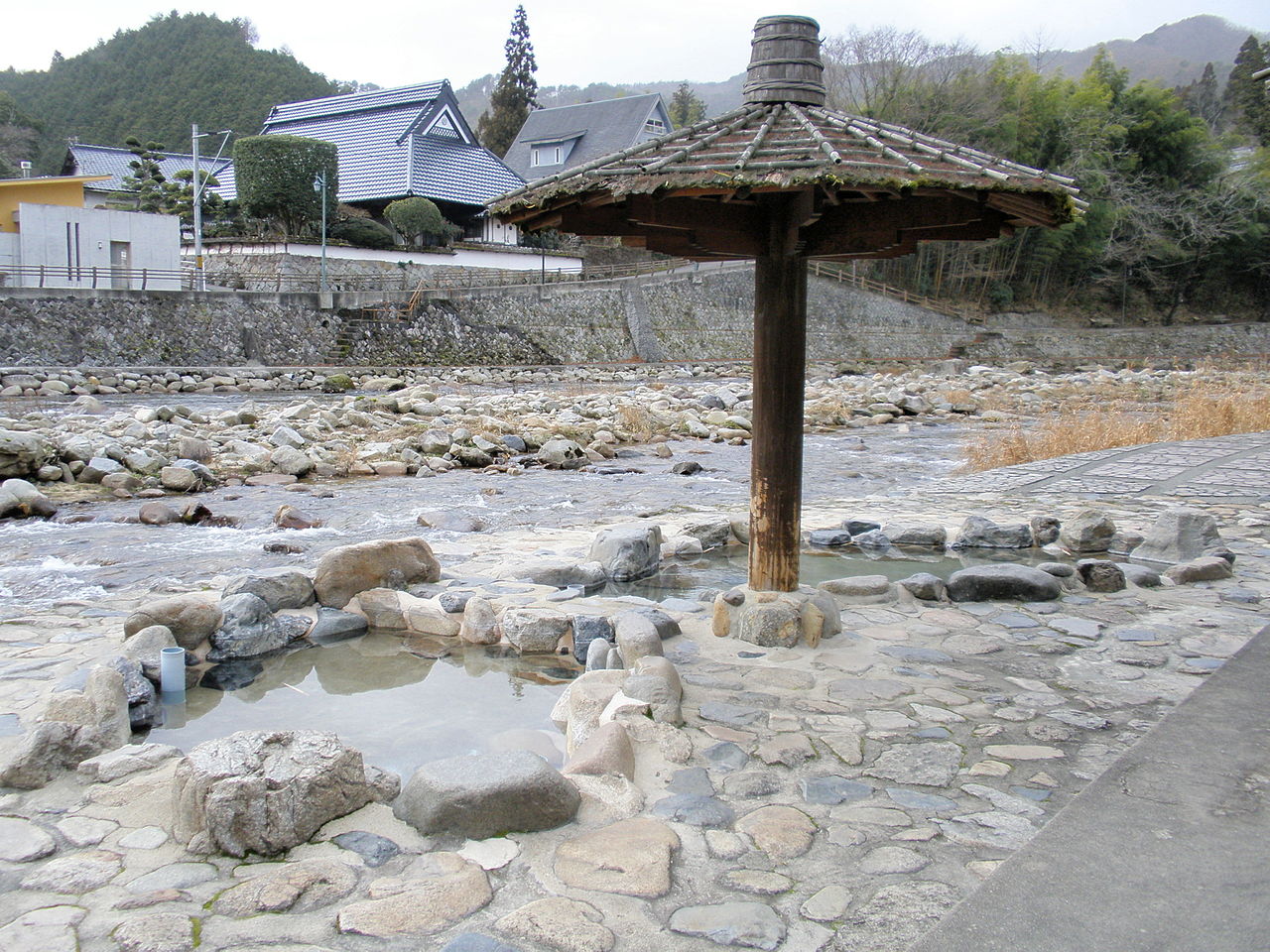
A trace of washing clothes in river hot water,shown in the way feet do the scrubbing.

Okutsu Onsen 02.jpg
Photo by Phronimoi (CC BY-SA 3.0)

A custom of Okutsu Onsen, performed at the foot of Okutsu Bridge. Women in headscarves and red wraps wash clothes deftly with their feet, a sight also called the "laundry dance." Demonstrations are held only on set days, and not from December to February.

  • Demonstrated at the foot of Okutsu Bridge
  • Resumption announced in May 2026 (tourism site)
  • Set dates from May to November and in March (FY2026)

03 / Former Morie House (旧森江家住宅)

Built around the late 17th century,a mountain farmhouse.

A national Important Cultural Property. Thatched with a hipped roof, 7 bays by 3, its walls are mostly closed. The plan is the "sanma-dori hiroma type," with a living room, guest room and bedroom along the earthen floor. It now stands near the Tomi Community Center; the prefecture notes that indoor visits need prior contact.

  • National Important Cultural Property (designated 1969)
  • 7 bays (15.8m) by 3 bays (7.4m)
  • Prefecture: the oldest mid-sized mountain-village farmhouse in Okayama

Living here

A river runs through the mountainson the Tottori border.

  • about 10,000 people
  • Rural district town

Kagamino is a town in northern Okayama, on the Tottori border. The Yoshii River, one of Okayama's three great rivers, runs through its mountains, and the town is made up of four areas: Kagamino, Okutsu, Kamisaibara and Tomi.

People living here
12,062people
20052020

−6.1% since 2015

14,059 → 12,062

Area
419.68km²

52.53km² of it habitable

2024

Households
4,643households

2.6 people per household

2020

Rent (average for rentals)
—
Healthcare
2 hospitals / 11 clinics

10.8 per 10,000 people

2023

Area419.68km²Habitable land52.53km² / 13%
Area and habitable land at the same scalee-Stat B1101 / B1103

Population from 2005 onward (municipal boundary changed).2005-03-01 に合併。2005年調査から市域が変わっている。

Children waiting for childcare
—6 nurseries and similar
Home purchase subsidy
—
Average annual temperature
—

These 3 items are waiting on a nationwide data source. We do not fill them with estimates.

ACCESS

Where you can go from here.

Kagamino Town in Japan35.092°N 133.933°E
TokyoKagamino Town
鏡野町役場
鏡野町役場2009
  • to Shin-OsakaHighway bus190min

Travel times follow 日本交通「倉吉~神戸・大阪線 時刻表」(2026年7月18日 一部改正。https://www.nihonkotsu.co.jp/bus/highway/timetable/kurayoshi-kobe_osaka.html と時刻表PDF 20260718-tottori-kurayoshi-yonago.pdf) (checked 2026-09-30). They vary by time of day.

Shape

Borders 4 municipalities across 1 prefectures.

Territory of Kagamino Town
Boundaries: National Land Numerical Information (N03)

North to south

32.3km

Okayama Prefecture
津山市, 真庭市
Tottori Prefecture
三朝町, 鳥取市

Kagamino Town isthis kind of town.

  1. 01The visitor tunnel at Ningyo Pass (Yotsugi-minami No. 2 adit) is part of a tunnel dug around 1957 to look for uranium. About 42m of it can be toured by prior application, from April to November; it is closed in winter because of snow.
  2. 02The Fuse Shrine rice-planting ritual, held every May 5, is a prefecture-designated important intangible folk cultural property. Okutsu Onsen's foot-treading laundry, a custom recalling washing in river hot water, is demonstrated only on set days.
  3. 03The Former Morie House, a farmhouse presumed built around the late 17th century, is a national Important Cultural Property. In Tomi, the Kajiyadani tatara site marks the Okurayama iron mine once run by the Tsuyama domain (a prefectural historic site).

If something caught your eye, ask the town itself.