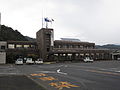
Misasa Onsen Curie Square03bs3900.jpg
Article

31364 / みささちょう

Tottori Prefecture 東伯郡

Misasa Town

A festival thanks radium's discoverer.

Curie Festival

Photo by 663highland (CC BY 2.5)

01 / Misasa no Jinsho (三朝のジンショ)

A rope of twisted wisteria vine is pulled,east against west, on a hot spring street.

On May 3, wisteria vines are twisted into rope (tsuna-garami); on the night of May 4, the male and female ropes are joined and pulled east against west on the road through the middle of the district. An east win is said to mean a good harvest, a west win thriving business. It has been held every May 3-4.

  • Important Intangible Folk Cultural Property (designated 2009)
  • May 3: rope twisting; May 4 night: tug-of-war
  • East wins: harvest; west wins: business

02 / Mitokusan Nageiredo (三徳山投入堂)

Tree-ring dating showed the national treasure hallwas built in the late Heian period.

Nageire-dou 2.jpg
Photo by Kazunori Fujimoto (CC BY-SA 4.0)

The hall stands on a cliff of Mount Mitoku and is said to have been thrown in by En no Gyoja with his magic power. Tree-ring dating by the Nara National Research Institute for Cultural Properties in 2001 showed it was built in the late Heian period (1086-1184). The Nokyodo hall dates to the same time.

  • 2001: tree-ring dating by Nara National Research Institute for Cultural Properties
  • Built in the late Heian period (1086-1184)
  • Nokyodo built at the same time

03 / Kabuyu (株湯)

A spring given in thanks for saving a white wolfis said to have welled up at a camphor's roots.

Misasa onsen kabuyu 202106.jpg
Photo by 三塚 (CC BY-SA 4.0)

In the Heian era, Okubo Samanosuke, on his way to Mount Mitoku, is said to have saved a white wolf and been shown where a spring lay by the bodhisattva Myoken. It welled up at the roots of an old camphor tree, so it came to be called Kabuyu ("stump bath").

  • Birthplace of Misasa Onsen
  • Town-designated historic site (2010)
  • Foot bath and drinking fountain are free

Living here

Radium hot springs and a soybean named for a hamlet.

  • about 6,000 people
  • Rural district town

Besides Misasa Onsen, known for its radium hot springs, local farmers grow Misasa Kannokura, a native soybean long cultivated in the Kannokura hamlet, which JA sells as its "Kami" series. The walking path of the nationally designated scenic spot Oshika Gorge is scheduled to be closed through the end of fiscal 2026.

People living here
6,060people
19952020

−6.6% since 2015

8,356 → 6,060

Area
233.52km²

26.87km² of it habitable

2024

Households
2,230households

2.7 people per household

2020

Rent (average for rentals)
—
Healthcare
1 hospital / 3 clinics

6.6 per 10,000 people

2023

Area233.52km²Habitable land26.87km² / 12%
Area and habitable land at the same scalee-Stat B1101 / B1103
Children waiting for childcare
—3 nurseries and similar
Home purchase subsidy
—
Average annual temperature
—

These 3 items are waiting on a nationwide data source. We do not fill them with estimates.

ACCESS

Where you can go from here.

Misasa Town in Japan35.408°N 133.862°E
TokyoMisasa Town
三朝町役場前
三朝町役場前2011
  • to Shin-OsakaHighway bus215min

Travel times follow 日本交通(事業者公式)の高速バス「倉吉~神戸・大阪線」時刻表(2026年7月18日一部改正)。表の脚注どおりコメントアウトされている臨時・期間限定の便(便27・29・33・931・03)を除いた、いま運行中の便だけを読んだ。三朝町内の停留所は『三朝温泉口』と『穴鴨(あながも)』の2つで、どちらも同じ便が停まる。**倉吉発(大阪行き)は便35だけ**:倉吉バスセンター・中央自動車学校 16:00 → 倉吉駅前 16:15 → 三朝温泉口 16:25 → 穴鴨 16:35 → かみさいばら温泉 16:50 → 新大阪 20:00 → 大阪弁天町・弁天営業所 20:45(毎日運行の便)。**大阪発(倉吉行き)は便30だけ**:大阪弁天町・弁天営業所 8:25 → 新大阪 9:20 → かみさいばら温泉 12:30 → 穴鴨 12:45 → 三朝温泉口 12:55 → 倉吉駅前 13:05(毎日運行の便)。計算:三朝温泉口16:25 → 新大阪20:00=215分、三朝温泉口12:55 ← 新大阪9:20=215分(上りと下りで同じ)。三朝温泉口16:25 → 大阪弁天町20:45=260分(大阪発の便30は8:25発なので270分。上りと下りで10分違う)。 (checked 2026-09-29). They vary by time of day.

Shape

Borders 5 municipalities across 1 prefectures.

Territory of Misasa Town
Boundaries: National Land Numerical Information (N03)

North to south

20.3km

Tottori Prefecture
倉吉市, 鳥取市, 湯梨浜町
Okayama Prefecture
鏡野町, 真庭市

Misasa Town isthis kind of town.

  1. 01Misasa has held the Curie Festival since 1951, thanking Marie Curie, the discoverer of radium, in this hot spring town.
  2. 02Misasa no Jinsho pits east against west with a wisteria-vine rope and is a nationally designated Important Intangible Folk Cultural Property, and tree-ring dating showed Mitokusan's Nageiredo was built in the late Heian period.
  3. 03At Kabuyu, said to be the birthplace of Misasa Onsen, tradition holds that a retainer who saved a white wolf was shown where the spring lay.

See the town as it is now.

Source: Wikidata (P2002, P2003, P2013, P2397)

If something caught your eye, ask the town itself.