Second Torii of Uchitogawa Hachiman Shrine forward.jpg
Article

41208 / おぎし

Saga Prefecture

Ogi City

A mason's name is carved on the pillar.

Togawa Hachiman, Hizen torii

Photo by Pekachu (CC BY-SA 4.0)

01 / Habu Site

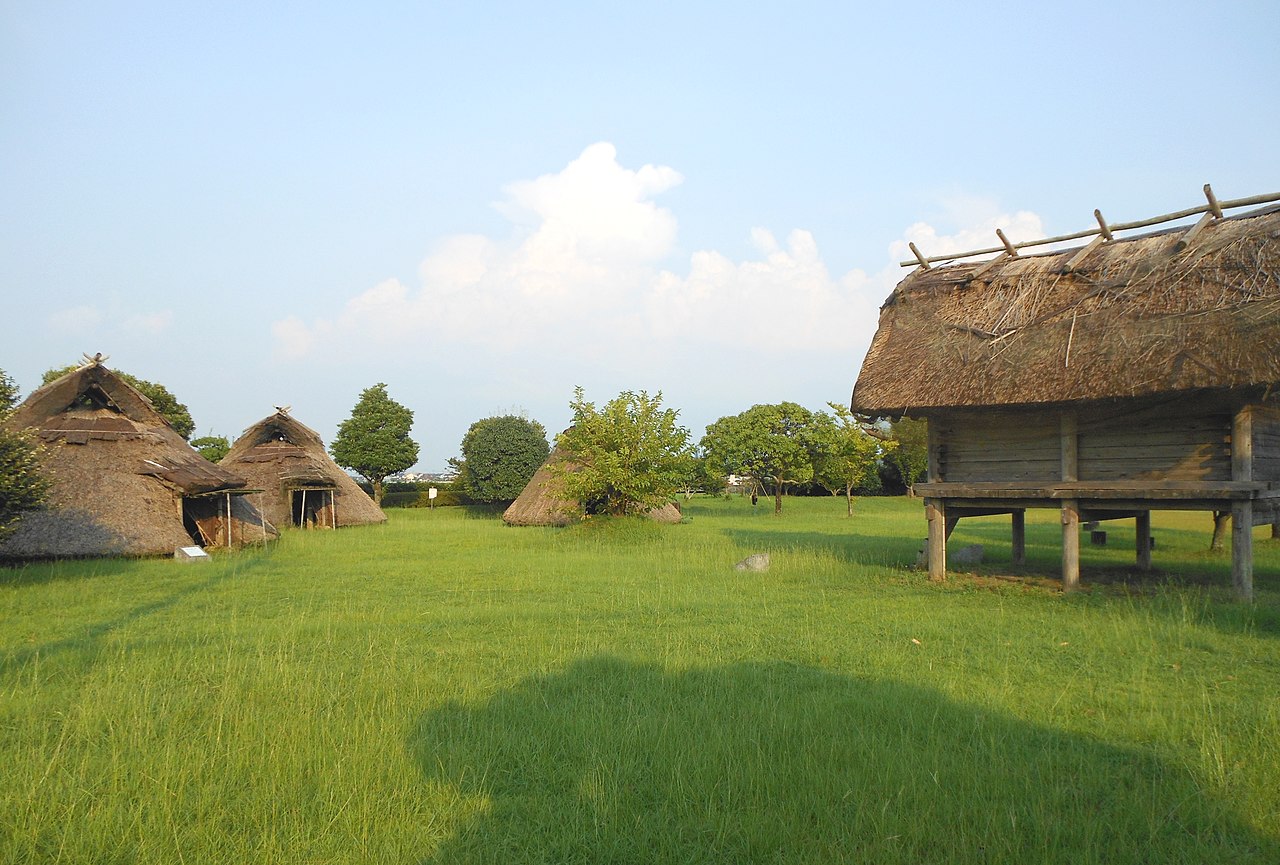
From an old river channel at the Habu site,a treadle spade came out fully assembled.
Habu Ancient Ruin restored houses and a warehouse.jpg
Photo by Pekachu (CC BY-SA 4.0)

The Habu site was a settlement from the early to late Yayoi period, the largest west of the Kase River. A wooden treadle spade of Korean-peninsula origin was excavated from an old river channel still assembled, about 153 cm long. The park on the site has three reconstructed pit dwellings and one raised-floor storehouse.

  • National Historic Site (designated 1973; city)
  • Treadle spade about 153 cm long when assembled (city)
  • Park with 3 reconstructed pit dwellings and 1 storehouse (city)

02 / Gochiku Kannondo

The calligrapher returned home at 82and built a Kannon hall.

Gochiku Kannondo temple.jpg
Photo by Pekachu (CC BY-SA 4.0)

Nakabayashi Gochiku (1827-1913) came home at 82, in 1908 (Meiji 41), and built the Kannon hall. He is said to have always carried a Kannon image about 5 cm tall. The hall is a city historic site; the present building was rebuilt in 1957 (Showa 32), on a smaller scale.

  • Built in 1908 (Meiji 41), at age 82 (city)
  • City Historic Site (designated 1995)
  • Said to have carried a Kannon image about 5 cm tall (Gochiku Memorial Hall map)

03 / Harusame Monument

A monument to the man said to have writtenthe song "Harusame" stands in Ogi Park.

Stele for "Harusame" in Ogi Park.jpg
Photo by そらみみ (CC BY-SA 4.0)

Shibata Hanamori (1809-1890) was born in Nakamachi, Ogi. The hauta (short song) "Harusame" is said to have been written at the Kagetsu restaurant in Maruyama while he studied in Nagasaki. The Harusame Monument in Ogi Park, erected in 1963 (Showa 38), is inscribed with the lyrics. The Harusame Festival begins with a dance before the monument.

  • Monument erected in 1963 (Showa 38) (tourism association)
  • Harusame Festival every April (city)
  • Hanamori born in 1809 (Bunka 6) in Nakamachi, Ogi (city)

Living here

From Mount Tenzan to the Ariake Sea: 95.81 km².

  • about 40,000 people

The city covers 95.81 km², 3.93% of the prefecture. The Tenzan mountains rise in the north, the Saga Plain opens in the center, and the south, a district of creeks, faces the Ariake Sea. It lies about 10 km west of Saga. Four towns, Ogi, Mikazuki, Ushizu and Ashikari, merged in 2005.

People living here
43,952people
20052020

−0.7% since 2015

45,852 → 43,952

Area
95.81km²

71.98km² of it habitable

2024

Households
15,907households

2.8 people per household

2020

Rent (average for rentals)
46,872yen

National average 60,630 yen

2023

Healthcare
3 hospitals / 31 clinics

7.7 per 10,000 people

2023

Area95.81km²Habitable land71.98km² / 75%
Area and habitable land at the same scalee-Stat B1101 / B1103
Children waiting for childcare
—11 nurseries and similar
Home purchase subsidy
—
Average annual temperature
—

These 3 items are waiting on a nationwide data source. We do not fill them with estimates.

Shape

Borders 4 municipalities.

Ogi City in Japan33.274°N 130.217°E
TokyoOsakaOgi City
Territory of Ogi City
Boundaries: National Land Numerical Information (N03)

North to south

16.6km

佐賀市, 多久市, 江北町, 白石町

Travel times per leg are not published by the municipality, so they are not shown.

Ogi City isthis kind of town.

  1. 01The first, second and third torii at Togawa Hachiman Shrine (Kamitogawa, Ushizu) are stone torii called Hizen torii, and are city Important Cultural Properties. The second torii stands at the foot of the steps in the precinct; its pillars carry an inscription dated Shoho 4 (1647), with the names of the stonemason and builder.
  2. 02In the Ogi Gion Yamahiki festival, the lower-town float is put together each year from ivy and other vines; it received a prefectural designation in April 2026. The Ushizu Red Brick Hall was built as a storehouse of a leading merchant house in Ushizu, and is a nationally Registered Tangible Cultural Property.
  3. 03The city was formed by the merger of Ogi, Mikazuki, Ushizu and Ashikari, and regards the whole city as an "Open-Air Museum." The city calls Ushizu the "birthplace of Hizen stonemasons." A spindle whorl excavated in Ogi (a prefectural Important Cultural Property) is incised with a year that corresponds to 687.

If something caught your eye, ask the town itself.