20160924kubote003.jpg
Article

40214 / ぶぜんし

Fukuoka Prefecture

Buzen City

A conical peak once called “500 lodges”

Mt. Kubote, a Shugendo mountain

Photo by Pontafon (CC BY-SA 4.0)

01 / Kannōgaku of Ōtomi Shrine (感応楽)

The performers are chosen in equalnumbers from two valleys.
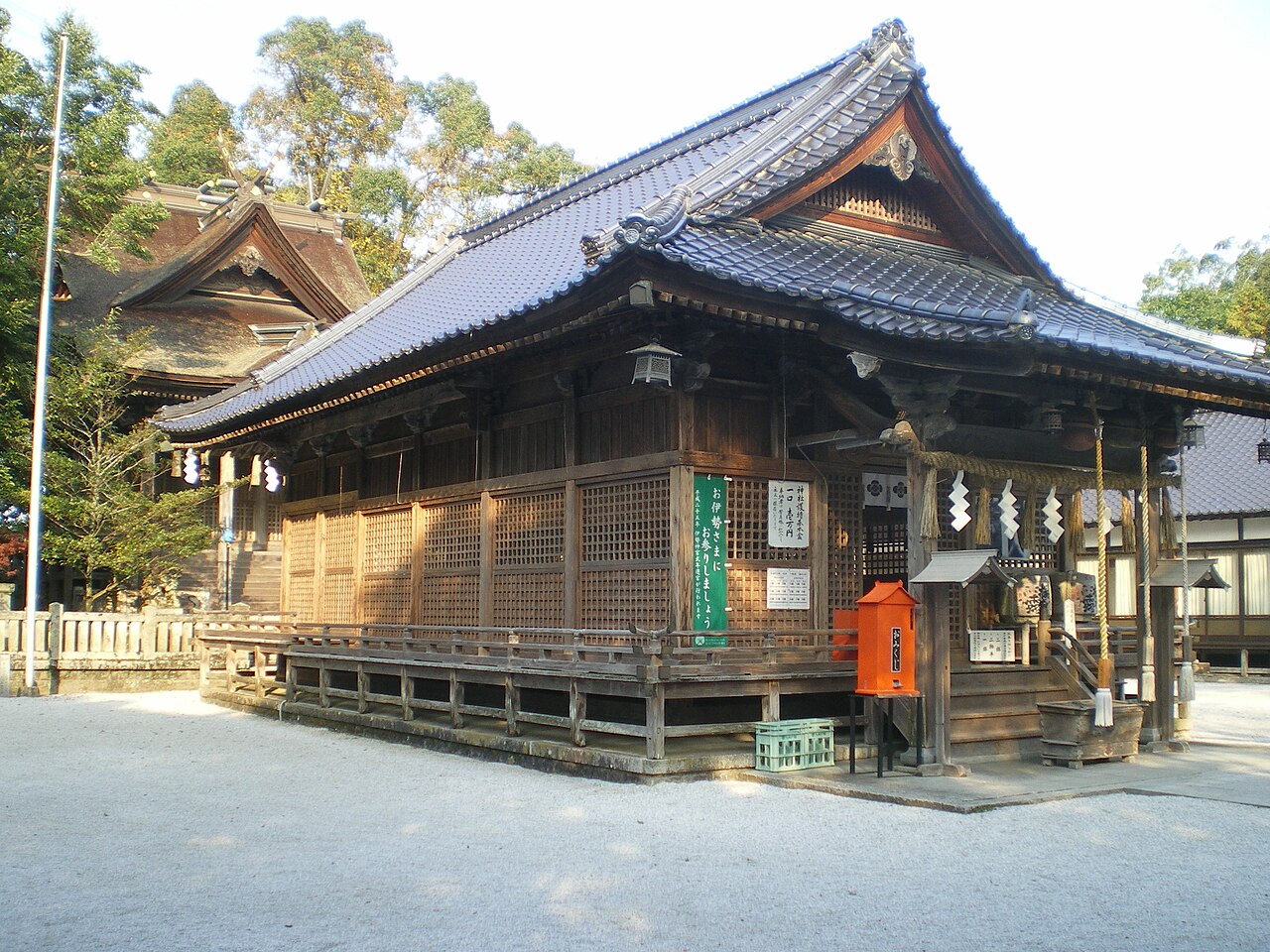
Ootomi jinja.jpg
Photo by Geneast (CC BY-SA 3.0)

A drum dance dedicated every other year at the spring festival of Ōtomi Shrine (大富神社), designated a national Important Intangible Folk Cultural Property. The performers are young and middle-aged men of the parish, and each role draws the same number from the “Mae no Tani” (前の谷) valley in the east of Shirōmaru and the “Sako no Tani” (迫の谷) valley in the west. In 2022 it was inscribed on the UNESCO list as one of the Furyū-odori (風流踊).

  • Dedicated every other year on April 30 and May 1
  • Important Intangible Folk Cultural Property (designated March 16, 2020)
  • UNESCO Intangible Cultural Heritage (inscribed November 30, 2022)
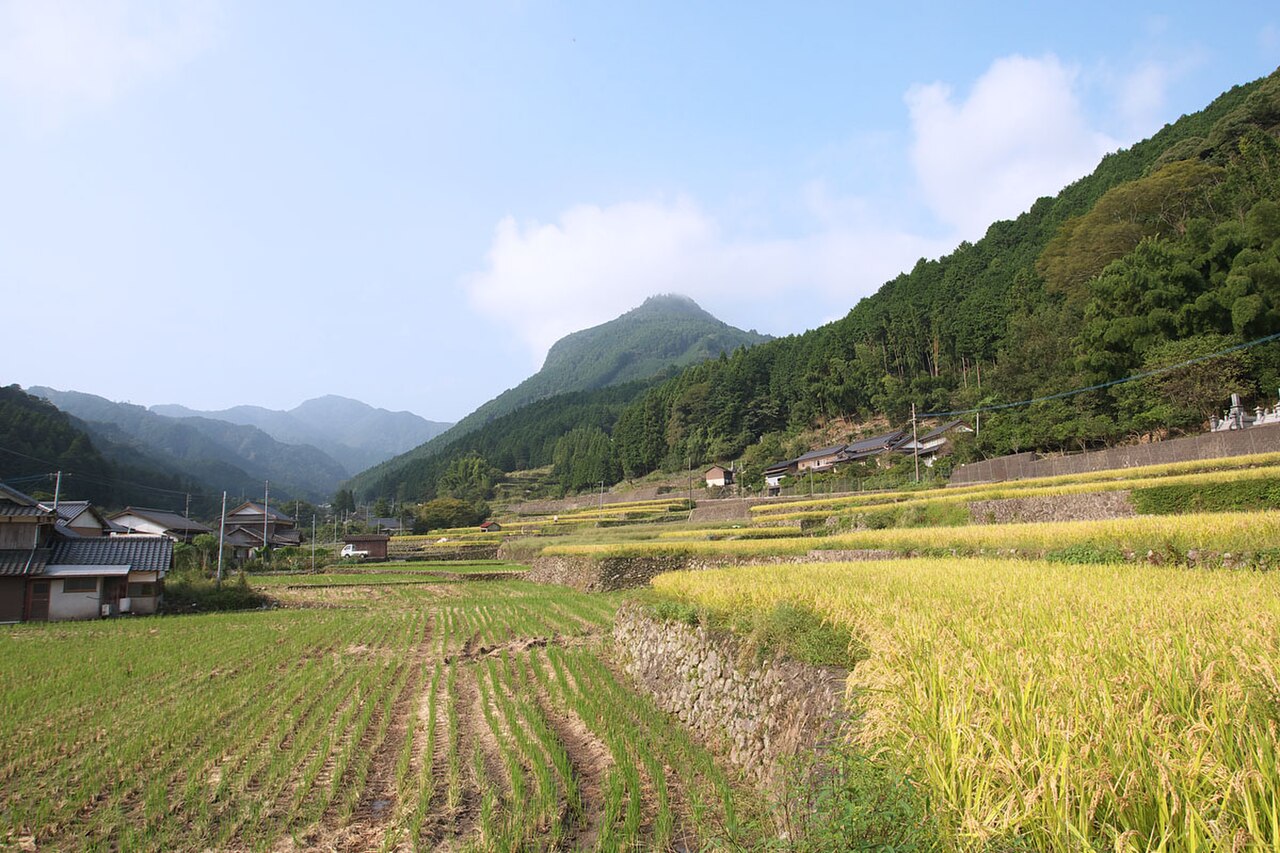
02 / Kubote Rural Landscape (求菩提の農村景観)

The terrace walls are nozurazumi,natural stones stacked as they are.

20160924kubote001.jpg
Photo by Pontafon (CC BY-SA 4.0)

A national Important Cultural Landscape spread over Toribata and Ubuya, at the foot of Mt. Kubote. In the long stone walls, steps of stone called “gobō-ishi” (ゴボウ石) jut out so people can move between the upper and lower paddies. On the paddy banks stand about 30 “tsuchi-goya” (ツチ小屋), huts set on stone-walled bases.

  • Important Cultural Landscape (selected September 19, 2012)
  • About 30 tsuchi-goya huts
  • Walls of natural stone, nozurazumi

03 / Kyōen-ji Bell Tower (教圓寺鐘楼)

The registered bell tower is described as“a rare three-tiered bell tower.”

A three-story bell tower in the southwest corner of the grounds of Kyōen-ji in Unoshima, facing Suō-nada Sea. The tourism association gives 1863 as its year of construction and 13.3 m as its height; the third tier offers a view over Unoshima, and it is said to have once doubled as a lookout.

  • Registered Tangible Cultural Property (building)
  • Height: 13.3 m
  • Built in 1863 (tourism association)

Living here

Mt. Kubote to the south, Suō-nada Sea to the north.

  • about 20,000 people

Buzen lies at the eastern edge of Fukuoka Prefecture, with Mt. Kubote and Mt. Inugatake to the south and Suō-nada Sea to the north. The Buzen Plain opens out like a fan around the Iwatake River, and the city says Nakatsu in Ōita Prefecture is 7 km to the southeast. Nine towns and villages merged in April 1955; the city was first named Unoshima, and on April 14 of the same month it was renamed Buzen.

People living here
24,391people
19952020

−6% since 2015

29,716 → 24,391

Area
111.01km²

41.96km² of it habitable

2024

Households
9,910households

2.5 people per household

2020

Rent (average for rentals)
40,513yen

National average 60,630 yen

2023

Healthcare
2 hospitals / 29 clinics

12.7 per 10,000 people

2023

Area111.01km²Habitable land41.96km² / 38%
Area and habitable land at the same scalee-Stat B1101 / B1103
Children waiting for childcare
—9 nurseries and similar
Home purchase subsidy
—
Average annual temperature
—

These 3 items are waiting on a nationwide data source. We do not fill them with estimates.

Shape

Borders 4 municipalities across 1 prefectures.

Buzen City in Japan33.611°N 131.130°E
TokyoOsakaBuzen City
Territory of Buzen City
Boundaries: National Land Numerical Information (N03)

North to south

14.0km

Fukuoka Prefecture
築上町, 上毛町, 吉富町
Oita Prefecture
中津市

Travel times per leg are not published by the municipality, so they are not shown.

Buzen City isthis kind of town.

  1. 01Mt. Kubote is a conical mountain, 782 m high, rising in the south of Buzen, and a national Historic Site. Together with Hikosan it was a center of Shugendo in northern Kyushu and was said to have “500 lodges on one mountain”; the city records that the separation of Shinto and Buddhism and the abolition of Shugendo in the Meiji era brought Shugendo here to an end.
  2. 02Kannōgaku of Ōtomi Shrine is a national Important Intangible Folk Cultural Property and is inscribed on the UNESCO list as one of the Furyū-odori (風流踊). The terraced walls of Toribata and Ubuya at the foot of Mt. Kubote, with their protruding gobō-ishi stones, are an Important Cultural Landscape. In March, the prefecturally designated Otaue Festival (お田植祭) is held in front of the Nakamiya of Kunitama Shrine.
  3. 03The Kyōen-ji bell tower in Unoshima is a registered tangible cultural property that the Agency for Cultural Affairs describes as “a rare three-tiered bell tower.” The national treasure Copper-plate Lotus Sutra belongs to Kunitama Shrine and is deposited at the Kyushu National Museum. Buzen was founded in April 1955 as Unoshima City, and renamed itself on April 14 of that month.

See the town as it is now.

Source: Wikidata (P2002, P2003, P2013, P2397)

If something caught your eye, ask the town itself.