Arima no Harunire elm, Ebina City
Article

14215 / えびなし

Kanagawa Prefecture

Ebina City

Said to be brought home: Nanjamonja.

Arima no Harunire elm

Photo by のりまき (CC BY-SA 4.0)

01 / Ancient temple

Pagoda to the west, hall to the east.A provincial temple laid out like Horyuji.

Ancient temple in Ebina City
Photo by Saigen Jiro (CC0)

Sagami Kokubunji has its main hall to the east, a pagoda to the west and a lecture hall to the north, the Horyuji-style layout. The city says it is very rare among provincial temples, with only a handful confirmed. The pagoda stood on a base about one metre high, which has now been restored.

  • Horyuji-style temple layout
  • Pagoda reconstructed as seven stories, 65 m, it is said
  • National Historic Site since 1921

02 / Old village office

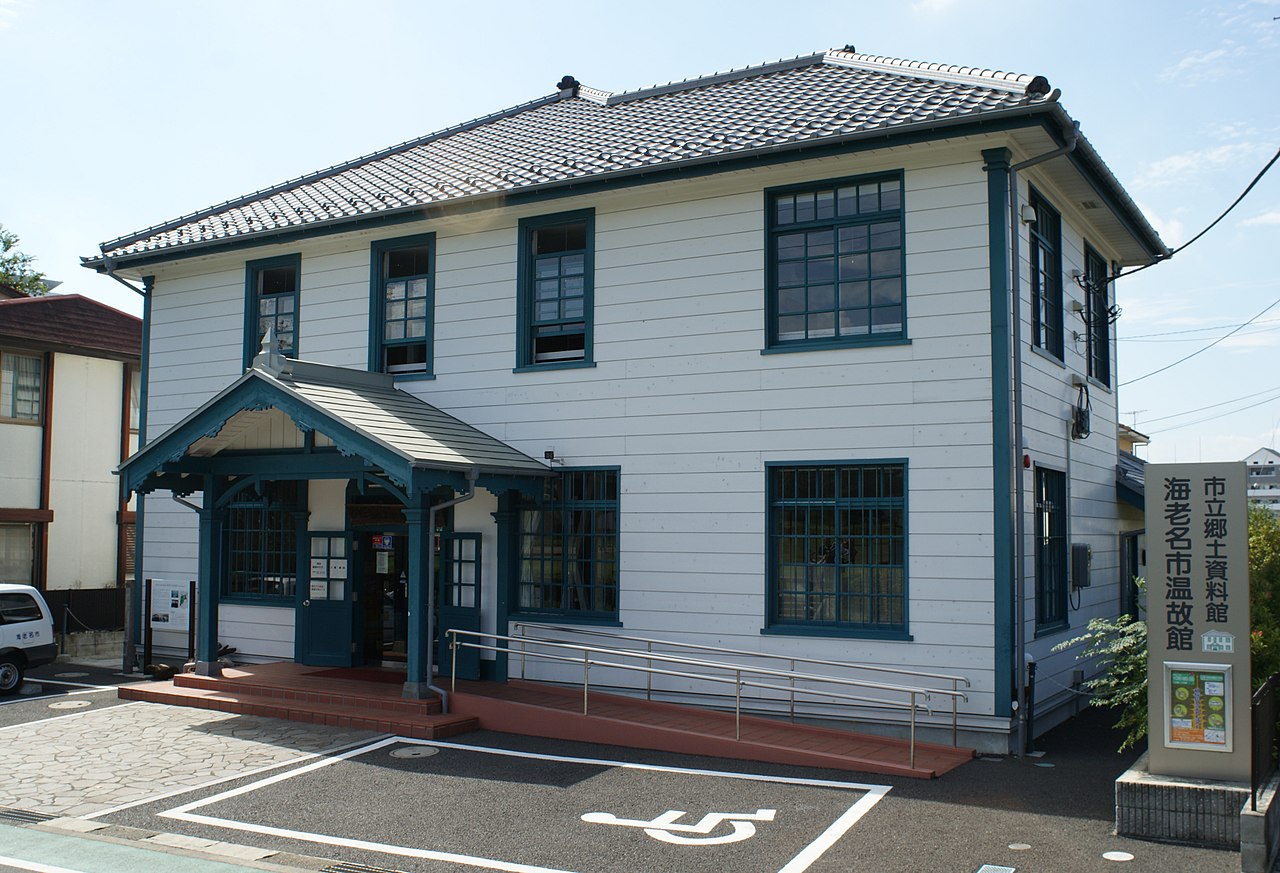
A village office in Western styletook the name of the relics hall.

Old village office in Ebina City
Photo by Haya4 (CC BY-SA 4.0)

Built as the Ebina village office in 1918, this two-story wooden building was moved in 2010-11 and has been the local history museum since 1982. The name Onkokan comes from the Relics Hall opened in 1921 to mark the temple site's designation.

  • Completed 1918
  • Registered Tangible Cultural Property, 2023
  • Relocated 2010-11

03 / Burial mounds

From a low square-front moundto a well-formed keyhole mound.

Burial mounds in Ebina City
Photo by のりまき at Japanese Wikipedia (CC BY-SA 3.0)

These mounds on the Kami-Imaizumi hill were built about 1,750 years ago, in the transition from the Yayoi to the Kofun period. Excavation showed the order: mounds 3 and 4, then 2, then 1 and 5. The city says the mounds' shapes can be seen becoming more refined.

  • National Historic Site, designated 14 July 2005
  • Mound 1: keyhole-shaped, 59 m long
  • Mound 4: square-front; mound 5: square

Ebina City from the sky

Now and 1974–78. Tap a photo to zoom in.

Wide (about 6 km across)

Close (about 1.5 km across)

Now (shot June–August 2019)Shot 1974–78

Source: Geospatial Information Authority of Japan (GSI) GSI Tiles(全国最新写真(シームレス)/国土画像情報(第一期:1974〜1978年撮影))

Open in GSI Maps (now)Open in GSI Maps (1974–78)

Living here

37 minutes to Shinjuku by Odakyu Romancecar.

  • about 140,000 people

Three lines meet here, Odakyu, Sotetsu and the JR Sagami Line, with nine stations in all. The city says Ebina keeps developing as a very convenient place for commuting to work and school. To the west, the Sagami River separates it from Atsugi.

People living here
136,516people
19952020

+4.9% since 2015

113,430 → 136,516

Area
26.59km²

25.85km² of it habitable

2024

Households
58,339households

2.3 people per household

2020

Rent (average for rentals)
68,737yen

National average 60,630 yen

2023

Healthcare
4 hospitals / 107 clinics

8.1 per 10,000 people

2023

Almost entirely flat.Almost all of it is habitable land (97.2%)
Area and habitable land at the same scalee-Stat B1101 / B1103
Children waiting for childcare
—20 nurseries and similar
Home purchase subsidy
—
Average annual temperature
—

These 3 items are waiting on a nationwide data source. We do not fill them with estimates.

ACCESS

Where you can go from here.

Ebina City in Japan35.446°N 139.391°E
OsakaEbina City
Ebina Station
海老名駅2026
  • to ShinjukuOdakyu Romancecar37min

Travel times follow 小田急電鉄『ロマンスカー時刻表』上り(海老名・新宿とも停車駅の列がある PDF。表紙に「2026.3.14改正」)の平日版・土休日版。各列車の列の海老名『〃(発)』→新宿『着』を列の位置で突き合わせて数えた (checked 2026-10-21). They vary by time of day.

Shape

Borders 6 municipalities.

Territory of Ebina City
Boundaries: National Land Numerical Information (Administrative Area Data), MLIT. Processed by Machigatari.Lakes: National Land Numerical Information (Lake Data), MLIT. Processed by Machigatari. Prepared with the approval of the Director-General of the Geospatial Information Authority of Japan, using its Digital Map 25000 (Spatial Data Framework) and Digital Map 25000 (Place Names and Public Facilities). (承認番号 平27情使、第585号)

Ebina City isthis kind of town.

  1. 01The Arima no Harunire is a Japanese elm nicknamed Nanjamonja, said to have been brought back from the Korean Peninsula by an Edo-period court physician, and a prefectural natural monument
  2. 02Sagami Kokubunji has a Horyuji-style layout and a restored pagoda base, with the old Ebina village office, Onkokan, nearby
  3. 03Odakyu, Sotetsu and the JR Sagami Line meet here, 37 minutes to Shinjuku by Odakyu Romancecar

If something caught your eye, ask the town itself.

From this town's themes