立梅用水6.JPG
Article

24441 / たきちょう

Mie Prefecture 多気郡

Taki Town

Canal said to use mercury-mining skills.

Tachibai Yosui irrigation canal

Photo by Indiana jo (CC BY-SA 4.0)

01 / Meki Pass Road

The first pass road of the Ise Route of theKumano pilgrimage has a cutting dug in Meiji.

熊野古道伊勢路女鬼峠 10.jpg
Photo by Asset utilitist (CC0)

Meki Pass Road is the first pass road on the Ise Route of the Kumano pilgrimage routes, linking the villages of Nonaka and Ogase. A cutting through the phyllite bedrock was dug in the Meiji era, alongside a Meiji road for carts, and stretches of the Edo road survive between them. The Edo road is an earth path about 1.8 m wide, hollowed deeply in the middle. It was added to the national historic site in February 2026.

  • Cutting dug in the Meiji era
  • Edo road: earth path about 1.8 m wide
  • Added to the national historic site, February 2026
02 / Nyu mercury

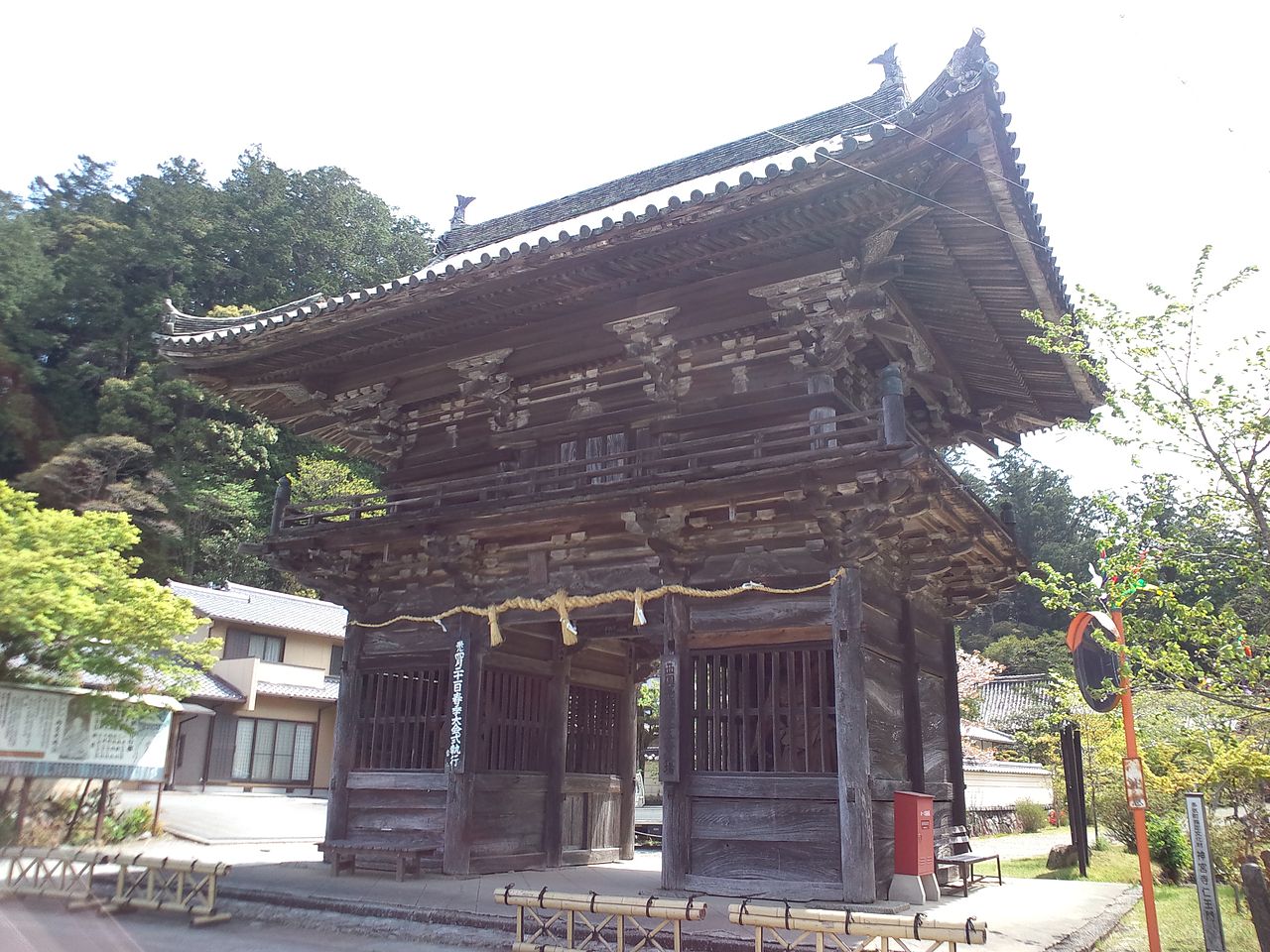
Most of the mercury for gilding the Great Buddhaof Nara is thought to have come from Nyu.

Le Temple Jingû-ji - La porte "Niô-mon".jpg
Photo by Yanajin33 (CC BY-SA 3.0)

The Todai-ji Yoroku records the mercury used to gild the Great Buddha at 58,620 ryo, about 2.2 tonnes. Most of it is thought to have come from the Nyu district of Iitaka County, Ise Province. Nyu Shrine has long been revered as a shrine of mercury, and the Niomon gate of the neighbouring Jingu-ji Temple (Nyu-daishi) was rebuilt in 1716.

  • 58,620 ryo (about 2.2 tonnes)
  • Nyu district, Iitaka County, Ise Province
  • Niomon gate rebuilt in 1716

03 / Nyu calendar

A woodblock for a calendar hung on a pillarpreserves the work of Nyu's calendar makers.

The Nyu calendar was issued by a calendar maker of Nyu under the protection of the Kitabatake clan, Ise's provincial governors, and records show it existed by 1532. It was widely used in the Kii domain and gradually faded as the Ise calendar prospered. The woodblock designated by the town is cherry wood, made for a pillar calendar that briefly lists the astronomical data for 1845.

  • Record from 1532
  • Woodblock of 1845
  • Cherry wood, 32.5 cm by 13.5 cm

Living here

75 minutes from Nagoya by Rapid Mie, at a fork in the line.

  • about 10,000 people
  • 90 min to a city centre
  • Rural district town

At JR Taki Station the Sangu Line branches toward Ise and Toba, and the Kisei Main Line toward Kumano and Wakayama. From Nagoya, Rapid Mie runs without a change in 75 minutes at the fastest (in the March 2026 timetable, counted from departure at Nagoya Station to departure at Taki Station). The town hall is in Oka.

People living here
14,021people
2010

−5.8% since 2015

15,438 → 14,021

Area
103.06km²

43.9km² of it habitable

2024

Households
5,124households

2.7 people per household

2020

Rent (average for rentals)
—
Healthcare
0 hospitals / 10 clinics

7.1 per 10,000 people

2023

Area103.06km²Habitable land43.9km² / 43%
Area and habitable land at the same scalee-Stat B1101 / B1103

Population from 2010 onward (municipal boundary changed).2006-01-01 に新設合併(勢和村)。2010年調査から市域が変わっている。

Children waiting for childcare
—6 nurseries and similar
Home purchase subsidy
—
Average annual temperature
—

These 3 items are waiting on a nationwide data source. We do not fill them with estimates.

ACCESS

Where you can go from here.

Taki Town in Japan34.496°N 136.546°E
TokyoTaki Town
Taki Station
多気駅2023
  • to NagoyaJR Rapid75min

Travel times follow JR東海『各駅の時刻表』(railway.jr-central.co.jp/time-schedule/)の駅時刻表PDF(2026年3月改正〔URLの 202603〕):名古屋駅の関西線[平日/土曜・休日][四日市・松阪方面](kansai_Nagoya_B_wh_d.pdf)と、多気駅の参宮線[平日/土曜・休日][伊勢市・鳥羽方面](sangu_Taki_B_wh_d.pdf)・紀勢線[毎日][尾鷲・新宮方面](kisei_Taki_D_e_d.pdf)。名古屋『発』と多気『発』(JR東海の駅時刻表は発車時刻のみ)を数えた。町公式『アクセス』(観光、更新 2021-03-29)と『役場のご案内』(更新 2026-06-20)も参照 (checked 2026-10-13). They vary by time of day.

Shape

Borders 5 municipalities.

Territory of Taki Town
Boundaries: National Land Numerical Information (N03)

North to south

12.0km

松阪市, 大台町, 玉城町, 明和町, 度会町

Taki Town isthis kind of town.

  1. 01Tachibai Yosui is an irrigation canal drawing water from the Kushida River; it is said to have applied mercury-mining techniques, was completed in 1823, and was registered as a national registered monument (historic site) in 2014
  2. 02Meki Pass Road, the first pass road on the Ise Route of the Kumano pilgrimage, has a cutting dug through phyllite bedrock in the Meiji era and was added to the national historic site in February 2026
  3. 03Nyu is thought to be the source of most of the mercury used to gild the Great Buddha of Nara; Jingu-ji Temple (Nyu-daishi) and the woodblock for the Nyu calendar remain, and Kinchokoku-ji Temple holds an eleven-faced Kannon statue about 660 cm tall (Important Cultural Property)

See the town as it is now.

Source: Wikidata (P2002, P2003, P2013, P2397)

If something caught your eye, ask the town itself.