2020-02-24 Kannawa Onsen 鉄輪温泉全景 DSCF8630.jpg
Article

44202 / べっぷし

Oita Prefecture

Beppu City

Steam rises here and there across town.

Steam of Kannawa and Myoban

Photo by 松岡明芳 (CC BY-SA 4.0)

01 / Yunohana Huts

A hut unbroken since the Edo era,raises nothing but yunohana.

2023-04-03 Myoban Onsen、明礬温泉湯の花小屋 DSCF0046.jpg
Photo by 松岡明芳 (CC BY-SA 4.0)

In the thatched huts of Myoban Onsen (明礬温泉), geothermal steam and blue clay combine to grow crystals of yunohana (湯の花), a mineral used in bath salts. The crystals grow about 1mm a day and are harvested after 40 to 60 days. Passed down since the Edo period, the technique was designated a National Important Intangible Folk Cultural Property in 2006.

  • National Important Intangible Folk Cultural Property, 2006
  • Crystals grow about 1mm a day
  • A technique passed down since the Edo period
02 / Takegawara Onsen

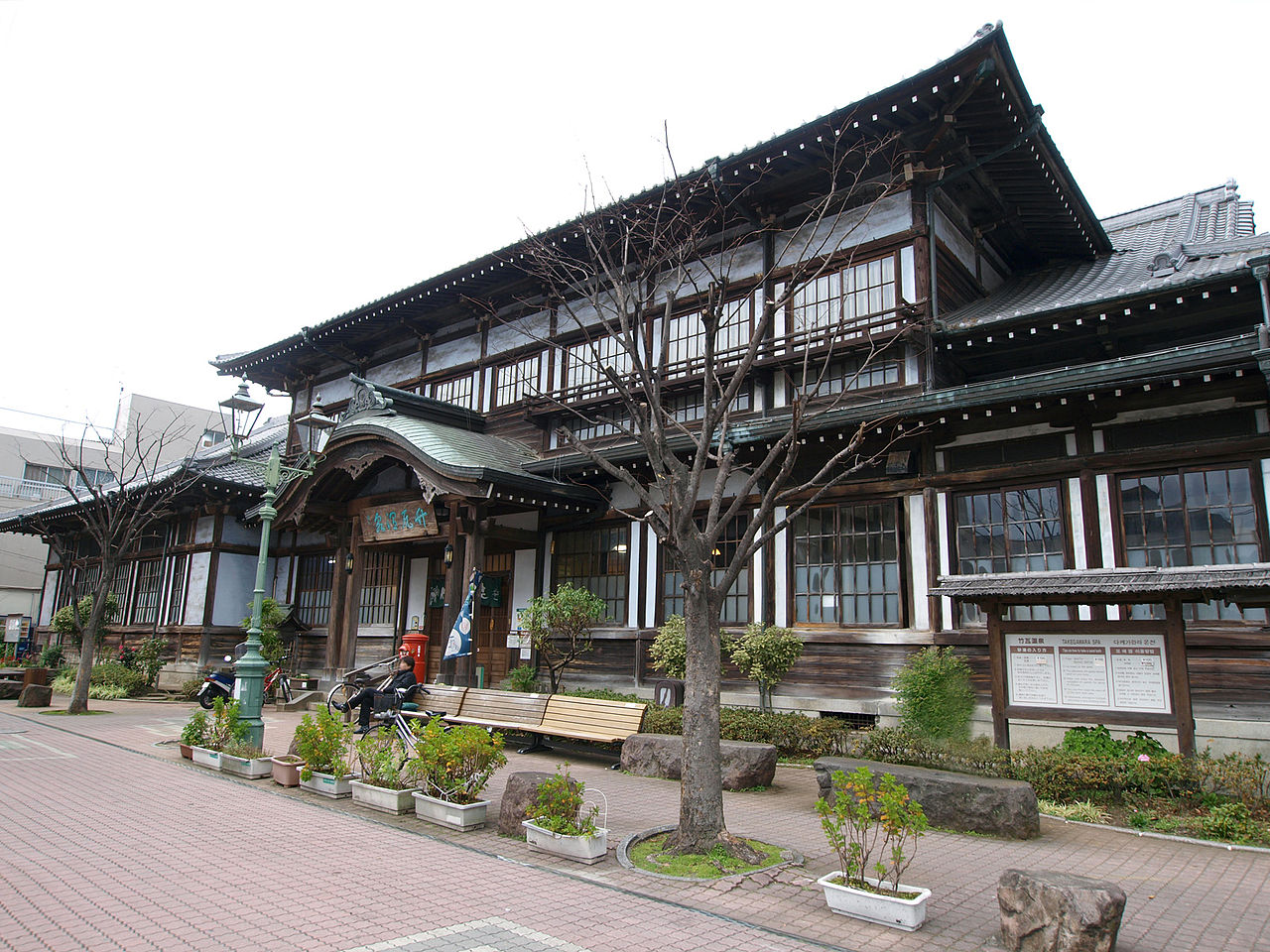
Beneath a karahafu gable,bathers lie in a bed of sand.

Beppu Takegawara Onsen 1.jpg
Photo by 大分帰省中 (CC BY 3.0)

Built in 1938, Takegawara Onsen (竹瓦温泉) is a two-storey wooden bathhouse with a floor area of 712 square metres and a grand karahafu (唐破風) gabled entrance. It was registered as a National Tangible Cultural Property in 2004. For its famous sand bath, visitors lie down in yukata while an attendant called a sunakakesan (砂かけさん) covers them with hot-spring-warmed sand.

  • Built 1938, 712 sqm
  • National Tangible Cultural Property, 2004
  • Sand bath taken in a yukata

03 / Aburaya Kumahachi

In 1928, Kamenoi Jidosha put aboardwhat it calls Japan's first female bus guides.

油屋熊八の碑.jpg
Photo by Vladied (CC BY-SA 4.0)

Aburaya Kumahachi (油屋熊八), who ran the Kamenoi Inn, founded Kamenoi Jidosha (亀の井自動車, now Kamenoi Bus) in 1928. On the sightseeing buses of the Beppu hell circuit, the company put aboard guides it calls Japan's first female bus conductors, and the tour became synonymous with Beppu sightseeing.

  • Founded Kamenoi Jidosha, 1928
  • Kamenoi Bus calls them Japan's first female bus conductors
  • Sightseeing buses of the Beppu hell circuit

Living here

Upstairs from the bathhouse, a community hall.

  • about 120,000 people

Beppu has around 100 kyodo onsen (共同温泉), neighbourhood bathhouses, including the city-run ones. Most are run by local residents' associations or hot-spring cooperatives, with a bath on the ground floor and a district community hall on the floor above.

People living here
115,321people
19952020

−5.6% since 2015

128,255 → 115,321

Area
125.34km²

43.86km² of it habitable

2024

Households
54,336households

2.1 people per household

2020

Rent (average for rentals)
38,751yen

National average 60,630 yen

2023

Healthcare
24 hospitals / 114 clinics

12.0 per 10,000 people

2023

Area125.34km²Habitable land43.86km² / 35%
Area and habitable land at the same scalee-Stat B1101 / B1103
Children waiting for childcare
—33 nurseries and similar
Home purchase subsidy
—
Average annual temperature
—

These 3 items are waiting on a nationwide data source. We do not fill them with estimates.

ACCESS

Where you can go from here.

Beppu City in Japan33.285°N 131.491°E
TokyoOsakaBeppu City
Beppu Station
別府駅2007
  • to OsakaHighway bus631min
  • to KyotoHighway bus691min

Travel times follow 近鉄バス・大分バス共同運行の夜行高速バス「SORIN号」(京都駅八条口・大阪駅前〈東梅田〉・なんばOCAT・三宮駅〈ミント神戸〉⇔中津・宇佐法鏡寺・別府北浜・中央通り・大分新川)の下り便の事業者公式時刻表(近鉄バス)。大阪駅前21:30発→別府北浜8:01着、三宮駅22:50発→別府北浜8:01着。乗り換えなしで市内の停留所に着く (checked 2026-09-25). They vary by time of day.

Shape

Borders 4 municipalities.

Territory of Beppu City
Boundaries: National Land Numerical Information (N03)

North to south

14.5km

由布市, 日出町, 宇佐市, 大分市

Beppu City isthis kind of town.

  1. 01Beppu has 2,831 hot spring sources and a flow of 101,856 litres a minute. The city's own relocation website calls this flow "the most hot water in Japan." In the Kannawa (鉄輪) and Myoban (明礬) districts, steam rising from vents wraps the town, a landscape recognised as a National Important Cultural Landscape in 2012.
  2. 02In the thatched huts of Myoban Onsen, a technique passed down since the Edo period grows crystals of yunohana from geothermal steam and blue clay, designated a National Important Intangible Folk Cultural Property. The city-run Takegawara Onsen, built in 1938, is known for its karahafu gable and its sand bath.
  3. 03Aburaya Kumahachi, who ran the Kamenoi Inn, founded Kamenoi Jidosha (now Kamenoi Bus) in 1928, putting aboard the sightseeing buses of the Beppu hell circuit guides the company calls Japan's first female bus conductors.

See the town as it is now.

Source: Wikidata (P2002, P2003, P2013, P2397)

If something caught your eye, ask the town itself.