Shiroshita-karei.jpg
Article

44341 / ひじまち

Oita Prefecture 速見郡

Hiji Town

Spring-fed, said to be sent to shoguns.

Shiroshita Karei

Photo by Utan506 (CC BY-SA 4.0)

01 / Chidōkan

Dismantled to build a school,rebuilt the same way a year later.
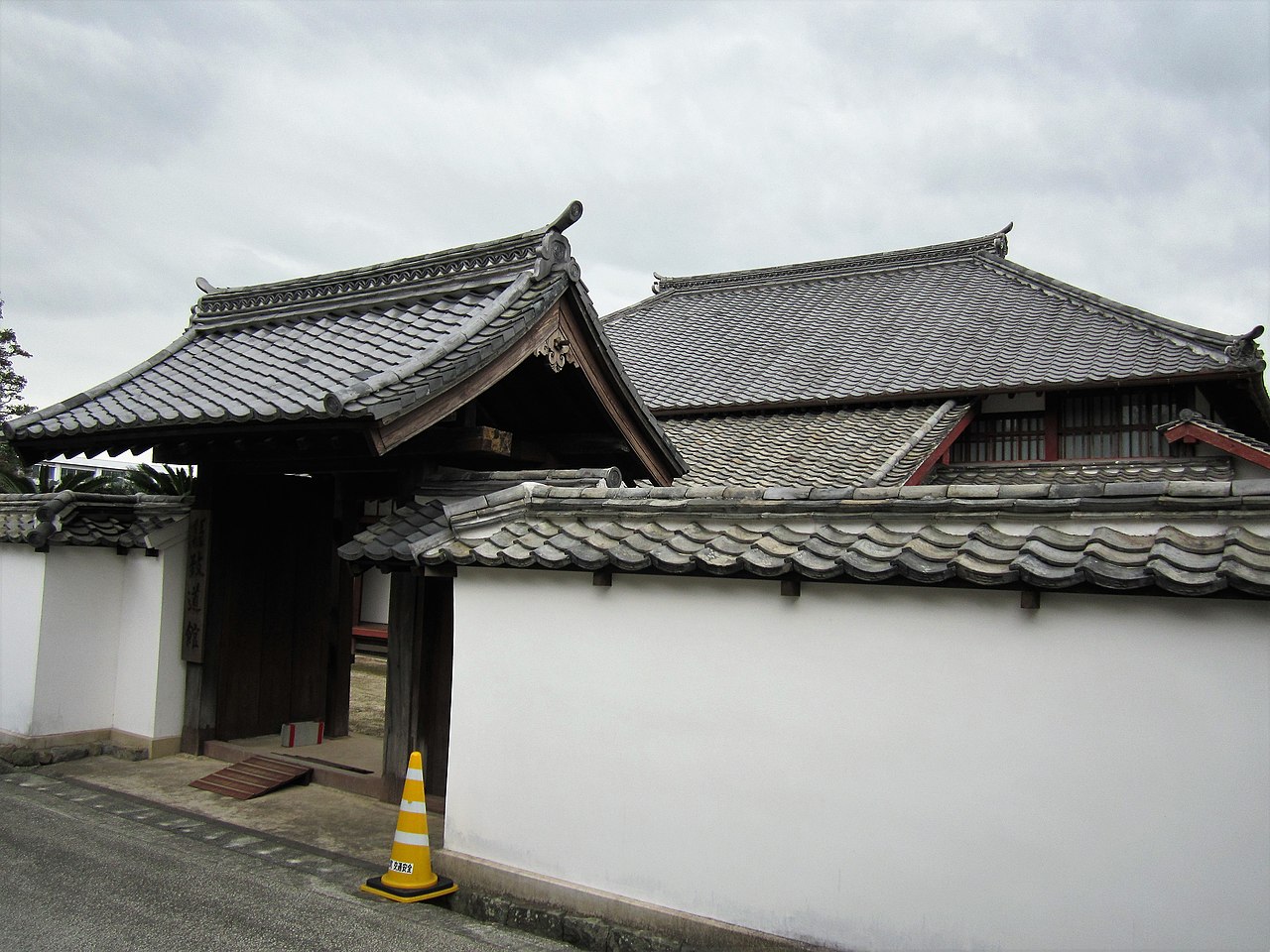
Chido-Kan (Hiji) 01.jpg
Photo by Suikotei (CC BY-SA 4.0)

In 1858 the 15th lord of Hiji domain, Kinoshita Toshinori (木下俊程), founded Chidōkan (致道館) as the domain school in the second bailey of Hiji Castle. Hoashi Banri (帆足万里), one of the "Three Sages of Bungo," taught here. The building was dismantled in 1950 to make way for a junior high school, then rebuilt the following year, the 100th anniversary of Banri's death. It is the only domain-school building still standing in Oita Prefecture.

  • 1858: founded as a domain school
  • 1950: dismantled, rebuilt the next year
  • Only domain-school building left in Oita

02 / Tekizansō

A garden that borrows Beppu Bay as its pond,built with a gold-mine fortune.

Tekizanso ac (1).jpg
Photo by Asturio Cantabrio (CC BY-SA 4.0)

Narikiyo Hiroe (成清博愛), known as the "gold mountain king," built this villa, Tekizansō (的山荘), in 1915 on the former third bailey of Hiji Castle, on a plot of about 3,670 tsubo. Seen from the reception hall, the garden uses Beppu Bay itself as its pond and Mt. Takasaki as its backdrop. The main hall, two annexes, a storehouse, and the gate — five buildings in all — are a National Important Cultural Property.

  • 1915: built
  • National Important Cultural Property (5 buildings)
  • Grounds of about 3,670 tsubo

03 / The Cycad of Shōokuji

A cycad carried from Funai Castlegrew into one called Japan's finest.

The cycad standing before the main hall of Shōokuji (松屋寺) is said to have been brought from Funai Castle, in present-day Oita City, and planted by domain lord Kinoshita Toshiharu (木下俊治) in 1657. Its trunk split from one into as many as 90, and it is thought to be about 600 years old. A national Natural Monument, it is known as "Japan's finest giant cycad."

  • 1924: designated a National Natural Monument
  • About 600 years old
  • Trunk split into 90

Living here

Hayami District now has only one town left.

  • about 30,000 people
  • Rural district town

In 2005, Yamaga merged into Kitsuki and left Hayami District, so Hiji became the district's only remaining town. The gateway is JR Yōkoku Station (暘谷駅), whose plaza is the town center. Beppu lies to the south and Kitsuki to the north, and the town faces Beppu Bay.

People living here
27,723people
19952020

−1.2% since 2015

24,433 → 27,723

Area
73.26km²

41.94km² of it habitable

2024

Households
11,072households

2.5 people per household

2020

Rent (average for rentals)
42,232yen

National average 60,630 yen

2023

Healthcare
3 hospitals / 16 clinics

6.9 per 10,000 people

2023

Area73.26km²Habitable land41.94km² / 57%
Area and habitable land at the same scalee-Stat B1101 / B1103
Children waiting for childcare
—7 nurseries and similar
Home purchase subsidy
—
Average annual temperature
—

These 3 items are waiting on a nationwide data source. We do not fill them with estimates.

Shape

Borders 3 municipalities.

Hiji Town in Japan33.369°N 131.532°E
TokyoOsakaHiji Town
Territory of Hiji Town
Boundaries: National Land Numerical Information (N03)

North to south

9.4km

杵築市, 別府市, 宇佐市

Travel times per leg are not published by the municipality, so they are not shown.

Hiji Town isthis kind of town.

  1. 01Shiroshita Karei (城下かれい), a marbled flounder raised in spring water beneath Hiji Castle, is said to have been sent to the shogun in the Edo period, and remains the town's signature dish.
  2. 02Chidōkan (致道館), the only domain-school building left in Oita Prefecture, is where Hoashi Banri (帆足万里), one of the "Three Sages of Bungo," once taught. Tekizansō (的山荘), a National Important Cultural Property, is a Taishō-era villa built by the mining magnate Narikiyo Hiroe (成清博愛).
  3. 03The ancestors of composer Taki Rentarō (瀧廉太郎) belonged to the Taki family, who served as chief retainers of Hiji domain for generations, and Japan's second Trappist monastery for men also stands in this town.

See the town as it is now.

Source: Wikidata (P2002, P2003, P2013, P2397)

If something caught your eye, ask the town itself.