中山道の景観整備.jpg
Article

11223 / わらびし

Saitama Prefecture

Warabi City

Japan's smallest city, once a post town.

Warabi-juku

Photo by Souka Kinmei (CC0)

01 / Post town

The second stop out of Nihonbashi,with two honjin facing each other.

Ruins of Warabi-juku Honjin.JPG
Photo by Abasaa (Public domain)

Warabi-juku (蕨宿) opened around 1612 as the second post town on the Nakasendō counting from Nihonbashi in Edo. Along about 1 km of street stood two honjin (inns for lords), one waki-honjin and 23 hatago inns, and Princess Kazu (皇女和宮) rested at the Kahei honjin. The honjin site is open today, and every 3 November the post-town festival is held on the old Nakasendō.

  • Opened around 1612
  • 2 honjin, 23 inns
  • Post-town festival every 3 November

02 / Weaving

A weaving shop begun on a dreammade this a town of cloth.

蕨市立歴史民俗資料館分館.jpg
Photo by Souka Kinmei (CC0)

In 1826 Takahashi Shingorō (高橋新五郎) of Tsukagoshi village started a weaving business after a revelation in a dream, and his aoshima striped cloth became popular in Edo. Futako-ori (双子織), woven from two twisted imported threads, made Warabi's textiles boom, and Shingorō and his wife are enshrined as gods of weaving. A cloth broker's shop built in 1887 still stands on the Nakasendō as an annex of the city museum.

  • Weaving begun in 1826
  • Futako-ori cloth
  • An 1887 shop survives

03 / Painter

A painter of ghosts and skeletons,kept alive by his great-granddaughter.

Kyosai 20070210.jpg
Photo by Dddeco (CC BY-SA 3.0)

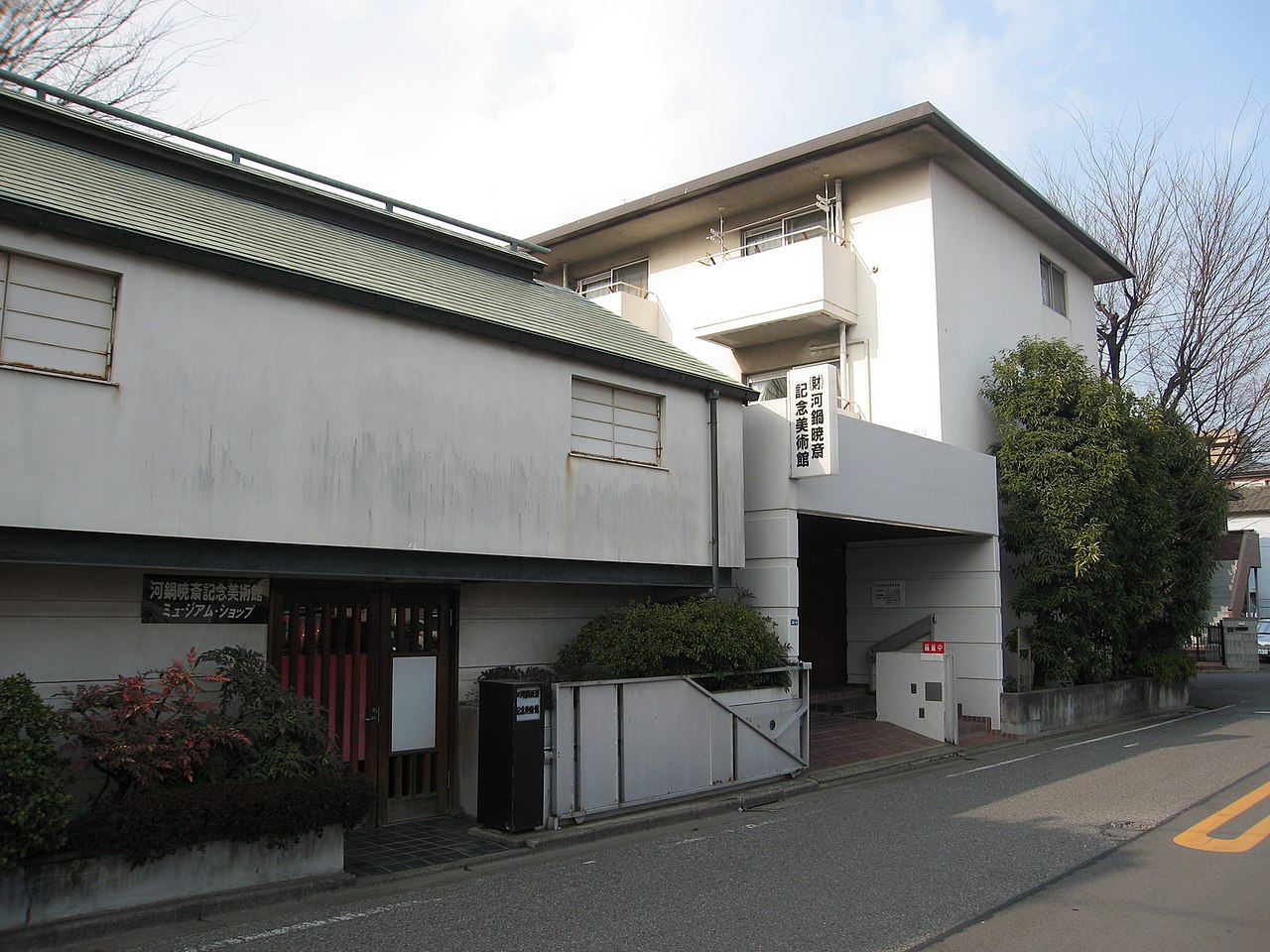
Kawanabe Kyōsai (河鍋暁斎), a painter active from the end of the Edo period into Meiji, became a pupil of Utagawa Kuniyoshi at seven, also trained in the Kanō school, and painted everything from Buddhist images to comic pictures of ghosts and dancing skeletons. The Kawanabe Kyosai Memorial Museum (河鍋暁斎記念美術館) in Minamimachi was opened in 1977 by his great-granddaughter Kawanabe Kusumi, who converted her home. It holds over 3,000 items, mainly sketches and drafts, and changes its displays every one or two months.

  • Opened 1977
  • Over 3,000 items
  • New displays every 1–2 months

Living here

About 4 km from one end of the city to the other.

  • about 70,000 people

At 5.11 km², and about 4 km from end to end, Warabi is the smallest city in Japan by area and the most densely populated. It is also where the coming-of-age ceremony began: in 1946 it held a seinen-shiki (成年式) ahead of the rest of the country. Its one station is Warabi Station on the JR Keihin-Tōhoku Line, a 14-minute walk from City Hall via the west exit. The city has more than 40 city parks.

People living here
74,283people
19952020

+2.8% since 2015

72,021 → 74,283

Area
5.11km²

5.11km² of it habitable

2024

Households
36,827households

2.0 people per household

2020

Rent (average for rentals)
64,659yen

National average 60,630 yen

2023

Healthcare
3 hospitals / 50 clinics

7.1 per 10,000 people

2023

Almost entirely flat.Almost all of it is habitable land (100.0%)
Area and habitable land at the same scalee-Stat B1101 / B1103
Children waiting for childcare
—13 nurseries and similar
Home purchase subsidy
—
Average annual temperature
—

These 3 items are waiting on a nationwide data source. We do not fill them with estimates.

ACCESS

Where you can go from here.

Warabi City in Japan35.826°N 139.680°E
OsakaWarabi City
Warabi Station
蕨駅2023
  • to ŌmiyaJR Keihin-Tohoku Line15min

Travel times follow 市公式の子育てしたいまち情報冊子『わらびStyle』(蕨市ガイドブック・2024-12-26 増刷の版)の路線図に載っている、蕨駅から午前7時台の値 (checked 2026-09-24). They vary by time of day.

Shape

Borders 3 municipalities.

Territory of Warabi City
Boundaries: National Land Numerical Information (N03)

North to south

2.4km

川口市, 戸田市, さいたま市

Warabi City isthis kind of town.

  1. 01The smallest city in Japan at 5.11 km², it was Warabi-juku, the second post town on the Nakasendō from Nihonbashi
  2. 02Takahashi Shingorō started weaving here in 1826, and futako-ori cloth made it a textile town
  3. 03A memorial museum opened by Kawanabe Kyōsai's great-granddaughter holds over 3,000 items, mainly sketches and drafts

If something caught your eye, ask the town itself.