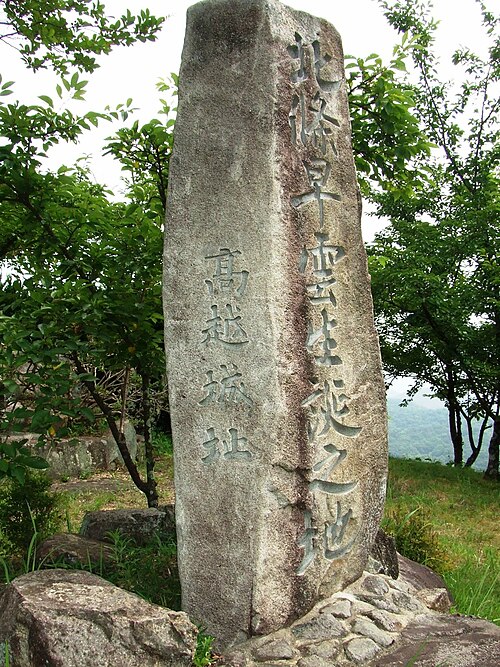
Camphor log, Hirakushi Denchu, Kodaira City
Article

13211 / こだいらし

Tokyo

Kodaira City

Bought at 100, a log to carve past 120.

Camphor log, Hirakushi Denchu

Photo by Calton (CC BY-SA 4.0)

01 / Paleolithic site

Dug on a three-day promise,a school site held a Paleolithic settlement.

The Suzuki Site was found in late June 1974 at a building site for a school, in an excavation begun on a promise of three days. Nothing turned up for two days; near the end of the third, the spade struck a burnt stone. It has 12 cultural layers dating from about 38,000 to 16,000 years ago, and obsidian from Kozushima was unearthed. It became a national Historic Site in 2021.

  • June 1974
  • 12 cultural layers
  • National Historic Site, 2021

02 / Land development

Anyone moving into Ogawa Villagehad to keep a horse.

In 1656 Ogawa Kurobee, who lived in Kishi Village, began opening land as the Tamagawa Aqueduct was dug. Ogawa Village sat on the busy Ome Kaido road, and newcomers had to keep a horse and take on post-horse duty. The Ogawa Family Documents, 10,973 items centred on records of the land development, are a Tokyo Metropolitan tangible cultural property.

  • 1656 (Meireki 2)
  • Newcomers had to keep a horse
  • 10,973 documents

03 / Former home

A sculptor's former home,designed by the architect Oe Hiroshi.

Former home in Kodaira City
Photo by Calton (CC BY-SA 4.0)

Hirakushi Denchu moved from Taito Ward to Kodaira in 1970 and spent about ten years there until his death at 107. The single-storey wooden home, designed by Oe Hiroshi, was selected as a Tokyo Metropolitan historic building in fiscal 2022. The feel of his daily life remains in its Japanese-style rooms, and the camphor log is displayed in the front garden.

  • Designed by Oe Hiroshi
  • Selected in fiscal 2022
  • Moved in 1970

Kodaira City from the sky

Now and 1974–78. Tap a photo to zoom in.

Wide (about 6 km across)

Close (about 1.5 km across)

Now (shot June–November 2019)Shot 1974–78

Source: Geospatial Information Authority of Japan (GSI) GSI Tiles(全国最新写真(シームレス)/国土画像情報(第一期:1974〜1978年撮影))

Open in GSI Maps (now)Open in GSI Maps (1974–78)

Living here

25 minutes to Seibu-Shinjuku.

  • about 200,000 people
  • 30 min to a city centre

From Seibu-Shinjuku to Kodaira Station takes 25 minutes on the reserved-seat Haijima Liner and 26 minutes by express. City Hall is about a five-minute walk from Omekaido Station on the Seibu Tamako Line. Seven villages merged into Kodaira Village in 1889, and the city was founded in 1962.

People living here
198,739people
19952020

+4.6% since 2015

172,946 → 198,739

Area
20.51km²

20.45km² of it habitable

2024

Households
91,287households

2.2 people per household

2020

Rent (average for rentals)
62,381yen

National average 60,630 yen

2023

Healthcare
9 hospitals / 136 clinics

7.3 per 10,000 people

2023

Almost entirely flat.Almost all of it is habitable land (99.7%)
Area and habitable land at the same scalee-Stat B1101 / B1103
Children waiting for childcare
—41 nurseries and similar
Home purchase subsidy
—
Average annual temperature
—

These 3 items are waiting on a nationwide data source. We do not fill them with estimates.

ACCESS

Where you can go from here.

Kodaira City in Japan35.728°N 139.477°E
OsakaKodaira City
Omekaido Station
青梅街道駅2020
  • to Seibu-ShinjukuSeibu Shinjuku Line25min

Travel times follow 西武鉄道の列車時刻(seibu.ekitan.com の駅の時刻表〈西武鉄道Webサイトの駅ページ seiburailway.jp/railway/station/kodaira/ からのリンク先。2026-10-22 はメンテナンス中で302転送されるため Wayback の web.archive.org/web/2026id_/ で取得〉)。西武新宿駅(238-0 d1 平日dw=0・土休日dw=1・時刻表の日付2026-09-22〜24)の発時刻と、小平駅(238-18 d2〈所沢・本川越方面〉・234-6 d1〈拝島方面〉・日付2025-12〜2026-03)の発時刻を、列車番号〈列車ID の末尾4桁〉で同じ列車に突き合わせた。到着時刻は、同じデータで経路を出す駅探(ekitan.com/transit/route/sf-2407/st-2122)を2026-10-22に引いて確かめた。西武の時刻表ページの表示は『2025年3月15日改正』 (checked 2026-10-23). They vary by time of day.

Shape

Borders 7 municipalities.

Kodaira City isthis kind of town.

  1. 01A camphor log that the sculptor Hirakushi Denchu bought at 100 is displayed in the front garden of his former home, designed by Oe Hiroshi
  2. 02Digging at a school building site uncovered a Paleolithic site about 38,000 to 16,000 years old
  3. 03The Ogawa Family Documents, records of Ogawa Village opened alongside the Tamagawa Aqueduct, are a Tokyo Metropolitan cultural property

If something caught your eye, ask the town itself.

From this town's themes