Main hall, prefectural property, Namie Town
Article

07547 / なみえまち

Fukushima Prefecture 双葉郡

Namie Town

A hall estimated moved from the castle.

Main hall, prefectural property

Photo by Higa4 (CC0)

01 / Pottery

Pour in hot tea, and the heatnever reaches your hand.

Obori Soma ware has a history of more than 300 years from the Genroku era and is a national traditional craft. Its double-walled form stacks two vessels, an inner and an outer, so hot tea does not heat the hand. When fired pieces come out, a ringing crackle sounds and the cracks form a pattern.

  • National traditional craft (Ministry of Economy, Trade and Industry list: Feb. 6, 1978)
  • Over 300 years since the Genroku era
  • Double-walled form and blue crackle

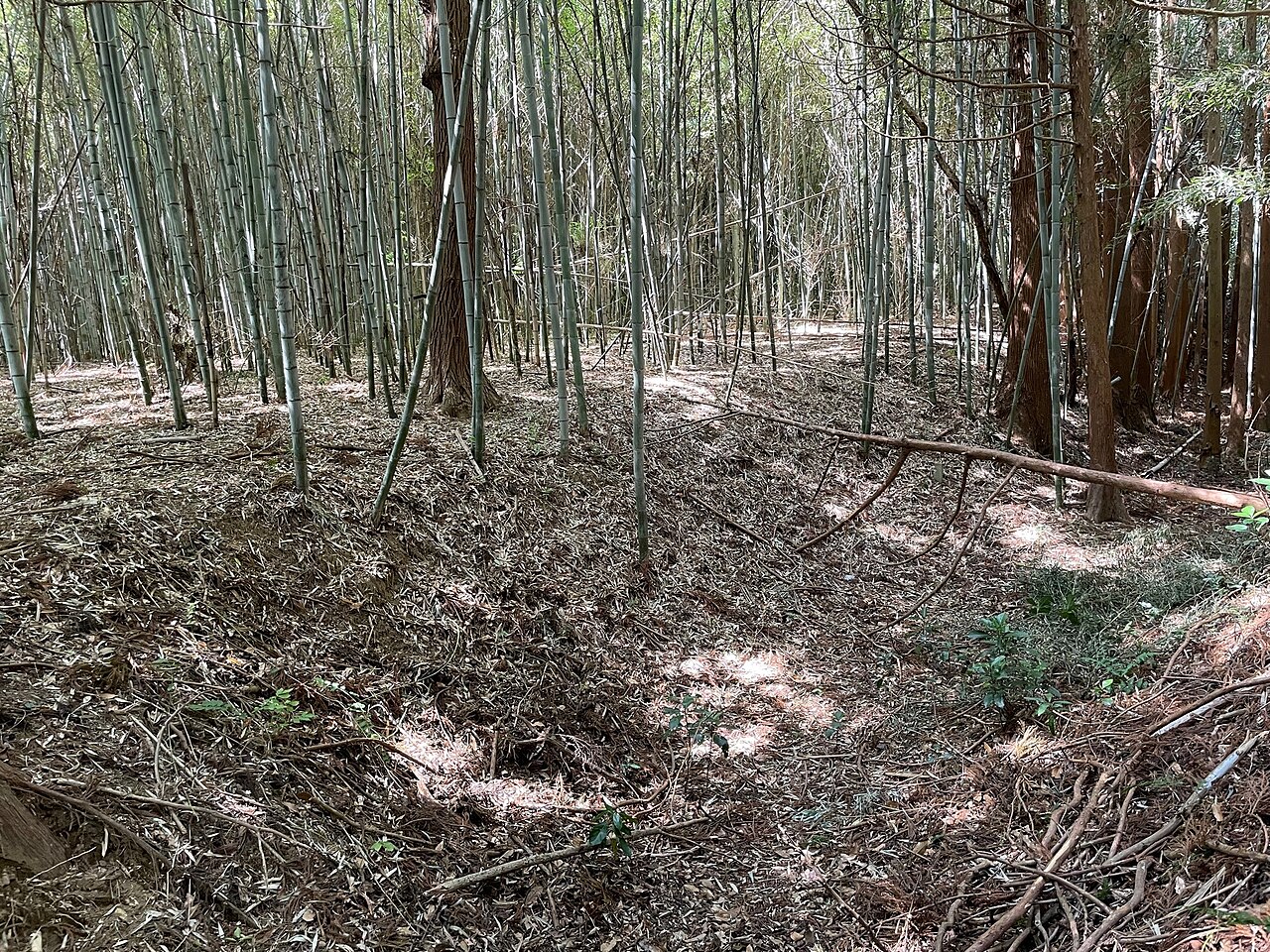
02 / Castle site and place name

The old name Shimeha is said to havetaken a new form around the 8th century.

Castle site and place name in Namie Town
Photo by Ngskt0206 (CC BY-SA 4.0)

The town says the place name Shimeha was changed to a new written form around the 8th century. The town's history names Gongendo Castle as the castle of the clan that bore that name. The name still lives on in the area's own Nomaoi horse festival.

  • Shimeha renamed around the 8th century
  • Gongendo Castle of the clan of that name
  • Name kept in the area's Nomaoi

03 / Market

In 1873 a market was set up in Gongendoto coincide with a shrine festival.

Market in Namie Town
Photo by Higa4 (CC0)

A tourism site says Tokaichi Matsuri began in 1873 (Meiji 6) when a market was set up in the Gongendo district to coincide with the festival of Dewa Gongen, now Namie Shrine. It ran three days centered on the 10th day of the 10th lunar month, hence the name Tokaichi.

  • Began in 1873 (Meiji 6)
  • Three days around the 10th of the 10th lunar month
  • Market tied to a shrine festival

Namie Town from the sky

Now and 1974–78. Tap a photo to zoom in.

Wide (about 6 km across)

Close (about 1.5 km across)

Shot 1974–78

Source: Geospatial Information Authority of Japan (GSI) GSI Tiles(国土画像情報(第一期:1974〜1978年撮影))

Open in GSI Maps (1974–78)

Living here

From Tokyo to Namie Station, 3 hr 11 min on the Limited Express Hitachi.

  • about 2,000 people
  • Rural district town

By JR East's timetable, Limited Express Hitachi No. 13 leaves Tokyo Station at 12:53 and arrives at Namie Station at 16:04. The town says Namie is the easternmost town in Fukushima Prefecture, with an area of 223.06 km2.

People living here
1,923people
19952020

23,245 → 1,923

Area
223.14km²

62.71km² of it habitable

2024

Households
1,405households

1.4 people per household

2020

Rent (average for rentals)
—
Healthcare
0 hospitals / 1 clinic

5.2 per 10,000 people

2023

Area223.14km²Habitable land62.71km² / 28%
Area and habitable land at the same scalee-Stat B1101 / B1103
Children waiting for childcare
—0 nurseries and similar
Home purchase subsidy
—
Average annual temperature
—

These 3 items are waiting on a nationwide data source. We do not fill them with estimates.

ACCESS

Where you can go from here.

Namie Town in Japan37.495°N 141.001°E
TokyoOsakaNamie Town
Namie Station
浪江駅2022
  • to TokyoLtd. exp. Hitachi191min
  • to UenoLtd. exp. Hitachi184min

Travel times follow JR東日本の駅時刻表(timetables.jreast.co.jp の 2611 版)の列車ページ。特急ひたち13号(列車番号13M)の『東京 12:53 発 → 浪江 16:04 着』『上野 13:00 発 → 浪江 16:04 着』 (checked 2026-10-28). They vary by time of day.

Shape

Borders 8 municipalities.

Territory of Namie Town
Boundaries: National Land Numerical Information (Administrative Area Data), MLIT. Processed by Machigatari.Lakes: National Land Numerical Information (Lake Data), MLIT. Processed by Machigatari. Prepared with the approval of the Director-General of the Geospatial Information Authority of Japan, using its Digital Map 25000 (Spatial Data Framework) and Digital Map 25000 (Place Names and Public Facilities). (承認番号 平27情使、第585号)

Namie Town isthis kind of town.

  1. 01The main hall of a shrine in Namie is a prefectural important cultural property, which the prefecture says Soma Masutane, 21st lord of the Soma Nakamura domain, had built as a two-bay gabled hall, estimated to have been moved from Nakamura Castle
  2. 02Obori Soma ware is a national traditional craft with a history of over 300 years from the Genroku era, known for its double-walled form and its blue crackle that sounds when fired
  3. 03Tokaichi Matsuri began as a market in 1873 held with the festival of Dewa Gongen, now Namie Shrine, and the town explains that the area's name took its present form from Shimeha around the 8th century

See the town as it is now.

Source: Wikidata (P2002, P2003, P2013, P2397)

If something caught your eye, ask the town itself.

From this town's themes