Hachioji Castle Ruins, Goshuden, Hachioji City
Article

13201 / はちおうじし

Tokyo

Hachioji City

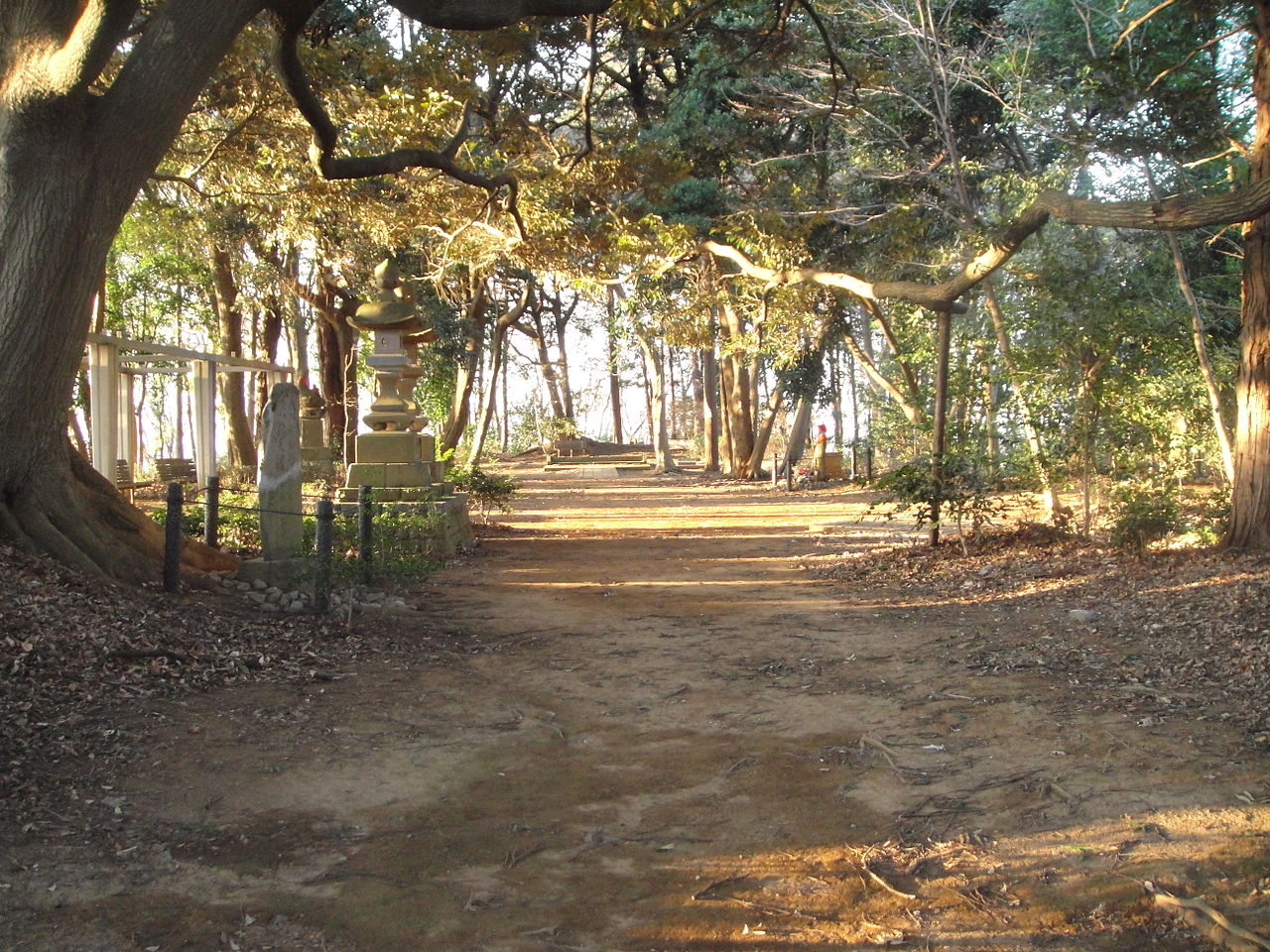
Original stones, reused where possible.

Hachioji Castle Ruins, Goshuden

Photo by Mocchy (Public domain)

01 / Old road

The silk merchant Yoemon was calledYarimizu's stone-wall magnate.
Old road in Hachioji City
Photo by tx-re (Public domain)

One of the roads that carried export raw silk in large amounts after Yokohama opened in 1859, it is a city-designated historic site of about 1.5 km. A hall once stood at the pass's highest point; the site is now Otsukayama Park. The city says the stone wall of merchant Yagishita Yoemon's residence site, facing the street, is magnificent.

  • City historic site, about 1.5 km
  • Yokohama opened in 1859
  • Yagishita Yoemon residence site is a Japan Heritage component

02 / Checkpoint site

A Koshu Kaido checkpoint, says its designationcommentary, was moved here in the Tenna era.

Kobotoke Checkpoint Ruins became a national historic site on 18 January 1928. The city calls it the checkpoint the shogunate regarded as most important on the Koshu Kaido, and says the tekata-ishi and tezuki-ishi stones remain. The designation commentary says it was moved here from nearby in the Tenna era, with stone walls north of the road.

  • National historic site (18 Jan 1928)
  • Tekata-ishi and tezuki-ishi stones remain, per the city
  • Designated area 1,531 m²

03 / Folk performing arts

A three-person puppet style becameone person seated in a box.

Hachioji Kuruma Ningyo was devised in the late Edo period by the first Nishikawa Koryu. He reworked the bunraku-style three-person puppetry into one-person puppetry, seated in a box holding a wheel called the rokuro-guruma, so the puppet performs with its feet directly on the stage. It became a national Important Intangible Folk Cultural Property on 23 March 2022.

  • National designation (23 Mar 2022)
  • Three-person style reworked into one-person
  • Devised by the first Nishikawa Koryu

Hachioji City from the sky

Now and 1974–78. Tap a photo to zoom in.

Wide (about 6 km across)

Close (about 1.5 km across)

Now (shot June–November 2019)Shot 1974–78

Source: Geospatial Information Authority of Japan (GSI) GSI Tiles(全国最新写真(シームレス)/国土画像情報(第一期:1974〜1978年撮影))

Open in GSI Maps (now)Open in GSI Maps (1974–78)

Living here

29 minutes to Shinjuku by JR limited express.

  • about 580,000 people
  • 30 min to a city centre

JR Chuo Line limited express trains stop at Hachioji Station. The fastest daily service takes 29 minutes from Shinjuku and 47 from Tokyo (October 2026 timetable; a limited express ticket is required). To City Hall, buses leave from Stop 8 at the north exit of JR Hachioji Station, among others.

People living here
579,355people
19952020

+0.3% since 2015

503,363 → 579,355

Area
186.38km²

108.03km² of it habitable

2024

Households
267,020households

2.2 people per household

2020

Rent (average for rentals)
59,280yen

National average 60,630 yen

2023

Healthcare
35 hospitals / 392 clinics

7.4 per 10,000 people

2023

Area186.38km²Habitable land108.03km² / 58%
Area and habitable land at the same scalee-Stat B1101 / B1103
Children waiting for childcare
—94 nurseries and similar
Home purchase subsidy
—
Average annual temperature
—

These 3 items are waiting on a nationwide data source. We do not fill them with estimates.

ACCESS

Where you can go from here.

Hachioji City in Japan35.666°N 139.316°E
OsakaHachioji City
  • to TokyoJR limited express47min
  • to ShinjukuJR limited express29min

Travel times follow JR東日本の駅の時刻表(八王子駅 中央本線・中央線快速 大月・甲府方面、平日・土曜休日)の列車ページ約300本から、東京・新宿の発→八王子の着を数えた(docs/handoff/tools/jr_count.py を作業用に改造) (checked 2026-10-23). They vary by time of day.

Shape

Borders 8 municipalities across 1 prefectures.

Territory of Hachioji City
Boundaries: National Land Numerical Information (Administrative Area Data), MLIT. Processed by Machigatari.

Hachioji City isthis kind of town.

  1. 01The Goshuden area of Hachioji Castle Ruins, a national historic site, had its stone walls and paths restored in 1990, reusing as far as possible the original stonework confirmed by excavation
  2. 02The Kinu-no-Michi is a city historic site, one of the roads that carried export raw silk after Yokohama opened. Yagishita Yoemon was called Yarimizu's stone-wall magnate
  3. 03Kobotoke Checkpoint Ruins is a national historic site, which the city describes as the Koshu Kaido's most important checkpoint. Hachioji Kuruma Ningyo became a national Important Intangible Folk Cultural Property in 2022

See the town as it is now.

Source: Wikidata (P2002, P2003, P2013, P2397)

If something caught your eye, ask the town itself.

From this town's themes